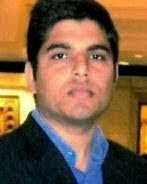
After the fall of left in West Bengal and Kerala, no man is as worried as A.B.Bardhan, the General Secretary of CPI. Today he is restless at the age of 88, despite the fact, that his party did well comparing other left parties. But this legendary Comrade needs no excuse…he is man at work now with new framework to retrieve the CPI as well as left parties much essential ground touch, also eyeing to enter in the crucial psyche of great Indian middle class and youth. Recently we had two hour straight long conversation at historic Ajay Bhavan in Delhi…sitting in at his office {probably his last year as top rank of CPI}, he shared future roadmap of left politics in India and also spoke on many new issues …excerpts…
Q: - How CPI is reconciling with the situation emerged out of the recent poll debacles in West Bengal and Kerala?
A: - Election results in West Bengal and Kerala was very disappointing but for different reasons. In Kerala, power has been almost alternatively won either by the LDF or UDF. This time, it was the turn of UDF, but as you know, the LDF felt short by only three seats. Those three seats, we lost by the very narrow margins. In West Bengal, it was truly a debacle, later we have analyzed the scenario and told openly, why the left front lost so badly after being in power for thirty four years. In a way, the voters in the State have mandated the left front to seat in the opposition for this term. I think, we should work like a true constructive opposition allows the new people learn from their experience about this new coalition government and retrace our links with the masses. The sense of alienation must be allowed to change.
Q: - Which factors are blocking the potential integration of Communist parties?
A: - The last four-five decades have seen the growth of many divisive factors, such as communalism, casteism, regionalism and so others. Parties have up exploit these factors and divert the attention of peoples. We have not been able to overcome these divisive factors and rallying the working peoples behind us. This is especially true in the vast Hindi belt. In particular, I am refereeing to our weakness among the rural masses, which are decisive in elections. We are working to overcome these hindrances by decisively turning our faces to the rural India. Cast vs. cast requires a sensitive approach to the problem of castes, particularly with the oppressed castes and the marginalized sections. As I think, there has been erosion in many of our old existing rural bases, therefore expanding and consolidating such rural bases is our priority task. Taking up these issues like land, water, employment and a stand against the price rise will be start of our fresh struggle, which have badly affected the already miserable access to food, health and education. The CPI is in the process, now of holding conferences at branch, Anchal, District, and State levels culminating in the All India Party Congress by March/April 2012. In all these conferences, the issues mentioned will be top in agenda. We are also working toward joint work and action between the two major Communist parties rallying along them all other left oriented parties and movements for strengthening left unity. Communist unity will be the core of left unity; only then, we can advance towards setting of left and democratic unity which can be the framework of a real alternative to both the major bourgeoisie parties, namely Congress and BJP. Such a combination will be the true secular and democratic front. Any other adhock combination, solely based on electoral arithmetic will not inspire confidence among peoples. In my view, the time is right because, the credibility of the Congress and BJP are at low level; people are looking forward to an alternative to replace them. Mobilisation of all these forces requires also the development of unity and united action among the mass organisations. The overarching coming together of all Central Trade Unions, whatever will be the political colour of leadership, is a case in point. They have taken up the issues confronting for the common peoples all over the country. Kisan organisations are also moving in that direction.
Q: - On many occasions, CPI has made intuitive in this regard, but those didn’t worked out by the denial of CPI {M}, why such inhibitions are growing among the fellow Comrades? In the past, CPI leaders, including Chaturanan Mishra tried to unify the progressive Trade Union Movement but that couldn’t be substantially materialised. In this direction, do you see any constructive development in the days ahead?
A: - The CPI is committed to the goal of Communist unity but this cannot be done in hurry. It’s true, the reaction to our moves have not been very positive but issues like, the programme, the organisational principles and the tactical line requires to be discussed and agreed upon. Afterall we have to fight back the legacy of a split that kept us apart for more than four decades. However, it’s a welcome sign that the perceptions of the two Communist parties are almost the same on national and international affairs, also on economic and political issues. This, I think created a good atmosphere though a sense of rivalry still persists. As far as the ideology is concerned, both the parties are committed to Marxism/Leninism and to the goal of socialism. The point is to apply the scientific theory in the complex and changing Indian and world conditions. As far as Trade Union Movement is concerned, we are working together now and very closely…it’s making good impacts. Things will be more visible very soon…
Q: - Why CPI’s stronghold in Bihar and Jharkhand is receding consistently? Once way of life in north Bihar, now Communism is becoming an alien ideology, don’t you think, CPI failed to forward the next generation leadership after Comrade Bhogendra Jha and Chaturanan Misha?
Q: - Bihar has been a relatively strong support base of CPI, this base was built through tremendous struggle and sacrifices led by Comrade Chandrashekhar Singh, Indradeep Sinha, Suryanarayan Singh, Bhogendra Jha, Chaturanan Mishra and many others. Have already said,; that erosion took place when this base was subjected to the caste politics, in Bihar ugliest caste politics was led by Lalu Prasad Yadav and others. The communal politics of the BJP and so not to be mention our own failures and shortcomings equally accounted in this fall. Bihar is a State, where huge mess of agricultural and marginal workers is on the one hand and land lords on the other. There is still huge scope and need for a class struggle between the two and to implement the land reforms. The so called Land Reform Commission has already detailed the issue of this struggle for land redistribution, land for house sites etc. The government and also some of the opposition parties have to do nothing on this core issue, it’s for the Communist’s to lead the battle of class vs. class and take the focus away from caste vs. caste.
Q: - Why Communism is still being determined by the texts rather contemporary contexts? Why not, CPI should follow more the Marx’ progressive line rather of Lenin’s technical programme?
A: - The world has changed but imperialism and capitalism continues exists; what we see today is a big crisis that has overtaken capitalism. It can’t solve the problem of unemployment, poverty and even illiteracy and disease. India is also changed in the course of last six and half decades since the independence but facts reveals that the capitalist path of the government, that’s being pursued and the so called new liberal policies of privatization, liberlisation and globalization have only aggravated all our problems. Disparities between the super rich and affluent section, which is only 10%of our population, and the overwhelming mass of poor and vulnerable sections has deepened and widened as never before. They talk of growth but if development means that, all sections are benefitted, we find that there is actually no development for the majority, particularly SCs, STs, minorities and the most backward sections are excluded from all this talk of growth. That’s why, we find outburst of discontent, indignation and so forth. This is the socio-economic basis of many of ours that afflicts us today. The free market, the so called trickledown theories have all proved to be for the benefit of the top layer, while mass remains excluded. No wonder, we have price rise, high level corruption and so called left wing terrorism which the government describes as the biggest security threat. Today, mass of the peoples have alienated from the present system and its governance. The more of the talk of law&order, the more alienation takes place, the more the indulging repression and denial of democratic rights, the more is the mass outburst. In this scenario, text and contexts, both are equally imperative for us.
Q: - AITUC has introduced labour class movement in India; it has been doing remarkable work over the years albeit new conditions after the market reform now necessitate policy changes. What framework CPI has to go deep to both the conventional and neo workers?
A: - I am happy to say that AITUC has taken the initiative in forging all in unity of Central Trade Union organisation and I am glad that the objective situation has forged all of them towards united action. We should first know that government has virtually banned any Trade Union or association among IT/ITES and many other sectors, their workers are being kept isolated. But I am confident, this moves by the government and corporate houses will be defeated soon rather than later.
Q: - What’s the CPI’s official position on market reform? Is there any possibility that CPI will support the reform with progressive clauses?
A: - There is confusion about markets. Markets existed even before capitalism and there will be markets even under the socialism. The point is under which system that markets operates? The so called market economy that’s functional today is a naked devise to extract and maximize profits; profits without limit by foreign and indigenous corporate houses and big businesses. It’s an instrument of imperialism for exploitation of the developing countries and of capitalist exploitation of the poors within each country. To call this reform, is not only misnomer, it’s a cruel joke.
Q: - Didn’t allowing Jyoti Basu for Prime Ministership in 1996 wasn’t a “historic blunder” for Communist parties as well as for the Indian democracy?
A: - As you know, he has himself called it a “historical blunder”, I agree with him.
Q: - With left parties, UPA-I was a different political coalition, after yours departure, series of scams became incessant-why not left parties should fight all the Loksabha seats and move forward for a strong alternative coalition at Centre?
A: - I think, left parties by themselves are not in a position to contest all the Loksbha seats, that’s why we want left and democratic unity, which will take along with the left and all other secular democratic parties, forces and individuals. Moreover, what we needed is electoral reforms, which will save the electoral process from the grip of money/muscle power. As you know, the left parties have been talking of the Proportional Representation system , which will do away with the First Past the Post System prevailing presently in which moneyed individuals uses all tricks to get elected, even with minority votes.
Q: - In the coming days, will CPI accommodate many sidelined issues in its agenda? How CPI will draw the attention of middle class and youth, whose roles have become substantially vital in all sphere?
A: - The middle class has proliferated considerably. But it’s not homogenous. While the upper layers hope to reach out to the top, the lower sections are subjected to corruption, price rise and are the victims of exploitation. However, on the whole, it’s a great opinion builder and therefore Communist and the left have to re-orient them to work among the large sections of the middle class and make substantial inspiration to draw the middle class towards progressive and democratic causes.
Q: - How you are viewing the current stand of Indian foreign policy? Have our stature strengthened in the world after twenty years of liberalisation programme?
A: - India’s foreign policy, unfortunately moved away from its anti-imperialist and the solidarity with countries fighting for democratic advancement to a policy of increasing strategic partnership with the U.S and developed west. But India is a big and assertive country, today there are no issues in international relations which can be solved without the participation of India and China. The combination of BRIC, BASIC and SCO, which have brought together India and China, Russia, Brazil and the South Africa, is a very important development. India can secure a stable strategic place in world affairs with being part of these alternative international formations instead of getting its position fixed as piggyback of international forces.
Atul Kumar Thakur
September 30, 2011, Wednesday, New Delhi
Email: summertickets@gmail.com
Friday, September 30, 2011


A better half truth
Book Review/Fiction: The Good Muslim by Tehmima Anam, Penguin Books, New Delhi, 2011
297pp; Rs499 {HB}, ISBN 978-0-670-08289-6
Year 1971, was proved epoch-making for East Bengal…this year, culturally aggrieved peoples natural boisterousness against the despotic and alien rulers of Pakistan found shape. Bangladesh, a nation was born, primarily on the basis of cultural distinctness…but is it remained same in the course of time? Which factors led to radicalization and changing of lives away from liberal socio-religious principles? Tehmima Anam, an author of repute with her debut novel, A Golden Age has closely searched the uncomfortable changes in Bangladesh in her second work, The Good Muslim. Forty years on, this discourse of being good or bad with ones Muslim self has its significance intact as unfortunately more than anything else, today faith is being maligned by the nasty elements and alarmingly they have led over the ethical minds!
Tehmima deserves the universal attention for leading a broadly conceptualized literary writing in Bangladesh; remarkable is the fact, she has spent a significant time outside of country. That’s only being evident with her superb narratives in English…the best thing is, in this regard, she never lost her insiders views on the issues that haunting her and her fellow countrymen, who prefers to be good human and Muslim than getting submerged in the narrow wave of radicalism. Set in the streets of Dhaka and rural Bangladesh, The Good Muslim is an epic story of Bangladeshi family, that met to radical transformation and causing uncomfort to the protagonist Maya Haque and entire liberal social structure. Maya, who justifies through act the title of book, The Good Muslim is in utter shock after remaining away for eight years. On her reinstation of social/familiar interaction, she realizes her surroundings have changed awkwardly and nation’s promises have altered blindly. Maya, still to the core is in struggle to be good with her family, social role, nation and also with her religious identity but hardship which she faces vehementally reminds the plight of liberal voices and dualism of State as most powerful entity.
This book is grounded and imagined on the Bangladeshi soil, so overtly resembles the maximum reality from that side. Albeit the crux of plot has universal meaning and I hardly think anyone can doubt over the fact that the biggest challenges that humanity encountering today is coming from the misinterpretation of religions. There lie the wide strategic interests of nations and essentially of radical traders. Tehmima with her protagonist, has cited towards a mean path, where world is out of extremes but in great strain. There is suffering and no bailing out from collective order…may be, this real scene will have overarching effects, suitably with rational religious practices or simply keeping religion out from the collective order.
On the literary forefront, if the grave issues could be debated without nurturing the frills of controversy, its sure must be ranked as an accomplishment par excellence. What Tehmima has done with her work is a formidable case of similar choices. Through literature, my understanding has grown up over Bangladesh, especially with reading both of her works. Similarly, the readers from South Asia will be found her take closer to their own imagination. From another angle, English literary writing has reached to the complete maturity in Indian subcontinent; Tehmima’s consistent endeavour along with many other remarkable writers from the region showing the desired integration of South Asia in literary arena.
What is best with the contemporary writing is, it’s walking with the time and is in distance from the typicalities of any bandwagon. That’s indeed giving the real stories a complete space of expression and putting aside the potential prominence of trivia which was once a trend and now only an abandoned choice. This book should go well with the targeted readers of Bangladesh; afterall they are the victims of choices, even after living in a sort of democracy. Words with better meanings must be acknowledges well, as action can be resolute from these ideas and there lies the chances of a better world…out of despair and angst!
Atul Kumar Thakur
September 30, 2011, Friday, New Delhi
The Slices of Past
Book Review: Fiction/ Miss Timmins’ School of Girls by Nayana Currimbhoy, Harper Collins/2011, 496 pp; Rs399 {Paperback}, ISBN 978-93-5029-073-6
Nayana’s literary debut is promising, her book easily reveals it. She went to all girls Convent school in India and in over the years, she kept her memories vivid and scrimped those intense personal treasure for her literary foray with Miss Timmins’s School for Girls. As normally happens with expats, their belongingness grow for the place of origin though such feelings rarely routes into serious literary fiction. But with Nayana, such myths have backyarded with profound narration and very intense intertwining with the series of events and scenes of life.
Miss Timmins’s School of Girls narrates the story of young Charu with strong individual characteristics, remarkably amidst the eventful collective surroundings. She hails from a traditional family background; usually it refers to the reality of India’s non-metropolis urban spaces. She moves to an Anglo Missionaries school with upward aspirations, that’s also a commonly prevailing in modern India. Here, in the course of adaptation with British colonial tantrums of public school, such as rock “n” roll {not awkward here}, drugs {not obscene here}, free love philosophy {way of life here}, Charu overtures with an absurd nostalgia of Britain’s crumbling signs of colonialism. Alas, in 1970s, novel depicts such scene albeit still many public schools in India nurtures similar complex among its students which we often see in roaring at public spaces when someone from Doon or Stephens announces, the word “dichotomous” is strictly patented for them and their elite tribes! Will they ever heed to the truths?
Until Charu started moving with normalcy, thrills suddenly reaches to the crest and at dangerous level…in a dark havocking monsoon night, a teacher is murdered and her world changes forever. She finds herself falsely implicated; rest is her struggle to prove herself out of offence. She finally succeeds but not without meeting the worst of suffering that world offers to a person in deep trouble. The best this is, this novel hardly has any popular tone, so there is not even a distant chance to be get it called a thriller. Interpretations of every covert component of events have given proper space within the framework of story. Nayana must be a happy author, as after writing such a detailed fiction can be remain carefree from the critics who will be never afford to ignore the intrinsic literary puts on the pages.
Where originality of work is the major strength, it becomes hard to see it in comparison with the other contemporary works. In recent times, many books have been written in popular literature with centralizing the elite professional institutions but barely could we see an entire novel centered on a Missionaries school. May be, this trend is co-related to India’s own resilience as a stable democracy and vibrant economy that outgrowing the imposed eliticism of erstwhile universally accepted schools. World is open now, so obviously the realm of ideas; nevertheless, distinct and offbeat experiences still have many takers. Sometime in the utter fantasies but mostly in nostalgic possession. Nayana has woven the plot for her novel with a rare mix of insider’s lucid accounts {life inside the walls of closely monitored old type Public schools} and the natural sarcasm that refers for a free life out of false and sinful cosmopolitanism!
Reckoning history, personal or collective, timid or buoyant always gives an edge over the state of not knowing the past. Sixty four years on of India’s independence, still our “tryst with destiny” is in progress but unfortunately level of struggle is perilously unequal and divided in hierarchies now. Every day passes, meaning of this nation differentiated for the different segments …either in soft tone or in candid expression, if literary writings are touching those issues that means sentiments are not completely dried out. Like this novel, looking on lives of schools or any other collective conditions profusely allow an author to delve with the broader realities of time besides searching personal world. Up to the end, this book is pleasantly readable…among the best entries in fiction this year, Miss Timmins’ School of Girls should be considered for the top slot. Indian literary writing in English has grown richer with this debut novel of Nayana…!
Atul Kumar Thakur
September 30, 2011, Friday, New Delhi
Email: summertickets@gmail.com
Wednesday, September 21, 2011
Tampered Nativity!
Book Review: Kashmir: Contested Identity
Author: Ashok Kaul, Format: Hardback/Social History
Pages: 257, Price: RS.750, Publishers: Rawat/2011
Ashok Kaul’s Kashmir: Contested Identity is one of the rare kinds of book on Kashmir written with the closeness to social history in its approach. So far, most of the writings on Kashmir were driven by the bandwagon of political inquiry, and used to be lost in midway without making any substantial gain. Similar is very much true, with the opinionated writings in print media, where contentiousness is itself taken as major source of narration instead to go deeper in the overall historical contexts that altered the age old harmonies of socio-cultural bond in Kashmir . Once a paradise; now this land is a field of ghost fighters. A.G.Noorani's endless writing on J&K with incessant fault findings in Nehru and subsequent political authorities of India could be a classical example of extreme from a great bibliophile like him. But the real solution lies in action, not in the self generated argument without any end.
Before reading this beautifully written book by Mr. kaul, I gone through a large number of works on Kashmir but alas, most of them either appeared me like the cunning reprising acts of similar perspectives or a source of subversion. Nowhere the crucial debate of “nativity” taken on the central stage, here author deserves all accolade for taking this matter forward on the Kashmir debate to the level of social analysis…such effort will sure diminish the hawkish grip of communalism from this State, if the search of lost identity could gain the popular support. Chances are likely, that its sooner than the later, the growing alienation of peoples for divisive movements and politics in State will take a decisive turn and its basis now will be the social cohesion which was once lost in the late 1980’s.
Book makes this argument lucid throughout its chapters besides covering the dangerous repercussions of cold war/power politics on Kashmir and also India’s own weakness that hampered the Kashmir cause at many historical turn. I always admire Salman Rushdie’s writings; especially few super assertive pages of his every book…also have similar take with his narration in “Shalimar the Clown”. He ends the book…”There was no India. There was only Kashmira, and Shalimar the Clown” –only new change will be in my views, that India will be existing in Kashmir, with the essence of Kashmira and Shalimar will be no longer the Clown, it will be a natural entity atleast.
Premshankar Jha’s realistic work, Kashmir 1947, was a crucial search to know what exactly went wrong in 1947. This book is making similar inquiry but with the added dimension of tracing the Kashmiriyat from scratch to its present status in badly conflict ridden Kashmir which now represents only the shadow of its impressive past and cultural sharing. Besides the perspectives of social history, Ashok Kaul has also done a meticulous research on the chronological history of Kashmir. There is also a detailed interpretation of Kashmiriyat through the iconic tells of Lal Deed and Nuruddin Rishi. I think, even today, very few can deny those traditions in historical perspectives…though in present action, a substantial number of peoples are defying those shared ethos. But the mass peoples are fed up now with the maliciously constructed conflict and they are showing temptations for normalcy in day to day life. Like, return of the Kashmiri Pandits and revival of shared neighbourhood instead of last two decades communal imposition on the local Muslim community that distorted their cultural outlooks or “nativity”.
Author, who himself is a part of the Kashmiri identity has given a proper look around on the entire Kashmir issue. Even after being remarkable part of the prestigious Banaras Hindu University for last three and half decades ,his own quest in life or academics have not changed much for those lost native possessions, he aptly represents the better left part of Kashmir which still is outside but not away from Kashmiriyat. Time is ripe now to acknowledge the humane point of view while searching the normalcy of Kashmir issue. Over the years, geo-strategic position of world has changed, so has strengthened India’s own position in the South Asian region. Naturally Pakistan, whose nationalism once used to flourish with their nasty tempering in Kashmir, now have to think million times before planning to sabotage India’s ground of “secularism” inside the State! Even with the heavy losses in Kashmir, Indian Union has emerged strong as a nation but in opposite, Pakistan has failed to shape its true national character for their consistent bad game in Kashmir. In plain speaking, people of Kashmir no longer have any consideration for Pakistan, separatist leaders are teethless and function without any credibility, and most notably, Pakistan is nowhere in comparison of India at any level. So, I am optimistic on the future course on Kashmir issue…so is this book and ofcourse its author too!
Atul Kumar Thakur
September 22, 2011, Thursday, New Delhi
Email: summertickets@gmail.com
Monday, September 19, 2011
Looking close on North East
With remarkable commitment and idealist standing in public life, the Sikkim Loksabha MP Prem Das Rai is an epitome of purposeful entry in to politics. Though serving first term in Losabha but he exudes all the veteran’s qualities with sound understanding of his own State and the entire north east. Today he is among the few most promising leaders from the north east who has clear roadmap for future…recently, in a rainy morning in New Delhi, we had a long conversation. Excerpts…
Q: - Sikkim is least populated and second smallest after the Goa, how does it feel to represent the State in Central politics?
A: - We have only one Lok Sabha constituency…so, its big honour for me to represent 6.5 lakhs peoples since 2009. Although in various capacities, I have been trying my best to serve the Sikkim and entire north east at large…so far, journey in public life is quite satisfying.
Q: - You hold a unique distinction among the Parliamentarians so far to be alumni of the top prestigious institutions, like IIT/IIM…how idea came for politics, while serving remarkably well in corporate sector?
A: - Idea of politics was always in mind as hailing from a political family background. Father, C.D.Rai was in politics…so leaning for politics grew from table discussion at home. Though later, father moved to government service facing some compelling financial reasons…in those days, politics used to be full with idealism where dividend were restricted to satisfaction of serving peoples. Despite this, my orientation towards politics grew further in School {Masoori} and later in college. During that period, C.K.Lal {then Governor, Sikkim} encouraged and mentored me to join politics, which I did few years later.
Q: - You were at IIT Kanpur when the Sikkim merged with India as its twenty-second State…was the end of Chogyal’s long rule came as shock for the indigenous communities? How different was and still is the perception of elites in this regard?
A: - It was indeed a shock and there was resistance but not something like a real fight. Protesters were out of match with the Indian forces, so transition ended soon with a toll of one life. The elites were supportive to the independence, so strategic move of Indira Gandhi succeeded well.
Q: - Among the States of north-east and even beyond, Sikkim presents a sort of hope for democracy…over the years, stable rule of your party {Sikkim Democratic Front, SDF}has kept enhancing the potential of Sikkim, will be you share with us, how SDF has been prioritizing the local issues?
A: - SDF came into power in 1994. It was a transition period…anti-India campaign and other adverse political issues were haunting this newly formed State. Until 1994, adverseness remained at place but when Pawan Kumar Chamling came in to power as Chief Minister, he articulated new democratic paradigms. Rest is history, today if you see the Sikkim; there nobody has any existential problems. Freedom of Speech is prevailing…peoples are peace loving, so they enjoying their democratic rights in full spirits. Over the seventeen years of our rule, tremendous progresses have been made inside the State. By 2015, we will be the first Indian Organic State, and also a tourist hub…our sophisticated Human Resource, strong grassroot democracy and free press are in full tune and giving Sikkim the bright prospects.
Q: - Before coming into politics, you have worked with Bank of America and BASIX {in eastern zone} and have seen the ground level situation from close, which factors in your views are the impediments for complete exploration of the north east?
A: - I think impediments are essential…if you look on Sikkim; it becomes evident that bottom level democracy has many grave complications. Autonomous aspirations are key…other thing; women’s representation is very feeble in local politics, here needed immediate attention from the government. Most essentially, we need to give better governance by ensuring accountability and people’s participation in the overall governance framework.
Q: - Our north east region gives us an edge over China that leads to irritation of China. China reacts on this time to time by acknowledging Sikkim as an independent territory. Do China has some imperialistic motives or simply it’s hard for them to see Tibet closely connected through an Indian State?
A: - China’s issues are much larger-they want to strategically dominate over our eastern part to western part. They have game plans to secure their frontier to strengthen their stand in Tibet and western China. For China, Sikkim is a small tool to irritate the Indian authorities…Ministry of External Affairs {MEA} needs to think carefully on the whole issue. Dalai Lama has huge following in Sikkim; we want 11th Karmapa {Ugen Trineley} back at the centre of learning which is sheet of governance/Rungtek Monastery. We have been repeatedly telling the government at Centre to help on this issue…till now, no substantial gain has achieved on this but we are trying our level best and hoping positive in future.
Q: - During the Chogyal’s rule, Sikkim shared a mix relationship with Nepal but on most of time in hostility…Gurkha war {1814, Nepal vs Sikkim/British Esat India Company} fought and joint forces were defeated by Nepales, tension finally ended with the return of land by Nepal to Sikkim through Titalia Treaty {1817}, how historical factors are influencing India-Nepal co-operation in Sikkim?
A: - There is no real issue with the historical ties. More or less, it was balanced post Indian independence in 1947 with the Delhi treaty signed between Prime Minister Nehru and Nepal’s King Tribhuvan . Though many issues need relooking, henceforth India must rethink its policies on Nepal if not wanted to backyarded by the China. As far the Titalia Treaty is concerned, it has nothing to do with the present India-Nepal relations. Legislatures of the both sides can work in streamlining the ties and taking forward the bilateral relations. Recently, a Nepali Parliamentary delegation has visited Delhi, we were happy to share our thought on the various issues. We warmly appreciate our historical relations with Nepal.
Q: - What’s the current state of Kalapani dispute over the Mahkali River water {Sarda River in India}? How Sikkim government, along with the co-operation of Bihar government can think for reasserting the revision in contentious treaty of Sugauli {1819}?
A: - I think boundary issues are very contentious…it need a thorough check up of the concerned matters. However, we should help Nepal in this phase of political transition…further; we are always ready for inter-state co-operation.
Q: - Do the current developments on ULFA give some long-lasting positive indications? Are you satisfied with the recent co-operation of Bangladesh?
A: - I think Bangladesh government is very co-operative at this time, besides we can think on western powers but we need a diligent outlook in neighbouring nations. We have to be in comfortable relations with our principal neighbours …whatever we have gained from Bangladesh or Bhutan is an outcome of similar practices.
Q: - What’s the major boost up, Sikkim and entire north east is needed from Delhi? Despite have very reach human/natural resources, what keeping isolationism high in north east?
A: - I am looking at the developments happening in western/northern/southern part of India…only eastern parts are lagging behind. North east has huge population facing international boundaries…our stake is substantially high in sharing international border as mainland part of India. It means, to reach out to these countries and make the economies stronger. We need to have better facilities for trade, but first we needed better connectivity with the mainland.
Q: - Are you satisfied with the implementation of Centre’s development programmes in north east? Why the penetration of formal banking is so low in these terrains, isn’t the goal of financial inclusion seems a pipe dream?
A: - See, Centre sponsored schemes topped down without looking on the ground realities. We need to rethink on mechanism…NRHM/NREGA etc requires another policy intervention for their functional implementation! 12th Plan offers great opportunity on these issues…next five years will be very crucial for development. MFI’s are grappling with regulatory issues…massive problems happenings needs to be recouped, real losses must be stopped. Regulations need to be put up in place. MFI bill needs to be rational, in the winter session of Parliament; MFI’s Act may come into existence. Andhra Pradesh has created all mess, rest inner issues have to be solved by the MFI’s themselves. Yes, banking needs more penetration in north eastern States, current state of affairs is not satisfactory at all.
Q: - How the indigenous tribes of Sikkim respond on the matter of national importance? Do modernism catching up these segments?
A: - Sikkim has high literacy rate, so modernism is the way for majority of its population. Except the few places, they are participating in the developmental programmes. Tourism is the big factor for this new resilience in the state.
Q: - What’s your view on Armed Force Special Power Act {AFSPA}?
A: - This is a draconian act and should be dropped immediately.
Q: - Will north east be a stronger hub of international trade?
A: - Certainly, but we have to adopt a flexible stand on the open border trade. Through better co-operation with Myanmar, India can smoothly carry forward its “Look east policy” in South East Asia.
Atul Kumar Thakur
September 9, 2011, Friday, New Delhi
Email: summertickets@gmail.com
Damnable beauties!
Book Review: The Beautiful and the Damned
Author: Siddhartha Deb
Format: Hardback/non-fiction
Pages: 253, Price: RS.499, Publishers: Penguin Viking/2011
Till now, Siddhartha Deb was mostly known for journalistic writings and his two remarkable novels, including debut work, The point of Return and Surface; so writing straight a problem centric book was a big shift from his side. This book reached to me with a banded notice on its jacket that was referring the scrapping of the first chapter following the Court order in north east. As I was aware about the unfortunate row between the IIPM {was covered as dream seller among the millions of desperate Indians} and CARAVAN Magazine, where the first chapter of this book was earlier published, so it amused me more than shock over such overt display of undeserving assertion!
Anyway, reading twenty-six pages long autobiographically enabled introduction gives an exact outline where author has eyes to reach out. Disappeared pages between 26-72 reminds us the consistent downgradation of an excellent Constitutional right known as “Freedom of Expression”, anyway this is way of life which needs reckoning and ofcourse no counter logic against the India’s Judicial temples!
Rest, the four remained chapters sensibly deals with the pros and cons of economic liberalisation in India…what strikes most, Siddhartha’s firsthand experience of these odd changes as a narrator. Simultaneously, he oriented to draw the shades of feeling behind the inflated success story of Indian economy? This book diversely acknowledges the desperateness among the most of working classes in India, whether serving in the fairy world of IT/ITES, in glamorous hotels or badly suffering with the existential crisis as temporary human recourses in abject inhuman industries. The best research inside this book {chapter-III}- Red Sorghum: Farmers in the Free Market, is on the rural distress caused by the single minded framing of policies which necessitates every human to be resource and every occupation to be globally competitive! Ofcourse, there are consistent support of McKinsey services but not adequate foods/water/shelter and most essentially freedom!
It’s hard to express the truth before the partying, yet many are daring, so giving hopes. Here, this effort could be listed in that category where truth prevails with all positive imprints for its sanguine takers…and amazingly without any subversive traits. In Indian English writing {both in fiction and non-fiction}, a new trend is being developed which is less flashy but surprisingly closer to the real life experiences. Simply, it’s marking the spread of literature in all around the lives along with big solace of dwindling hippocratic plays of words. So, if the range of literature moving ahead from nonsense 5Star cocktail parties to the plight of waiters and from board room’s slumbering Power Point’s world to the casual crowd of industries, that refers the maturity of this trendy writing and also the growing nausea of mass peoples towards India’s inefficient and unsustainable model of economic planning.
Readers will find the entire book equally persuasive as the basic motives and the form of narration {in reporting style} is almost uniform, only sectoral changes are at place. Inevitably, the scrapped first chapter is a big miss but again it refers towards the new Indian affluents which grew in the wake of India’s neo-resilience and practically without tolerance for anything against their vested interests. Business is not bad itself, neither the reform but the Indian reform is running short of clauses that could tempted to see humanity as driver of civilization…alas, here might is perfectly right and roses are in existence but without any prospect of blossoming?
Atul Kumar Thakur
September 19, Monday, New Delhi
Email ID: summertickets@gmail.com
Journey through heart
Book Review: The Reverse Journey
Author: Vivek Kumar Singh
Format: Paperback/Fiction/New Age
Pages: 122, Price: RS.95, Publishers: Frog Books/2011
This is Vivek’s debut novel; short is size, very lucid in narratives and crisp in plotting the events. Altogether these specialities give the book a fascinating touch and enable readers a pleasant read. The Reverse Journey is a kind of book, normally written with the real life experiences and to a great extant, reveals the inner world of its author. Same is true here; author himself is in the centre as an IIT grad heading for the new resilient professional world in India and finally abroad in U.S. Here protagonist reached to the desired level of professional ladder in working at top consultancy firm, but it’s the heart which overpowers the mind and further journey begins for home. Story is simply crafted but the protagonist’s state of mind aptly signifies the complexity of Indian expatriates…for whom working overseas falls in dream coming true slot but once they land in alien location, suddenly a cultural emptiness keeping them awake towards the newly found existence. This in most cases resulted with better compatibility to his/her motherland and a sort of only formal dwelling with the working foreign land. So, at some level, differences started getting visible between the reality and perception.
I will reprise again and again that, such literary writing from the professionals is a healthy trend and quite deserves to get the appropriate attention of both readers and critics. This wave of newly found writers marks the unprecedented height of Indian writing in Queens own language. Even with their frugal lingual strength, the new genre of professional turned writers will be keep floating high in the sea of literature as some of them have honest feelings to tell and those feelings are essentially in need by the modern humankind. Vivek has such keenness for observing/practicing the human acts…that’s obvious in the way, his protagonist chose the motherland full with systemic shortcomings over a furnished international location known for living in material dreams. Not a dualist mind can imagine such pious favour for heart led decision…
Author himself shown that, it’s averseness to struggle that causing most of the lust related complications. Here, he leaves a grand message to the Indian middle class standing on the verge of complete myopia for listening their inner calls, which may be closer to the rational choices. Profession or any discipline of working can’t be blamed for big mess around everywhere…afterall, that’s the flawed policy maneuvering which sizes up the make or mar from exotic corporate culture. Afterall, isn’t it panic to hear living in Bangalore being coded as “Bangalored” or the dialectism of bad human resource management, when an IIT grad without knowing the software programming being exported to the U.S? In the same way, India exports the Basmati rice or Darjeeling’s best tea because some Tom, Peter or Frank likes these stuffs being consumed in daily life?
In no manner, it should be confused as India’s triumph with its questionable overtures with the open global trade…like the protagonist of this novel; the new professional working class must be stand with their basic rights and without ever fearing the potential sabotage of their career, as the industries can never afford losing them with valuable expertise.
Vivek is himself grew up in Bihar/Jharkhand studied at IIT Kanpur {Civil Engineering}before leaving in to the swiftly emerging IT sector in mid 1990’s…he also Banagalored before becoming a frequent visitor to Hudson bay, where the “Statue of Liberty “has presence but alas in desperate passivity! So, his views and pointing of complexities must be taken in serious contexts, why and how, he thought another parallel world of professionals getting hammered under the profit driven industrial norms? Any longer, avoidance of this affluent working class’s alienation will be caused for a big mismatch in the capitalist agenda of growth…and neither talking of Marx nor his egalitarian Communism will be in out of fashion for long! Time is to rationalize the policies in favour of working class, either affluent or unskilled…afterall; too much casual bearing of top management may disorient the long term perspectives of organised business. The Reverse Journey will sure make forward a good message of ethical moving in the professional world, target can’t be total but its substantial effects can’t be ruled out either. Hoping, Vivek’s literary voyage will be similarly engaged with the real life issues…that will be more essential than getting activated with the deviating “street activism”, the way its alarmingly grooming among the ex City bankers etc!
Atul Kumar Thakur
September 19, 2011, Monday
Email: summertickets@gmail.com
Subscribe to:
Posts (Atom)

 Posts