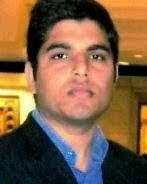
Though violence put forth the blind assertions of angst but often it appears with so much inhuman senselessness as shockingly been it executed today in Janakpur.The blast handled by the Janatantrik Terai Mukti Morcha in Janakpur caused the immediate death of Binod Sharan/Satya Narayan Jha, Ranju Jha(A promissing thespian in Maithili), Jhagru Mandal and Suresh Upadhaya besides leaving twenty-four other critically injured. After many hours of this unfortunate incident, the question remains unanswered, who represents the peoples of Madheshi region in Nepal? Time is for an immediate wake-up now to suppress those urges, which unnecessarily categorising this small nation into many blocks and giving the strength to the unwarrantably hostile groups working under the political guise.
As hailing from the Mithila region myself, I am in state of consistent inner confrontation, how such massive blast could take place at Ramanand Chowk in Janakpur, which has been for long had reputation of being one of the most vibrant cultural center of Nepal? Shock increases with undeniable realisation that this coward act was done by a nonsense fraction of Madhesh right based parties-terribly cruel with their endgame, the incredible and unjustifiable representation confusions created by these regional political fractions must be end now. The next revamp, which this incident has made essential that mainstream democratic Madheshi parties, must have to work with conclusive agendas under the national government instead over playing with the non issues.
Nepal's political transition is still being far from over, that's major cause of concern. Not less dangerous is its ramification over the desperate youths across the nation, who is simply loosing the healthy aspirations for the sake of easily gainable temporary stay in power through the deadly combine of violence and nasty propositions of regionalism. It's not that Nepal never had the wave of regionalism but the earlier divide of Madheshi-Pahadi was unlikely to be so acute and chronically processed as it's in the course of action now. When I first heard about the blast, at maximum, I thought for a very low scale casualty, but the land of Sadhu/sage turned to be the death bead like never before, alas!
Among the Nepal's major urban spaces, Janakpur had for long maintained its specialties of being a center of historical connect. From the time immemorial, many myths and the living traditions have been strengthening its significance as once the capital of Mithila and later as the place of great cultural confluence as undoubtable symbol of India's shared past with Nepal. Personally, I have seen the gradual decline of functional good spirits from Janakpur in my visits in 1991,1999, 2003, 2006,2007 and last in 2008-as a seven year old child, my memory is still vivid how this city and Nepal at large was in state of equilibrium in 1991, which is no longer remained the same.
I saw Ranjhu Jha acting in the major Maithili plays around my familiar places and also later in Delhi’s cultural hub, Mandi house, never thought I would remember her for anything else than her immortal acting for meaningful plots but unfortunately now I have to, in a very tragic atmosphere that shook me and the all who heard about this incident. My sincere tributes for her and all those affected by this massive shock, besides I also wish to see any overplay of politics out from the Madhesh and Nepal. Only by which, the nation could converge with the proper democratic culture, and people’s lives would be stopped getting undermined by the nasty political dramatists who are in any case good for nothing-politics must be sustained but not on the cost of lives!
Atul Kumar Thakur
New Delhi, May1st, 2012, Tuesday
Email: summertickets@gmail.com
Monday, April 30, 2012
Sunday, April 29, 2012
Revisiting Tagore
Amit Chaudhuri’s essays on Rabindranath Tagore delineate the former’s intimate relationship with an iconic poet and intellectual whose life and works have (and continue to) inspire generations of scholars and readers
Book Review: Non-fiction/On Tagore: Reading the poet today by Amit Chaudhuri, Penguin/2012, 178 pp; Rs399 (Hardback)
The beauty of Amit Chaudhuri’s essays on Rabindranath Tagore lies in how they allow the reader a tantalising glimpse into the rich textures that construct the broad views that have governed the works of one of the world’s most celebrated thinking men. This volume leaves an overarching effect in clearing the fog about how Tagore was great in many spheres. Not due to his plutocratic background and plumy exposures — a fact corroborated by Job Charnok’s foundation of the city of Calcutta — during the peak of colonialism, but because his writing can be seen intricately, through different prisms without ever deviating from his core belief which was imbibed in universalism. This wistful thinking is probably the centre of all under and over stated freestyle views on the life and literature of Tagore.
Even if one has, perchance, encountered one or all five essays in the collection independently, reading them in sequence helps the reader savour and recuperate the ‘essential’ Tagore. An eminent literary scholar, critic and musician of high senses, Amit Chaudhuri’s ideas on the writer should be treated as his subjective point of view; an independent observation on Tagore as opposed to any discourse on interventionist blocks active in propagating alternative vision on Bengal’s renaissance and India’s decisive struggle against the colonial rule. Chaudhuri has promptly confessed, in the foreword of this book, how carefully his relationship with Tagore began: First by listening to the renditions of rabindra sangeet by great vocalists such as Subina Roy and his mother Bijoya Chaudhuri and it was later that he becoming serious about Tagore’s literary works. For long, however, W.B. Yeats has remained his favourite poet and in Bengali, it has been Jibanananda Das (not Tagore); something that has remained a subject of sublime argument between Chaudhuri and his uncle, as it apparent through the former’s essays.
The first essay, ‘The Anniversary Begins,’ first published in The Guardian/2011 , strengthens Chaudhuri’s stand that a writer is not essentially attracted to another writer of great merit out of populist fascination; rather it is the importance of his work that brings them closer. His honest perspectives on Tagore’s persona and overall presence within the Bengali psyche is (slightly less but still) very much affiliated with Universalists without any boundaries. This essay therefore espouses the boundary less emotion associated with Rabi Thakur/Tagore and what his 150th anniversary meant for the world.
The Nature Of Poetics
The oldest essay of this collection, ‘The Flute of Modernity’, first appeared in The New Republic in 1998. It overtly explores Tagore through his personal quest during the process of writing Gitanjjali while elaborating on his intellectual on impact British artists and writers such as William Rothenstein and W. B. Yeats. As a poet who achieved unprecedented heights in the history of mankind, Tagore emphatically shaped a new overview about the wisdom of the East. Chaudhuri opines that, “Tagore’s poem is an implicit tribute to an intellectual ambience and the possibilities it created; and it also a tribute to the secular, silent act of reading, which, in that culture, had become a significant activity whereby old texts, and the printed page, were being placed in new contexts, and reassessed and reimagined”.
The next essay solves the puzzles surrounding what inspired Tagore to be close to nature and verses so keenly? In his formative stages, especially around the time he composed the Bhanusingher Padabali, the music of medieval Bengali poet Chandidas and Maithili-Bengali poet Vidyapati charmed him immensely. But it’s also equally true that Tagore lived and observed modernism from close quarter and this way; his concern proliferated in diverse dimensions of life. Leading social historian In Ram Chandra Guha’s view on Tagore, “If Tagore had merely been a ‘creative artist’; perhaps one would not have found him put to rank alongside those other builders of modern India”, draws his unique persona in terms of the multiple efforts he had relentlessly made in his lifetime. Tagore’s humbleness always exposed him as a creative artist in consistent effort contrasted him from his very early acceptance into a worldwide figure.
‘A Pact with Nature’ was earlier published in The London Review of Books in 2006 and examines Tagore’s leaning towards nature as a close part of his action whose impact is visible in his works of literature, art, institution making and as well as his life. This essay has a very wide canvass that sufficiently absorbs the thematic debates from oriental lingual emancipation to the profoundness of the Upanishads as a distinct source for knowing India’s past. Also, this work focuses on the mystery about Tagore’s decision to translate Gitanjali into English, which he only used with a degree of insecurity in his own confession. Though Ezra Pound’s slapping of “boomed by the pious non-conformist” for Tagore’s Nobel Prize in literature was the height of enthusiasm and insecurity among the figures of literary London towards the arrival of a man outside of Occidental terrains. This essay is very relevant for understanding the cultural whims and fancies between the East and West, and lastly the synthesis compromised across different periods.
The fourth piece of the volume, ’Poetry As Polemic’ was first written as the foreword for Harvard University Press and later for Vishva Bharati’s Essential Tagore in 2011. Tagore’s drive for experiment was relentless and many conclusions inundated through those painstaking actions were simply turned down by the poet himself as transitory accomplishments. Hence, his works are hard to be seen only in bounded framework, rather they must be reckoned with consideration of a “larger interest”, evident in Tagore’s all work. Bengalis seldom admire both Satyajit Ray and Ritwik Ghatak at the same time but the influence of Tagore is common on both and they have cinematised it well in their immortal works. Ray adaptation of Tagore’s novels such as Ghare Baire, and novella, Nashtanirh (Ray’s Charulata) among others and celebrated worldwide, while Tagore’s poetry influences a number of Ghatak’s movies. Infact, he immortalised Meghe Dhaka Tara (The Cloud Covered Star) through portraying amazing landscape and multi-vocal, performing entity actively indulge in the desire of existence at the end of cinema. That sense was drawn from Tagore which denies “landscape” only as serene, indifferent, permanent background to human endeavour. This essay is short, lucid and worth of calling essential reading on Tagore.
Tagore always enjoyed the intrinsic struggle of art very intimately and entwined those conflicts into different realms of life. Amit Chaudhuri’s elaborates that “Tagore knew this, and it’s from his intimacy with solitariness and secrecy that his extraordinary language and his transformative vision of the world emerged — he often seems to make this solitary self an interlocutor, in a tone at once self-flagellating and accusatory; in India, Tagore is viewed as a sort of Guinness Book of World Record holder” The last essay of the book, ‘Nothing But A Poet’, first published in The Hindustan Times, 2010, tries to deciphers the versatility of this unparalleled man.
Legacy Of Thought
We Indians seem to have a masterly command in forgetting our own traditions and being part of them. Tagore’s criticism also suffered similar flaws both at home and abroad. Amit Chaudhuri’s voices the concern that, “from Vidyapati (great Maithili poet of14th century AD, of whose songs Tagore once composed a pastiche) to Tagore, there’s an immense movement; but of what kind?” This brilliantly covers the historical series of negligence towards the discipline of literature.
At this eventful juncture of modernity, India needs to look back towards its own thinkers rather than surmising on absentee philosophers from different geographies of the world. The time is ripe for taking Tagore’s vision in completeness and expelling all virulent perceptual divisions. These five essays stand to make a huge difference in high standard debates on Tagore. As always, Amit Chaudhuri’s contribution in literature is path breaking and challenges the occupied territory of (many) stubborn self styled experts.
Atul Kumar Thakur
April 29, 2012, Sunday, New Delhi
Email: summertickets@gmail.com
(Published in Business World, April17, 2012)
Labels:
amit chaudhuri,
Atul Kumar Thakur,
Bengal,
biography,
Book Review,
Cinema,
essays,
Music,
on tagore,
Penguin,
rabindranath tagore
Family Matters!
Book Review: Fiction/Tread Softly by Nandita Bose, Rupa, 198 pp; Rs195 (Paperback)
The respect for literary structure is under severe attack with the upsurge of informal popular book productions. These popular books are by large hard enough to be taken like the factors of literary emancipation or the stimuli for healthy creative engagements. At on a turn of major changes, is it possible finding a new kind of writing that could be placed in between the pure literature and popularly delivered fiction? In “Tread Softly”, the debutant Nandita Bose seems showing the similar way with abiding to the basic literary tenets and without making it a restricted reading only for the purely conscious readers, which also keeps the populist tributes alive inside her overtly feminized plot.
This well written novel on an unusually tough family story sets high scores from the point of view of poignant narratives though slightly escapes diversifying its fold to co-relate the development of themes with the outside world. Whatever the appearances of the outside world, this novel visualises are shadowy in nature and suggests their approaches forwardly as interfering and distortive-these worldly oddities are presented profoundly but what lacks the much needed broadening of images in multifaceted terms. The novel centrally walks with its protagonists-Paroma and her replacement groom, Abhinn who are by the nature of their marital circumstances and later failure to redefine it falls to the level of breakup before the values and emotions timely return and kept the family in union.
In eastern cities like Calcutta or Jamshedpur or even in the rural areas of these sides, such stories are not unheard off, so the depiction of these two places, their relative asymmetric characteristics have found a proper shape. If considering the delineative aspects on mapping “psyche” and “acts” of characters, Nandita clearly has an edge in embodying her female protagonist so natural and close to the real life. Though, even with citing all the wrongness of Abhinn, his character could have build less irreverent, which would have made the end in novel more justified when the same man reappears changed and much credible!
Like many social institutions, in the recent past, family too underwent the major fluctuations with growing integration among geographies and culture. Though the theme and mandate of this book is only remotely entitled with those broadly categorical dynamics but at some stages, the complications inside the lives of two representatives characters of the novel hardline the essentiality of interruption from the external participants if the basic of bond, bound to be out of equilibrium. The broken threads lastly can be collected and reshape only by the values, which the crux of this novel reaffirms.
A piece of literature like this has ample chances of letting a natural progress of the sequences besides inserting some creative overtures possible. Though, a family can’t be seen with the superlative evaluation of its either parts but some weightage could be drawn asymmetric in special cases-the way Nandita does extra delineation on the family raw from a feminist angle. Somehow, this can’t be taken superficial as the reasons let solid allowance on this behalf. In the basic framework, a woman supposed to be on the receiving end in unfortunate family clashes but also the stability comes from her side-sacrifice or standing with equal height normalizes the situations but the both cases are still not for taken as “buzz”. This book will be fine for the readers who care for formal expressions on the living stories of familiar lives-sometime good, sometime stark but never escapable!
Atul Kumar Thakur
April 29, 2012, Sunday, New Delhi
Email: summertickets@gmail.com
Sunday, April 15, 2012
India & China- The Next Question?
Book Review: Non-fiction/ India& China: The Battle between Soft and Hard Power by Prem Shankar Jha, Penguin/Viking, 398 pp; Rs599 (Hardback)
Prem Shankar Jha belongs to that class of journalists who could turn meticulous empirical observation with very high scholarship for his analysis and perceptions. In his journalistic career spanning over five long decades, he has been proving his descript authority in various areas, most noticeably in foreign affairs. With increasing his concentration on China, in 2010, he published two books on China's development. The first, “Managed Chaos,” dealt with the fragility of the Chinese miracle-so far it was indeed being taken literally but this book shaped the opinion for a more radical truth about the pros and cons of China’s extractive system.
Much before Daron Acemoglu and James Robinson’s bestselling book-Why Nations Fail, Mr. Jha had proved that China’s crouching and India’s hidden status is not going to be long lasting, as soon the democracy would give India a much sharper edge over China’s hard and fast systemic solipsism! He uncovered many paper trails to placate the well trodden belief that China is destined to grow indefinitely at 10 per cent. He identified the impeding areas that may hamper sustained growth but ofcourse without scarifying the deserving extol where China has made commendable progress. Most remarkably, he attempted and succeeded well to establish the complex web of social, political, and economic factors that shape and pose challenges for China's growth.
The second book internationally published as “Crouching Dragon, Hidden Tiger: Can China and India Dominate the West?” and later with present title for Indian subcontinent as “India& China: The Battle between Soft and Hard Power “dismissed the turpitude notions about China having an edge over India and refereed that both have different problems at the bottom level. However, he makes it clear that many similarities in their trajectories of growth and experiences have remained unnoticed under variant ideological preoccupations in comparative dealing of these two giant powers. The title, “The battle between soft and hard power”, is in no manner themed forwardly as basic contention in this book, rather it exemplifies the two different political systems under these nations are dwelling and their fateful ways lying ahead.
The book is documented into parallel parts that deal individually with China and India, tracing the history of their metamorphosis from closed and mixed economy into market economies and in the process revealing their commonness. Jha produce a unique thought how, “contrary to universal belief, India did not embark on its reforms in 1991, all of 13 years after China, but around the same time”, with Indira Gandhi’s 1980 government and later Rajiv Gandhi’s government marking the beginnings of a liberalized regime from the command economy. Both India and China moved with a gradualist approach on reform, which under the intense pressure of rapid industrial openness later caused for the wave of corruption in governments.
In initial four chapters, comparisons and contrasts between the two countries are the focus area and that makes this book very insightful. Knowing about the “intermediate class” from this book would be helpful in searching the factors behind the accelerated growth in China, but similar observation which could have made easily, is missing on India. The rest chapters are like case based studies on China and India, whose values would be ageless as such work of deep concentration reappears not more often.
This book is a timely intervention, to unleash the actuality of crisis ridden west’s overt exuberance for world’s most happening economies-China and India or CHINDIA. In retrospect, it was an attempt by a leading investment company, Goldman Sachs, to lure investments into Asia at a time when the United States market was sagging. As Jha says, “projections of China's and India's future, such as those made by Goldman Sachs in its BRICs report, … fail to take into account the fact that the two countries are not simply undergoing rapid economic growth, but undergoing transformation into capitalist states.” Hence his critical views put forth a cautionary discourse for both nations to address their unresolved bilateral issues if really they have to reorientalise the existing economic-strategic order of the world.
The growing strength of local authorities is leaving mixed effects on the growth in China; but proportionally, more it has benefitted than tolling any big damage. Also it has not weakened the dominant centralized core of Beijing, as it became evident when China put through very actively a massive stimulus programme of $590 billion after the financial crisis. Though, Jha has not appreciated the role and strength of the Communist Party of China (CPC) and there may have some reasons, specifically in broad context. On India, Jha argues that the decline of Congress, the advent of coalition politics in late 1980’s, and the Supreme Court's decision on the Centre's powers under Article 356 of the Constitution have weakened the state-that’s to an extant true though existence of state is still very strong in India and no reason is visible for its seizure in foreseeable future.
Jha’s insights on the real scores of China’s growth are a pathbreaking contribution, which suddenly allows readers to get free from the abundantly stocked fancied views on the same matters. Moreover, he leads readers into the fateful years of China’s policy reform in the 1980s, when the foundations of China’s cadre capitalism were established. Jha paints a genuinely bleak picture of a troubled state with local officials increasingly running out of control, given their power to take loans from banks free of the responsibility to pay them back. A very right observation that much of the foreign investment-fuelled growth witnessed by the country, argues Jha, is a house built on sand.
A finding of this book is quite havocking regarding the dualist temptations of Chinese society towards the Chinese Communist Party-there seems marked difference in actual internal feelings and its expressions. It seems astonishing, how alike elites and working classes publicly announces their sycophant loyalty for the centralized role of Communist party. Notwithstanding an ideological attachment that shows such restricted voices as the side effects of China’s closed polity, which the author of this book rationally presents as China’s major impediment in smoothly sustaining its impressive growth for long. Not surprising, if with its rigidly monopolized political system, Beijing is usually able to successfully continue its strong political authoritarianism even with its high economic growth.
But Premshankar Jha does admit that while China’s leaders are aware of the dangers, and on the constant look-out for solutions to contain social discontentment, India’s political leadership is “thoroughly unaware” of the dangers that lie ahead. He pragmatically appears to favour India’s chances given its democratic system and the existence of institutions consolidated by the democratic ethos that could manage social conflict. Mr. Jha makes it clear that India has some strong advantage over China with its democracy but in its current state, things would be difficult for India to compete China’s enterprising capacity.
In the near future, as the major constituents of BRICS and even beyond it, both the nations would compete in economic race where the fair political system would decide the real courses of action. This book should be in the must read priority of all those who continue to struggle to reckon and analyse the fundamentals of liberalized growth in India and China. With this second major work on the India-China project, gifted narrator Premshankar Jha naturally stands as the most authentic source of knowledge on the world’s two most diversely complex nations!
Atul Kumar Thakur
April 16, 2012, Monday, New Delhi
Email: summertickets@gmail.com
Prem Shankar Jha belongs to that class of journalists who could turn meticulous empirical observation with very high scholarship for his analysis and perceptions. In his journalistic career spanning over five long decades, he has been proving his descript authority in various areas, most noticeably in foreign affairs. With increasing his concentration on China, in 2010, he published two books on China's development. The first, “Managed Chaos,” dealt with the fragility of the Chinese miracle-so far it was indeed being taken literally but this book shaped the opinion for a more radical truth about the pros and cons of China’s extractive system.
Much before Daron Acemoglu and James Robinson’s bestselling book-Why Nations Fail, Mr. Jha had proved that China’s crouching and India’s hidden status is not going to be long lasting, as soon the democracy would give India a much sharper edge over China’s hard and fast systemic solipsism! He uncovered many paper trails to placate the well trodden belief that China is destined to grow indefinitely at 10 per cent. He identified the impeding areas that may hamper sustained growth but ofcourse without scarifying the deserving extol where China has made commendable progress. Most remarkably, he attempted and succeeded well to establish the complex web of social, political, and economic factors that shape and pose challenges for China's growth.
The second book internationally published as “Crouching Dragon, Hidden Tiger: Can China and India Dominate the West?” and later with present title for Indian subcontinent as “India& China: The Battle between Soft and Hard Power “dismissed the turpitude notions about China having an edge over India and refereed that both have different problems at the bottom level. However, he makes it clear that many similarities in their trajectories of growth and experiences have remained unnoticed under variant ideological preoccupations in comparative dealing of these two giant powers. The title, “The battle between soft and hard power”, is in no manner themed forwardly as basic contention in this book, rather it exemplifies the two different political systems under these nations are dwelling and their fateful ways lying ahead.
The book is documented into parallel parts that deal individually with China and India, tracing the history of their metamorphosis from closed and mixed economy into market economies and in the process revealing their commonness. Jha produce a unique thought how, “contrary to universal belief, India did not embark on its reforms in 1991, all of 13 years after China, but around the same time”, with Indira Gandhi’s 1980 government and later Rajiv Gandhi’s government marking the beginnings of a liberalized regime from the command economy. Both India and China moved with a gradualist approach on reform, which under the intense pressure of rapid industrial openness later caused for the wave of corruption in governments.
In initial four chapters, comparisons and contrasts between the two countries are the focus area and that makes this book very insightful. Knowing about the “intermediate class” from this book would be helpful in searching the factors behind the accelerated growth in China, but similar observation which could have made easily, is missing on India. The rest chapters are like case based studies on China and India, whose values would be ageless as such work of deep concentration reappears not more often.
This book is a timely intervention, to unleash the actuality of crisis ridden west’s overt exuberance for world’s most happening economies-China and India or CHINDIA. In retrospect, it was an attempt by a leading investment company, Goldman Sachs, to lure investments into Asia at a time when the United States market was sagging. As Jha says, “projections of China's and India's future, such as those made by Goldman Sachs in its BRICs report, … fail to take into account the fact that the two countries are not simply undergoing rapid economic growth, but undergoing transformation into capitalist states.” Hence his critical views put forth a cautionary discourse for both nations to address their unresolved bilateral issues if really they have to reorientalise the existing economic-strategic order of the world.
The growing strength of local authorities is leaving mixed effects on the growth in China; but proportionally, more it has benefitted than tolling any big damage. Also it has not weakened the dominant centralized core of Beijing, as it became evident when China put through very actively a massive stimulus programme of $590 billion after the financial crisis. Though, Jha has not appreciated the role and strength of the Communist Party of China (CPC) and there may have some reasons, specifically in broad context. On India, Jha argues that the decline of Congress, the advent of coalition politics in late 1980’s, and the Supreme Court's decision on the Centre's powers under Article 356 of the Constitution have weakened the state-that’s to an extant true though existence of state is still very strong in India and no reason is visible for its seizure in foreseeable future.
Jha’s insights on the real scores of China’s growth are a pathbreaking contribution, which suddenly allows readers to get free from the abundantly stocked fancied views on the same matters. Moreover, he leads readers into the fateful years of China’s policy reform in the 1980s, when the foundations of China’s cadre capitalism were established. Jha paints a genuinely bleak picture of a troubled state with local officials increasingly running out of control, given their power to take loans from banks free of the responsibility to pay them back. A very right observation that much of the foreign investment-fuelled growth witnessed by the country, argues Jha, is a house built on sand.
A finding of this book is quite havocking regarding the dualist temptations of Chinese society towards the Chinese Communist Party-there seems marked difference in actual internal feelings and its expressions. It seems astonishing, how alike elites and working classes publicly announces their sycophant loyalty for the centralized role of Communist party. Notwithstanding an ideological attachment that shows such restricted voices as the side effects of China’s closed polity, which the author of this book rationally presents as China’s major impediment in smoothly sustaining its impressive growth for long. Not surprising, if with its rigidly monopolized political system, Beijing is usually able to successfully continue its strong political authoritarianism even with its high economic growth.
But Premshankar Jha does admit that while China’s leaders are aware of the dangers, and on the constant look-out for solutions to contain social discontentment, India’s political leadership is “thoroughly unaware” of the dangers that lie ahead. He pragmatically appears to favour India’s chances given its democratic system and the existence of institutions consolidated by the democratic ethos that could manage social conflict. Mr. Jha makes it clear that India has some strong advantage over China with its democracy but in its current state, things would be difficult for India to compete China’s enterprising capacity.
In the near future, as the major constituents of BRICS and even beyond it, both the nations would compete in economic race where the fair political system would decide the real courses of action. This book should be in the must read priority of all those who continue to struggle to reckon and analyse the fundamentals of liberalized growth in India and China. With this second major work on the India-China project, gifted narrator Premshankar Jha naturally stands as the most authentic source of knowledge on the world’s two most diversely complex nations!
Atul Kumar Thakur
April 16, 2012, Monday, New Delhi
Email: summertickets@gmail.com
Wednesday, April 4, 2012
Tales&Fables of Rajtarangini!
Book Review: Non-fiction/Passion, Power, Perfidy: Tales& fables based on Kalhan’s Rajtarangani by Pl.D.Parimoo, Acme Books/2012, 178 pp; Rs295 (Paperback)
This book essentially aims to make a crucial period of history in Kashmir comprehensible through relying on an important yet ambiguous work-Rajtarangini. Rajtaringini(The River of Kings) presents the broad historical chronicle of north-western Indian subcontinent, particularly about the royals of Kashmir. This was written in Sanskrit by a Kashmiri Pandit, Kalhana in 12th century CE.
P.Parimoo’s book is based on the tales and fables of Kashmir’s most important book which generally records the noticeable events and landmarks of Kashmir, but hundred and twenty verses of Rajtarangini describe the misrule prevailing in Kashmir during the reign of King Kalash-son of King Ananta Deva of Kashmir. Although the earlier books, including of Rajtarangini are inaccurate in their chronology, they still provide an invaluable source of information about early Kashmir and its neighbors in the north western parts of the Indian subcontinent.
This work demonstrates an amicable way out to live between unconfirmed historical narratives and its optimum rationalisation from a point of view of non-academic historian. Parimoo has done well with his chosen chunk from the source, Rajtarangini-he covered all the eight Tarangs to investigate, contextualize those main points into right historical order and finally seems letting this old text a sort of modest lease. This is not less than an accomplishment, earned through hard conceptualisation and getting acquainted through it over a long period of time. Remarkable is the fact, author of this book doesn’t hailing from an academic section, rather he entered the fray of historiography from a career in corporate.
Kalhana lived in a time of political turmoil in Kashmir, at that time Kashmir used to be a very pertinent centre of scholastic tradition despite the incessant ire of barbarism coming from external interferences. Kalhana was an educated and sophisticated Kashmiri Pandit, well-connected in the highest political and scholastic circles. His writing exudes literary height of diverse knowledge, groomed in his unique and sublime style. Kalhana was a poet at large; instead confusing-it’s much better knowing him with this tag. The primary motive behind the Rajataringini was to provide Sanskrit account of the various monarchies of Kashmir, prior to the advent of Islam. It reminds an appropriate comparison between Persia’s Shahnameh and the Rajataringini of Kashmir-both have striking similarities on many counts.
The author of the Rajtarangini had compiled the history of valley’s rulers from ancient patches-from the epic period of the Mahābhārata to the reign of Sangrama Deva (c.1006 CE), until the advent of Muslim rule. The list of kings goes back to the 19th century BCE. Some of the kings and dynasties can be identified with inscriptions and the courtesan histories that periodically included the Kashmir valley, but for knowing the long periods, Rajtarangini remains the only source. The Rajtarangini consists of 7826 verses, which are divided into eight books called Tarangas (waves).
So far, very few follow-up writings happened on Rajtarangini, this book to a large extant will bridge the gap in this regard. Kalhaṇa’s account of Kashmir begins with the legendary reign of Gonarda, who was contemporary to Yudhisthira of the Mahābhārata, but the recorded history of Kashmir, as retold by Kalhana begins from the period of the Mauryas. Kalhana’s account also express that the city of Srinagar was founded by the Mauryan emperor, Ashokaa, and then Buddhism reached the Kashmir valley during the same period. Henceforth, Buddhism spread to several other adjoining regions including Central Asia, Tibet and China.
At a point in Rajtaringini, Kalhana says, that the valley of Kashmir was formerly a lake. This was drained by the great rishi or sage, Kashyapa, son of Marichi and Brahma, by cutting the gap in the hills at Baramulla (Varaha-mula). Vraha (in Kashmiri Boar), Mulla (in Kashmiri Molar).Parimoo has also stated it in metaphor during his self styled narration of Rajtarangini through this book, those who wants to go in deep of Kashmiri history would surely feel the deepness of historical inquisitions imbibed in the book very useful and scintillating.
After twenty years of displacement of Kashmiri Pandits from the Kashmir valley, slowly but very genuinely, these genuine stakeholders of Kashmir now trying to figure out their history in ancient time to co-relate it with the modern fragmentation of collective psyche that made this heaven a fearsome terrain. Historical inquiries are for reestablishing the once well acknowledged truth, that Kashmir was the most secular place in Indian subcontinent and what happened wrong there, shaped by the effects of lethal adventures of politically manipulated actions.
Two decades back, Kashmir lost its long tradition of syncretism under the ire of malicious fundamentalism projected from the outside of boundary-shockingly; neither the local socio-cultural bond among the inhabitants nor the commitments of secular Indian union could save the tragical displacement of innocent Kashmiri Pandits from the valley. Now, Pakistan is no longer has any credential among the rest Kashmiris as well, their thirst is now to retrieve the nativity they lost with the departure of Pandits-in the detailed search, most of those who hailing from the valley have earnest desire to get back the old life. Is time ripe now to forget the nightmares?
Absolutely yes, if the Kashmiri’s living outside of the valley for last two decades could still entitle them with the rich Kashmiriyat, and those who left in valley have stronger disenchantment with the rogue political/fundamentalist elements than ever in last two six decades, it seems the old days are bound to return in Kashmir. On Kashmir, Kashmiri’s should have better right to frame their future course under the defined laws of Indian constitution, which is liberal enough to accommodate the all genuine aspiration of a mass Kashmiri. Parimoo’s book and many other writings in both fiction and non-fiction domain from the Kashmiris will strong appeal for the rationalisation of action and emotion for a better world without malice and cunningness.
Both symbolic and in real terms, Rajtarangini still has immense importance for common Kashmiris, so its fresh and stylized narratives coming through this book will be a valued gift for them-rest, scholars not attached with the geographical limitations too will find the work a real worth to involve!
Atul Kumar Thakur
April 05, 2012, Thursday, New Delhi
Email: summertickets@gmail.com
This book essentially aims to make a crucial period of history in Kashmir comprehensible through relying on an important yet ambiguous work-Rajtarangini. Rajtaringini(The River of Kings) presents the broad historical chronicle of north-western Indian subcontinent, particularly about the royals of Kashmir. This was written in Sanskrit by a Kashmiri Pandit, Kalhana in 12th century CE.
P.Parimoo’s book is based on the tales and fables of Kashmir’s most important book which generally records the noticeable events and landmarks of Kashmir, but hundred and twenty verses of Rajtarangini describe the misrule prevailing in Kashmir during the reign of King Kalash-son of King Ananta Deva of Kashmir. Although the earlier books, including of Rajtarangini are inaccurate in their chronology, they still provide an invaluable source of information about early Kashmir and its neighbors in the north western parts of the Indian subcontinent.
This work demonstrates an amicable way out to live between unconfirmed historical narratives and its optimum rationalisation from a point of view of non-academic historian. Parimoo has done well with his chosen chunk from the source, Rajtarangini-he covered all the eight Tarangs to investigate, contextualize those main points into right historical order and finally seems letting this old text a sort of modest lease. This is not less than an accomplishment, earned through hard conceptualisation and getting acquainted through it over a long period of time. Remarkable is the fact, author of this book doesn’t hailing from an academic section, rather he entered the fray of historiography from a career in corporate.
Kalhana lived in a time of political turmoil in Kashmir, at that time Kashmir used to be a very pertinent centre of scholastic tradition despite the incessant ire of barbarism coming from external interferences. Kalhana was an educated and sophisticated Kashmiri Pandit, well-connected in the highest political and scholastic circles. His writing exudes literary height of diverse knowledge, groomed in his unique and sublime style. Kalhana was a poet at large; instead confusing-it’s much better knowing him with this tag. The primary motive behind the Rajataringini was to provide Sanskrit account of the various monarchies of Kashmir, prior to the advent of Islam. It reminds an appropriate comparison between Persia’s Shahnameh and the Rajataringini of Kashmir-both have striking similarities on many counts.
The author of the Rajtarangini had compiled the history of valley’s rulers from ancient patches-from the epic period of the Mahābhārata to the reign of Sangrama Deva (c.1006 CE), until the advent of Muslim rule. The list of kings goes back to the 19th century BCE. Some of the kings and dynasties can be identified with inscriptions and the courtesan histories that periodically included the Kashmir valley, but for knowing the long periods, Rajtarangini remains the only source. The Rajtarangini consists of 7826 verses, which are divided into eight books called Tarangas (waves).
So far, very few follow-up writings happened on Rajtarangini, this book to a large extant will bridge the gap in this regard. Kalhaṇa’s account of Kashmir begins with the legendary reign of Gonarda, who was contemporary to Yudhisthira of the Mahābhārata, but the recorded history of Kashmir, as retold by Kalhana begins from the period of the Mauryas. Kalhana’s account also express that the city of Srinagar was founded by the Mauryan emperor, Ashokaa, and then Buddhism reached the Kashmir valley during the same period. Henceforth, Buddhism spread to several other adjoining regions including Central Asia, Tibet and China.
At a point in Rajtaringini, Kalhana says, that the valley of Kashmir was formerly a lake. This was drained by the great rishi or sage, Kashyapa, son of Marichi and Brahma, by cutting the gap in the hills at Baramulla (Varaha-mula). Vraha (in Kashmiri Boar), Mulla (in Kashmiri Molar).Parimoo has also stated it in metaphor during his self styled narration of Rajtarangini through this book, those who wants to go in deep of Kashmiri history would surely feel the deepness of historical inquisitions imbibed in the book very useful and scintillating.
After twenty years of displacement of Kashmiri Pandits from the Kashmir valley, slowly but very genuinely, these genuine stakeholders of Kashmir now trying to figure out their history in ancient time to co-relate it with the modern fragmentation of collective psyche that made this heaven a fearsome terrain. Historical inquiries are for reestablishing the once well acknowledged truth, that Kashmir was the most secular place in Indian subcontinent and what happened wrong there, shaped by the effects of lethal adventures of politically manipulated actions.
Two decades back, Kashmir lost its long tradition of syncretism under the ire of malicious fundamentalism projected from the outside of boundary-shockingly; neither the local socio-cultural bond among the inhabitants nor the commitments of secular Indian union could save the tragical displacement of innocent Kashmiri Pandits from the valley. Now, Pakistan is no longer has any credential among the rest Kashmiris as well, their thirst is now to retrieve the nativity they lost with the departure of Pandits-in the detailed search, most of those who hailing from the valley have earnest desire to get back the old life. Is time ripe now to forget the nightmares?
Absolutely yes, if the Kashmiri’s living outside of the valley for last two decades could still entitle them with the rich Kashmiriyat, and those who left in valley have stronger disenchantment with the rogue political/fundamentalist elements than ever in last two six decades, it seems the old days are bound to return in Kashmir. On Kashmir, Kashmiri’s should have better right to frame their future course under the defined laws of Indian constitution, which is liberal enough to accommodate the all genuine aspiration of a mass Kashmiri. Parimoo’s book and many other writings in both fiction and non-fiction domain from the Kashmiris will strong appeal for the rationalisation of action and emotion for a better world without malice and cunningness.
Both symbolic and in real terms, Rajtarangini still has immense importance for common Kashmiris, so its fresh and stylized narratives coming through this book will be a valued gift for them-rest, scholars not attached with the geographical limitations too will find the work a real worth to involve!
Atul Kumar Thakur
April 05, 2012, Thursday, New Delhi
Email: summertickets@gmail.com
Saturday, March 31, 2012
A Voyage through History
Book Review: Non-fiction/Current Affairs, Tinderbox: The Past and Future of Pakistan by M.J.Akbar, Harper Collins publishers, 376 pp; Rs399 (Paperback)
M.J Akbar is one among the iconic journalists, India has produced. He contributed immensely for the nation, both as journalist and writer of many remarkable books. His uncountable articles written in the last three decades and some of his books are very important contributions to contemporary history, which shows his early interests and inclinations for regular reading and meticulous independent research.
As having fortune to know him from close (mostly through reading and listening him for years), can say this humble man’s journey started in journalism through honest aspirations and he rose to the crest of success by following the path of sheer excellence. In his teenage and during college days in Calcutta, like many young writers, he started writing letter and later unsolicited articles to the editor, The Statesman (then Sunanda Datta Ray was the editor)-the concern of writings used to be varied, from the shortage of fish in Bada Bajar to jams at college street etc.
Like his many earlier works, this book is seriously focussed on the liberal and modernist discourses and also about their weak formulations in the specific context of Islam in South Asia. The book has written with deep research, so details are very nuanced and proliferated but without ever loosing the focus in narrative. This work needs high level of concentration from readers, as the history of Islam in South Asia and the genesis of Pakistan have entirely covered throughout its pages with degree of high seriousness. The liberal and enlightened impulses of the author is being evident through the kind of effort he has placed for sincerely documenting the every essential facts in the formation of Pakistan
As chronicler of historical journey of an idea, M.J Akbar gives Tinderbox the touch of first-hand authenticity on events, peoples, circumstances and the rigid mindsets that divided India. For finding the mainframe, his overtures spans a thousand years and with the both good and bad factors, such as-visionaries, opportunists, statesmen, tyrants, plunderers, generals and numbers of unkind theologians beginning with Shah Waliulah who propagated “theory of distance “to protect Islamic identity from then still socio-culturally dominant Hinduism.
The book gives unprecedented insight to know Shah Waliullah’s intervention in the 18th century not be taken complex, rather it should be seen for very much directed with virulent aims to corner the liberal discourses-for now, this book should be considered authentic before Shah Waliullah’s works in Arabic and Persian is translated into English. Contrary to this, Syed Ahmad Khan was a modernist in conviction but inconsistent with same in action, though his works overall benefitted emphatically to atleast elite sections of Muslims under the Aligarh Muslim University, an institution of repute he founded at the height of independence movement. Despite few historic blunders, he deserves to be known as modernist, strongly for his exemplary contribution in education and also for his sporadic display of political prudence that assisted in strengthening anti British sentiment at crucial times.
The chapters, Gandhi’s Maulanas and The Non-violent Jehad explores very well about the Gandhi’s agenda for common struggle to meet the independence and further looking forward for a free nation out of the narrow religious confinements. Akbar seems doing right act with balancing the events of past that bloodied the nation and drawn the unfortunate boundaries over its fate. It’s true that non-conformity of few Congress leaders was the prime reason for the formation of obstinate and lustful greeds among high rank Muslim League leaders, particularly with M.A.Jinnah, who had his own dreams formatting and deformatting under huge fluctuations.
Jinnah was the man, who stood with all anti-thesis possible against the Islam. He was religiously non-practicing, English speaking, consistent drinker and married with a woman of different religion-moreover, his best friends were Hindus/Parsis until he seen the dream for modern secular Pakistan that unfortunately never realised. Why Jinnah moved under the aegis of blind religious faith and later in remorse, after triumphing Pakistan is still need to be reckoned?
Here, the major competitor of Jinnah, Jawaharlal Nehru alone gives frank account of the reasons why the Congress and the Muslim League couldn’t settle rights lucidly implied in the Act of 1935. Nehru noted in 1938 that Jinnah didn’t show much interest in the economic demands of the masses and shown no concern for issues like-poverty and unemployment, damaging even minimum attempts to propose democratic reforms and modern economic policies.
The essay on contemporary Pakistan highlights the over grown impact of religious conventionalism burdening the architects of the new nation. Those practices are being continues under the confused mental state giving fillip to all imagined misnomer about anything beyond that “defined and restricted construct”. That somehow makes stronger the blockade of mind and progressive policies with equal vigour. The new chapter/ Dark Side of the Moon on the events leading up to the killing of Osama bin Laden and its realised and potential impact on US-Pakistan relations are giving the picture of Pakistan till present day. Tinderbox has enough space and erudite range of narration to cover the every possible details related to formation, shattering of beliefs to the level of chaos in Pakistan.
This is a sort of work, which is not written to subvert the existence of Pakistan. If this book will be read by readers with rational angle, sure the crux would be very worthy for them, as here is concern for a nation consistently moving towards instability-the leaders of global politics will be hardly show off their concern for this fall. So, at some point solutions and good thoughts have to be come and accepted from the homeland or neighbourhood-this work should be taken in the same context!
Atul Kumar Thakur
April 06, 2011, Friday, 2012, New Delhi
Email: summertickets@gmail.com
M.J Akbar is one among the iconic journalists, India has produced. He contributed immensely for the nation, both as journalist and writer of many remarkable books. His uncountable articles written in the last three decades and some of his books are very important contributions to contemporary history, which shows his early interests and inclinations for regular reading and meticulous independent research.
As having fortune to know him from close (mostly through reading and listening him for years), can say this humble man’s journey started in journalism through honest aspirations and he rose to the crest of success by following the path of sheer excellence. In his teenage and during college days in Calcutta, like many young writers, he started writing letter and later unsolicited articles to the editor, The Statesman (then Sunanda Datta Ray was the editor)-the concern of writings used to be varied, from the shortage of fish in Bada Bajar to jams at college street etc.
Like his many earlier works, this book is seriously focussed on the liberal and modernist discourses and also about their weak formulations in the specific context of Islam in South Asia. The book has written with deep research, so details are very nuanced and proliferated but without ever loosing the focus in narrative. This work needs high level of concentration from readers, as the history of Islam in South Asia and the genesis of Pakistan have entirely covered throughout its pages with degree of high seriousness. The liberal and enlightened impulses of the author is being evident through the kind of effort he has placed for sincerely documenting the every essential facts in the formation of Pakistan
As chronicler of historical journey of an idea, M.J Akbar gives Tinderbox the touch of first-hand authenticity on events, peoples, circumstances and the rigid mindsets that divided India. For finding the mainframe, his overtures spans a thousand years and with the both good and bad factors, such as-visionaries, opportunists, statesmen, tyrants, plunderers, generals and numbers of unkind theologians beginning with Shah Waliulah who propagated “theory of distance “to protect Islamic identity from then still socio-culturally dominant Hinduism.
The book gives unprecedented insight to know Shah Waliullah’s intervention in the 18th century not be taken complex, rather it should be seen for very much directed with virulent aims to corner the liberal discourses-for now, this book should be considered authentic before Shah Waliullah’s works in Arabic and Persian is translated into English. Contrary to this, Syed Ahmad Khan was a modernist in conviction but inconsistent with same in action, though his works overall benefitted emphatically to atleast elite sections of Muslims under the Aligarh Muslim University, an institution of repute he founded at the height of independence movement. Despite few historic blunders, he deserves to be known as modernist, strongly for his exemplary contribution in education and also for his sporadic display of political prudence that assisted in strengthening anti British sentiment at crucial times.
The chapters, Gandhi’s Maulanas and The Non-violent Jehad explores very well about the Gandhi’s agenda for common struggle to meet the independence and further looking forward for a free nation out of the narrow religious confinements. Akbar seems doing right act with balancing the events of past that bloodied the nation and drawn the unfortunate boundaries over its fate. It’s true that non-conformity of few Congress leaders was the prime reason for the formation of obstinate and lustful greeds among high rank Muslim League leaders, particularly with M.A.Jinnah, who had his own dreams formatting and deformatting under huge fluctuations.
Jinnah was the man, who stood with all anti-thesis possible against the Islam. He was religiously non-practicing, English speaking, consistent drinker and married with a woman of different religion-moreover, his best friends were Hindus/Parsis until he seen the dream for modern secular Pakistan that unfortunately never realised. Why Jinnah moved under the aegis of blind religious faith and later in remorse, after triumphing Pakistan is still need to be reckoned?
Here, the major competitor of Jinnah, Jawaharlal Nehru alone gives frank account of the reasons why the Congress and the Muslim League couldn’t settle rights lucidly implied in the Act of 1935. Nehru noted in 1938 that Jinnah didn’t show much interest in the economic demands of the masses and shown no concern for issues like-poverty and unemployment, damaging even minimum attempts to propose democratic reforms and modern economic policies.
The essay on contemporary Pakistan highlights the over grown impact of religious conventionalism burdening the architects of the new nation. Those practices are being continues under the confused mental state giving fillip to all imagined misnomer about anything beyond that “defined and restricted construct”. That somehow makes stronger the blockade of mind and progressive policies with equal vigour. The new chapter/ Dark Side of the Moon on the events leading up to the killing of Osama bin Laden and its realised and potential impact on US-Pakistan relations are giving the picture of Pakistan till present day. Tinderbox has enough space and erudite range of narration to cover the every possible details related to formation, shattering of beliefs to the level of chaos in Pakistan.
This is a sort of work, which is not written to subvert the existence of Pakistan. If this book will be read by readers with rational angle, sure the crux would be very worthy for them, as here is concern for a nation consistently moving towards instability-the leaders of global politics will be hardly show off their concern for this fall. So, at some point solutions and good thoughts have to be come and accepted from the homeland or neighbourhood-this work should be taken in the same context!
Atul Kumar Thakur
April 06, 2011, Friday, 2012, New Delhi
Email: summertickets@gmail.com
Essential Etiquettes
Book Review: Business-Self Help/Business Etiquette by Shital Kakkar Mehra, Collins Business/Harper Collins publishers, 2944 pp; Rs250 (Paperback)
Shital Mehra is the lone figure in Indian corporate, who thought sincerely to write and spread awareness on Corporate Etiquette...for last four years, she has been writing a column for Economic Times-Corporate Dossier on soft business skills and now with her book, she is allowing a chance to those who found lesser pastime to read pink papers quite regularly but never feel short to do business. For doing business, etiquette is very essential-that can be to an extant enhanced and optimized by reading this book and further keeping ideas in practice..!
I have been reading Shital Kakkar Mehra's columns on business etiquette in Economic Times/Corporate Dossier for years and one morning was glad to found her on my blog's followers list. Her book “Business Etiquette” deserves to be read by all aspiring/and established folks in corporate world, who either lacks collective demeanour or knows it little...and also by those who wants to confirm their actual hold on behavioral action.
Under the consistent bad fluctuations in global market, the overall morale of working class has badly deteriorated. Peoples management lacking the essence of functional etiquette from top towards the middle to the bottom order...here Shital’s book would be of great help in specially bringing some basic redefinition of much needed etiquette among influential authorities.I read the book and found it very-very useful, those who are less savvy with the ET, will be more benefited with reading Shital's take on business etiquette!
The new world of open trade has substantial binding over many paradigms of life. Under its guise, sphere of culture is also passing through a very new situation that was never so compulsive for an integrated existence-even though with many direct or indirect disclaimers. In the last two decades, world has changed rapidly and made peoples more and more close in terms with all things superly activated in search of accomplishing hyped anticipated commercial goals. By its effects, productivity being taken only in price terms and values are thought for sidelining…lately, such tendency marring even the lowest possible ethics in behavioural terms.
Here is need of immediate relooking on the sidelined essential etiquettes for making business sustainable and more decent that what it is in present form. Also, etiquettes should be known and practiced more as a universally applicable quality rather categorizing it among the many blocks. Hence, for practicing business etiquettes, learning social norms would be remain imperative. With subtle details, this work would endow its readers some very important basics of etiquettes…its prolongations from business to the different domains will be highly desirable.
Learning always helps in finding the maximum insights and in most of cases, it never comes too early or late. Only matters, how one take the success in commerce or in other field as for transitory sake or look for a stable landmark! In fair world, that up to extant being decided by etiquette…in alternative world, terms and conditions hardly exists-we all know this open secret!
Atul Kumar Thakur
March 31, 2012, Saturday, New Delhi
Email: summertickets@gmail.com
Shital Mehra is the lone figure in Indian corporate, who thought sincerely to write and spread awareness on Corporate Etiquette...for last four years, she has been writing a column for Economic Times-Corporate Dossier on soft business skills and now with her book, she is allowing a chance to those who found lesser pastime to read pink papers quite regularly but never feel short to do business. For doing business, etiquette is very essential-that can be to an extant enhanced and optimized by reading this book and further keeping ideas in practice..!
I have been reading Shital Kakkar Mehra's columns on business etiquette in Economic Times/Corporate Dossier for years and one morning was glad to found her on my blog's followers list. Her book “Business Etiquette” deserves to be read by all aspiring/and established folks in corporate world, who either lacks collective demeanour or knows it little...and also by those who wants to confirm their actual hold on behavioral action.
Under the consistent bad fluctuations in global market, the overall morale of working class has badly deteriorated. Peoples management lacking the essence of functional etiquette from top towards the middle to the bottom order...here Shital’s book would be of great help in specially bringing some basic redefinition of much needed etiquette among influential authorities.I read the book and found it very-very useful, those who are less savvy with the ET, will be more benefited with reading Shital's take on business etiquette!
The new world of open trade has substantial binding over many paradigms of life. Under its guise, sphere of culture is also passing through a very new situation that was never so compulsive for an integrated existence-even though with many direct or indirect disclaimers. In the last two decades, world has changed rapidly and made peoples more and more close in terms with all things superly activated in search of accomplishing hyped anticipated commercial goals. By its effects, productivity being taken only in price terms and values are thought for sidelining…lately, such tendency marring even the lowest possible ethics in behavioural terms.
Here is need of immediate relooking on the sidelined essential etiquettes for making business sustainable and more decent that what it is in present form. Also, etiquettes should be known and practiced more as a universally applicable quality rather categorizing it among the many blocks. Hence, for practicing business etiquettes, learning social norms would be remain imperative. With subtle details, this work would endow its readers some very important basics of etiquettes…its prolongations from business to the different domains will be highly desirable.
Learning always helps in finding the maximum insights and in most of cases, it never comes too early or late. Only matters, how one take the success in commerce or in other field as for transitory sake or look for a stable landmark! In fair world, that up to extant being decided by etiquette…in alternative world, terms and conditions hardly exists-we all know this open secret!
Atul Kumar Thakur
March 31, 2012, Saturday, New Delhi
Email: summertickets@gmail.com
Subscribe to:
Posts (Atom)