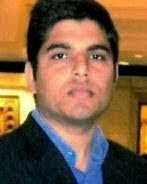
I have been sharing a very intense but imaginative sort of relationships with the city of joy (Calcutta); my charm for this bewildering city basically emerged from the Bangla literature, Music and great Cinematic movement which simultaneously spells bounded me for greater ties. Indeed I bestowed too much intellectually from the legacy of this city which imparts me fresh vision to see the things in greater context. Looking through the snapshots of modern Indian History, its become explicit that the city Calcutta possessed utmost importance in comprehending the actual intricacies of British colonialism in India.
The city founded by a British Job Charnok with motives to strengthen the base of East India Company in Indian subcontinent which later established the Calcutta as focal point of colonial expansion and largest commercial hub for at least two centuries.
As the acts of colonizers were not even handed for the interest of Indian Territory; it started getting ground among the local intelligentsia that enabled British Raj to shaping the circumstances in their selfish favors which was lasted only with the loss of Indian sovereignty; so, that immediately caused for a large chunk of dissociation from British standpoint which they enjoyed retrospectively.
Obviously Calcutta was the first Indian city which came so forwardly under the exposure of modern English education likewise major socio- cultural reforms also have been taken place in this city. So,very soon a new radical class was formed with candid expressions of modern enlightenment which was somehow very reverse from the British conception about these newly English literates. In this manner Calcutta and even entire Bengal earned the distinction of avantgarde in cultural awakening and formation of anti colonial sentiments across the country.
Establishment of Presidency College and further the Calcutta University radically changed the outlook of its academic associates which eventually left dual effects on the fortune of British Empire although British educationist became able to create a pool of intelligence in their favour; Michael Madhusudan Dutt, a bright alumni of Hindu College could be a formidable example in this regard but the wave of nationalism was much stronger against the hegemonic tendencies of Colonizers.
In later period disillusionment from such cultural fabrication very pragmatically enhanced the plight of freedom seekers; even the intellectual sycophants like Michael Madhusudan Dutt had entirely got away from colonial impressions and returned back to his home land in completely new incarnation where he penned numerous adorable sonnets in Bengali.
But in later course Calcutta got two major setbacks by first the division of Bengal in 1905 and transfer of the capital from Calcutta to Delhi in 1911 which further jeopardized the previously held prominence of Calcutta, even though the city kept playing the active role in freedom movement. In post independent phase Calcutta struck with the slump development oriented framework from both the major ruling governments of Congress and Left parties; its eventuality appears very lucid by passing through this city which completely lost its edge in growth momentum.
In meantime West Bengal also gone through many socio-economically generated disruptions like, Naxalbari movement and later Maoism which grasped untimely the thousands of best educated lives. Advent of Left parties in 1970’s was an implication of such chaotic state of affairs, initially great hopes persisted in their promises but very few things could actually materialized in positive way.
It’s true those in initial years, CPI (M) led government did some commendable work for land reform and law and order situation but such more work couldn’t be sustained in further time. Politically situation in West Bengal is really very grim since both the ruling and opposition sides reflects their intention only for authoritarian lust instead the betterment of greater common goods. By the effect Calcutta and even entire West Bengal today gravely lagging behind in development indexes.
A very political atmosphere is urgently imperative to short out these chronic maladies of governance and in boosting the morale of city dwellers towards their great past. Today Calcutta needs a radical improvement in its infrastructural capacity which is hardly suffice presently to carry on the extended load of modern economy; city’s architectural marvels are today waiting for same considerations.
Despite such all odds Calcutta is still worth of attention for various reason; even today city stood with its great culture of intellectual tradition and respect for learning. The city Calcutta immensely contributed in the shaping of modern India and up gradation of Nationhood, of course Calcutta could proudly honoured by the history of hosting intellectuals like Rabindranath Tagore who not only infused vibrancy in West Bengal albeit his charisma spread universally across the globe.
Twentieth century also witnessed the numbers of scion emerged in different fields from this city; work of Mahasweta Devi, Sunil Gangopadhaya, Badal Sirkar , Amitav Ghosh,Amit Chaudhuri etc presents very alluring introspection of Calcutta’s city life.
But it’s most remarkable portrayal being evident from the great Bengal movement of Cinema with hard efforts from Cinema makers like Satyajit Ray, Ritwik Ghatak, Mrinal Sen, Vimal Roy, Rishikesh Mukherjee etc. They infused their best constructive energy to raise the causes of Calcutta; Cinemas like “Do Bigha Zameen” (Bimal Roy), “Meghe Dhaka Tara” and “Bari Theke Paliye” (Ritwik Ghatak),”Mahanagar” and “Charulata” (Satyajit Ray), and many magnum opus work of Mrinal Sen are vehemently exposing the diverse facades of Calcutta’s urban life. It could be a matter of solace that city still having some very great names in different domains.
In my lone visit to this city in September 2007, I frequently came across the déjà vu situations besides eureka moments as well, such things happened in strong imaginative relationships to any particular subject; in my three days in Calcutta, I directly corresponded to this city and done so many productive acts.
Like, moving on the street of Esplanade and Park Street, Sit for long hours in Victoria Memorial, spent some time on the bank of Ganga, and Involved in a shopping spree for Panjabi Kurtas and Bangla taiint sarees in Tantuja shop at Esplanade, commuted in metros, tram and buses (From Mullick Bazar to BT Road) and most notably I scanned the Asiatic Societies very precious Library to see some of treasures from histor.Here I abled to see the manuscripts of most precious work in Maithili literature ( “Varna Ratnakar” by Jyotireshwar Thakur , 13th ce4ntury AD) ; alas!, I couldn’t see the National Museum and Victoria Memorials Museum due to weekly holidays; this remain a regret for me during this trip.
Indeed I feel very closer with this city because of its persistence with great intellectual and cultural tradition which makes it especially unique. A song of a differently abled beggar (In a bus) is still vivid in my mind ...”Amar Juger Nai Thicker Re Bandhu” (This is Not Our Age, Brother); for a while it resembled me some relationship with this city, but I had emphatic wish for a changed fortune of city and its residents. I would wish to see Calcutta in my next visit as genuine City of Joy with free from ironies.
Atul Kumar Thakur
24th July 24, 2009, New Delhi
atul_mdb@rediffmail.com
Showing posts with label Calcutta. Show all posts
Showing posts with label Calcutta. Show all posts
Friday, July 24, 2009


Friday, April 10, 2009
Ritwik Ghatak : A Relentless Maverick
In the last quarter of year 2008, Cine club of India Habitat Centre organized a screening of Ritwik Ghatak’s Meghe Dhaka Tara; being a cinema lover I had reason to attend this show and interact with the serious viewers of cinema. On this occasion, I availed an opportunity of interaction with the renowned cinema maker Kumar Sahni who was once very closed to Ritwik Ghatak at FTII (Pune) and in later period of life. He profoundly revealed his relentless creativity and his promising attitude towards the progressive ideology.
Every close observer of his life and work can see a close connection between his Idea and action. Writer and activist of international repute Mahasweta Devi, who is a close family member of Ritwik Ghatak, recalls his work with great admiration and memorized his restlessness in pursuit of purposeful creativity.My own frequent conversation with Mahasweta Devi in last six months enhanced some of my closer views about this great cinema-maker-Ritwik Ghatak.
Ritwik Ghatak was born on November 4, 1925 at Zindabazar in Dhaka (East Bengal), He and his twin sister Prateeti were the youngest among nine children of his parents. They grew amidst the natural proximity, those memories and nostalgia canopied over his consciousness throughout the life. It’s also quite visible in his cinemas. Ritwik Da was born and brought up in East Bengal but at the time of partition, they had to flee away from their own land to Calcutta, where he along with his family bound to live an extremely strained new life. Like many others, they too lost their belongingness from East Bengal, but anecdotes kept Ritwik Da culturally sensitive and oddities of life, even more progressive.
Though a sense of alienation never fled from Ritwik Da’s mind in Calcutta, probably his own bitter experiences in life enabled him to see sufferings of modern time, like war, partition, exile, and dispossession in acute way. Distortion of his life further made him inclined towards an organized and solid ideological base of Marxism.
Ritwik Da was a perfectionist practitioner of art, music and literature, articulation from his natural impulses assisted him in cinema making. In his childhood, he was deeply influenced through the works of Abnindranath Tagore and certain paintings of Gangendranath Tagore. In later phase, he practically comprehends the works of Rabindranath Tagore and with certain conditions, liked his intent for the humanity.
As an avid reader, he found taste for the progressive Bengali and world literature, especially he admired the works of Sukanta Bhattacharya, Bibhutibhusan Banerjee,Manik Banerjee,Ishwarchandra Vidyasagar,Abrahan Lincoln Marx and Lenin. He even used the poem (Cheel) of Sukanta Bhattacharya in his masterwork Bari Theke Paliye.
In the sphere of music, he learned its universal anatomy from the great maestro-Ustad Alauddin Khan. He had great taste of music (mostly in background scores) which he consistently shown in his cinema’s like Meghe Dhaka Tara.
Probably that affection for music made him among the real admirers of Beethoven, Thaickovsky, Paul Robeson, S.D.Burman and others. In1920’s, influenced through the literary impression of Manik Banerjee, a legendary Kallol group was formed. Manish Ghatak (Elder brother of Ritwik Da) was one among its founders. Radicalism of this group shaped the child mind of Ritwik Ghatak for the progressive ideas.
In 1942, IPTA came into existence and involved itself to forward the collective opposition of masses against the British imperial rule. The formidable front-bearers were-Khwaja Ahmad Abbas, Sambhu Mitra, Balraj Sahni,Salil Chaudhary, Ravishankar,Udayshankar, Bijon Bhattacharya.
Ritwik Ghatak entered in active Communist politics during his college days in Berhampur in 1946. In 1948, he graduated from Berhampur College and joined the IPTA as full-timer. He started activism with theaters, and later wrote stories, plays, essays in Bangla and English. Jwala, Sankho, Dalil are some of the illustrating plays of Ghatak, which spread across the Bengal and earned great attention of peoples.
In 1955, he married with Surama, a renowned IPTA activist. Ritwik Da believed in the continuance of life countering with devastation of life, that way he tried to live a creative life but with clear objective realities. He translated Bertolt Brecht’s, The life of Galileo and The Caucasian Chalk Circle, besides he also penned two remarkable novels in Bangla namely as, Ayananata and Akash Gangar Path Beye.
He had also edited two journals- Abhidhara, Abhinay Darpan and produced a collection of essays in English- “Cinema and I”. Ritwik Da was equally great as a literary genius, which he proved in his very short stint as a script writer for Hindi films in Bombay- he worked on the scripts for cinemas like, Madumati (Directed by Bimal Roy), Musafir (Directed by Hrisikesh Mukherjee). But as he was destined for creating history as a cinema director in Bangla, he left Bombay early for Calcutta, to get completely involved for his own projects.
He had considered cinema, as a form of revolutionary Art. So, naturally he was working as part of the new cinema movement of India, started off with Dharti Ke Lal(IPTA,1949). Cinemas of Eisenstein, Pudovkin, Siegfried Kracaner, Paul Rotha and Roger Manville emphatically influenced him. By reference, Baedeni (1951) was his first cinema under his direction, but with having some technical faults, that could not be screened publicly.
So, it would be appropriate to recall Nagrik (1952), as his first cinema, which was based on the middle class families’ agony in Calcutta in post-partition days. The cinema exposes and condemned the insensitivity of the system. It does lucidly cinematize the grim struggle and tragic fall of a middle class family in heartless metropolis of Calcutta. Nagrik reflects Ritwik Ghatak’s own painful struggle in Calcutta; he portrayed the city life in as like ‘web of betrayals’.
Ritwik Da personalizes his odd experiences in this cinema through showing pauperization of its protagonist Ramu, who even fall to the label of a wage laborer despite being a teacher’s son-the depiction creates the grim picture of helplessness of exiled masses in cruel city life. Observers of such realistic works also become equally helpless with watching Ramu and his old mother to enter in a slum, his conditional drifts from girlfriend Uma and seeing turning of Uma’s sister in to prostitution.
Ritwik Da moved to making a documentary after his first breakthrough of Nagrik, in 1955, he made “Oraon”, on the tribes of south Bihar. His next major work was Ajaantrik (1958), centered on an unusual story of Subodh Ghosh, this proved one of the few cinemas to win international acclaim within a short span of time. The cinema was based on the relationship between men and machine, with concentration on the nuances of divergence that modern system creates with the humanity.
The next from him was Kato Ajanare (1959), which chosen not to be released after the last scene was shot. In the same year, he came out with a landmark work in Indian cinema-”Bari Theke Paliye”, Ghatak could be seen doing technical experiments in this cinema. The cinema presents various faces of city life though unnamed postures but portrayal of Calcutta becomes visible on screen and in mind of audiences. Despite having all the typical concepts of Ritwik Da, cinema allowed the viewers to enjoy for some moment, but the centrality of ideas remains serious.
I personally take “Meghe Dhaka Tara (1960)’” as one among the greatest cinemas, the world has seen so far. Here, every character appears immortal with the great casts from Supriya Chaudhary, Anil Chatterjee, Bijan Bhattacharya, Niranjan Roy, Geeta Ghatak and others. This cinema shows a lower middle class family in suburban Calcutta where the bread earner Neeta (Spriya Chaudhary) severely struggles for the survival of her family. But in the course of time, her family started to show indifference from her falling emotional and physical conditions, even with the deadly Tuberculosis which she got in solitaire.
Only her elder brother (Dada, acted by Anil Chaterjee) offers true emotion for her falling condition but his late success in the field of music could not make his dream true for her loving sister. The relationship between these two touches high moral ground, cinema ends in sanatorium amidst the emotional exchange of words between brother and sister. After listening about the recently earned fame of her brother, she could not resist her temptation for life, she broke out for the first time for own sake…”Aami bachbo Dada”.
That forwards the core concerns of feminism and other aspects of our problem ridden society in modern times. In 1961, ‘Komal Gandhar’ was released and elegantly visualized the shattering dreams of the principle characters; he very cautiously utilized the metaphor of “Anasua” from the “Abhijana Shakuntalam” (Kalidas) and “Miranda” from “Tempest” (Shakespeare). “Suvarnarekha (1962)” should be considered among his best works, it also touches the life of Ritwif Ghatak in Calcutta. Madhavi Mukherjee and others characters including of Ritwik Da himself lived the story of uproot beingness at various levels.
Cinema starts with viciousness of a displaced brother, sister and an orphan (outsider), presence of this outsider radically altered the life of its prime character Sita (Madhavi Mukherjee). She represents the sound of opposition (in her suicide) against the decaying values of society. Ghatak Da again becomes successful to utilize the realistic metaphors from Indian tradition.
In 1970, he made an exceptional documentary on “Chhou” dance of Purulia-a year later, “Amar Lenin (Short Film)” was screened in Russia though it never released in India. In 1973, he made a cinema ‘Titas Ekti Nadir Naam’ on the tragedy stricken lives of a fishing community living along the banks of river Titas in Bangladesh. It could fetch modest response from the critics.
‘Jukti Takko Aar Gappo (1974) could be said his last cinema, because his last work (Documentary on Ramkinkar) was mysteriously lost, and therefore could not screened publicly. Ritwik Ghatak made eight feature films, four short films, four documentaries and an Ad film in his life time and like his own role acted in ‘Jukti Takko Aar Gappo’ disappeared suddenly from the scene on February 6,1976.
His premature death was a major blow for the world of progressive cinema and its admirers. It is regrettable that Ritwik Ghatak could achieve the proper evaluation of his work only after his death, still his cinemas deserve fresh look from the critics and cinema lovers, because even today, his kind of works are as relevant as they were fifty years back!
Atul Kumar Thakur
New Delhi
10th April 2009
atul_mdb@rediffmail.com
Subscribe to:
Posts (Atom)

 Posts