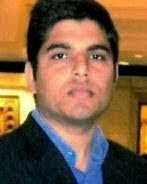
Only up to a point, a very vaguely defined point, we understand our goals in democracy. This has been a strong case in India since we have been working under the many adverse shadows, even after throwing out the British colonialism and our tryst with destiny to a most profound authoritative system called, democracy. Was discovering the democracy sixty-four years back was a mania, a passion or even a kind of neurosis, without the slightest moral justification? I never wish anyone should think in this manner and take it like that; no explanation will ever convince them to settle collective wishes for common greater goods. With embedded resilience and appropriation of ideological and even sectarian new classes, Indian democracy has strengthened enough itself over the years to give ample room to Bentham’s utopia of happiness or Marx’s equitable socio-economic stake.
What we have a functional base for our democracy with a chequered proven record of comparatively peaceful transition of power but what we don’t have the volition for rock bottom segment. There have been always some underlying disagreements among the different classes-ofcourse, we too had broken off for even more than once, but interestingly never completely. Indeed, even those skirmishes were not the roistering moments-after all, we are still paying the price of over sobriety on Kashmir and extreme baffling with monstrous emergency era. Later after witnessing the most undemocratic ordeal, we realized and came out of slumber that the monstrosities are a mark of emotional imbalance rather than a lack of intelligence. Obviously, if someone has no confident I himself, it is because they sees themselves through others eyes even barring world’s vision that gives atleast some universal feeds.
I really scarcely know what our goals were, even can’t endorse whether they were adequate? I also don’t see either opulence or nattering in single magic line…we could have done otherwise as a nation? That we couldn’t, so now merely muttering that our collective obstinate trust turning swiftly into bitterness of hearts and wavering all around our system. The dwindling credibility from public institutions is not passable; it’s emphatically reflects the growing ostracizing from those who are in authority instead of performing on tall vows. In a sort of warring, common folks are on receiving end, theirs representation being hijacked by the hawkish thugs with pedigree of many questions marks on their integrity. Under a new fashion, impractically theirs ubiquitous entanglements on every matter have tarnishing the line made to delink the statecraft from manipulated street demonstration.
Present wave of corruption, that otherwise should have taken as serious governance flaws is unfortunately being considered as byproduct of coalition government by the Congress party with nerd citing towards the blind ambition of regional political forces. What Congress is missing today? The loyalist political cohorts-the cornerstone of sycophancy based political order. Whatever their’s intent or display, it’s hard for a Journo to cite, who is Judas? Only crux of the matter is truly embarrassing, how the genuine rage of common men’s was falsely represented by the Anna Hazare and innumerable metro cities based activists who never votes or faced the ire of price rise or corruption. The demonstration pavements of Jantar Mantar which years back was awarded the entertaining slots to free Rajpath from deviating concerns, was well managed by the sharpest brains like father-son combo, Shanti Bhushan and Prashant Bhushan, Magsaysay award winner and may be Nobel prize aspiring Arbind Kejriwal.
Later, it was altogether a big flash, that father-son have combined property of around Rs.145 Crore, even with most conservative estimation…and remarkable is the fact Shanti Bhushan has earlier played two extra innings in legal practice and politics including once of Ministerial profile-rest is open secret about his claim of integrity! It was worth of noticing that, sensationalizing electronic/social media had at no point covered the voices from rural hinterlands towards the hyped crusade against corruption. What Anna Hazare movement with back up from conglomeration of neo-NGO type civil organizations has did the, complete outshining of real issues for an unreasonable Lokpal bill in current form. That went well in favour of Anna&co and ofcourse for principle opposition BJP-what left in midway the electoral reform, Inflation control, lethal inequitable spread of wealth, nexus of vested corporate interests etc. Even in wildest dream, Anna Hazare couldn’t be confused with Gandhi by a conscious mind-it was indeed ironic to see a non-political man like him being prepared for an unprecedented revolution against the corruption without looking on the role of parliament and constitution.
A nation like India can’t be run in this way-there is need of peoples connect as vital organ of governance and that’s alone possible through react practically instead of hanging with blurred tantrums and ending like cobweb. Governance must mean for public goodness and transparency, that can be only achieve through broader participation and electoral reform-that will too address and check the growing overlapping of jurisdictions among legislatures, executives and judiciary. Instead of shunning politics, peoples must see it as life and let entwine it with fairness through corrective measures-political process must have to throw the pedantic following for a bigger reform. This must start now to retrieve people’s faith in their political system…it must be in place very soon because world has already started seeing us with doubt. Thinning FDI in last few months and coverage of corruption by the western media, including Economist, which has a scripture like stature has summarily rejected the Indian growth story as “rotten”.
Peoples have to take ccare of politics but not through shambling convictions, the main concern here left with the role of loose talking by policy makers-the way Kaushik Basu has idealized the bribe on finance ministry website is indeed very shocking. This must be condemned as ethical violation from top on hierarchy…we needed peoples who can work, and not experts have only mastership of bawdy rhetoric’s. India is complex entity, here misadventures’ tolls high on human capital which is its true strength-we shall not take risk to jeopardize our edge as knowledge economy vis-à-vis China. China with much stricter and closer political system, has grown up fairly on governance and sizable income spread at bottom level. We shall not be envy merely; rather we should act for competency.
Our distortion of progressive elements which begun with the blockades in Communist movement and theirs balkanization as political entity did lot of harms in mainstream Indian politics and further in lessening of progressivism from collective psyche. Under changed ideals, except few core issues, there is little differences of perceptions among the rest political parties, that is matter of grave concern. The major stakeholders of Indian democracy must have to align with the dynamics and compelling changes to avoid the further nightmares. Culprits must be nail to sabotage their glamour’s and misuse of trust& authority…nation can’t be run by the uncivil foes, it exactly needs characters like Caesar’s wife!
Atul Kumar Thakur
April 30, 2011, Saturday, New Delhi
Mail: summertickets@gmail.com
Saturday, April 30, 2011


Friday, April 29, 2011
The World of Yatri
Baidyanath Mishra , who with his independent and resilient intellect came to known as “Yatri”, “Nagarjun” and most remarkably as peoples’ poet/Jankavi ,naturally left overarching effects on the modern Maithili and Indian literature. As per existing custom in Mithila, he was born at his maternal place {Village Satlakha, Madhubani} on June 30, 1911. But alas, only at the young age of three, he lost mother and consequently the attention of father, who was by nature a wanderer and free from holding the worldly obligations. Such familiar stiffness made him untimely matured towards the worldly affairs.
Although defying all odds, young Baidyanath started learning through traditional Sanskrit/Maithili education in his maternal village and later moved to Kashi in the quest of knowledge. He was a great informal learner, that adaptability might be shaped with the chronic adverseness he faced but finally that established him as an avid scholar of Maithili, Sanskrit, Hindi, Bangla, Pali, Prakrit. Further in his formative years, he established very intimate ties with the natural impulses that kept him highly sensible throughout his literary voyage. Probably, with feeble familiar back up, he sensed the importance of travelling and relentless learning albeit that didn’t deter him to be in functional material fray. So, he married to Aprajita Devi, who played atleast half role in making of this poet; with amazing determination and sacrifices, she brought up her six child and allowed freedom to “Yatri” for continuing with the humane aspirations, that proved catalyst in his literary productions.
Except of short overtures in family, 1930’s onward “Yatri” became completely align with writing and traveling, and rest is history before us about his broader perspectives and its literary expression. Primarily and even ultimately, he was closer to instinct rather following mechanical cognition order, which he demonstrated by remaining at ease and keeping himself away from the institutional engagements, except a short stint as teacher in Saharanpur {UP}in very early phase of transition. Here, he was closer to Tagore; both emphatically valued the natural human instinct in place of surpassable artificial affiliations. The basic difference between these two great poets were of not world views but of approaches-Tagore with his aristocratic background was obviously an elitist unlike the “Yatri” whose background and construction of psyche both were akin to people-centric and based on the social realities.
If culturally, Mithila was closer to Bengal, then on socio-economic counts, there used to exist a huge drift…lack of urbanization and western temptations were among the foremost reasons of reality check. Although, he was too a keen naturalist like Tagore but again the differences were on the institutional levels. If Tagore had vision for an institution like Shantiniketan and later institutionalizing his own works too; “Yatri”, on the other hand had incessant devoid for such possibilities. A stout reason was ofcourse the aloofness of Mithila from outside world unlike Bengal during the British colonialism and in post-colonial years. “Yatri” missed a dynamic Mithila, and this region an enlighted mediation from him that could have made a huge difference on socio-cultural fabric in this region. But in absence, things of importance met to lackluster treatment at large and Maithili way of life never impacted the national mainline as it should have. Though with his unique standing against the unfortunate social stigmas, he heralded a revolutionary wave of progressivism inside and outside of the Mithila and established himself as first Maithil on national and international literary arena.
Meanwhile, in the course of experiments with the knowledge, this freethinker came under the Buddhist influence-though it was short lived as he couldn’t suppress his embedded Maithili progressivism albeit before that he travelled across the Tibbat, Central Asia and Srilanka (Kelania). Even after, he left the Buddhist commune, his cult name “Nagarjun” followed him forever-it reminds another contemporary literary figure and also a Buddhist, Rahul Sankritayan. In late 1930’s, he again entwined with a new ideology-Communism, though it remained his part of vision throughout the remaining life. He was a progressive minded, both in life and writing-he understood the Communism through direct experiences in U.S.S.R, and kept alive that touch within or outside the purview of Indian Communist Parties. What he did best with ideology, he supported it as movement rather a means of party blocks that happened in India post 1962.
“Yatri” had struggled against the authoritative extreme, equally during the independence struggle against British and in post-independent India with authoritarianism of political classes…he spent time in Jail (1939-42) and again in 1975-77 during emergency. Like a true maverick, he remained attracted with the peoples’ causes, for their upliftment, he struggled with the eminent peasant leader, Swami Sahjanand Saraswati (Founder, Kisan Sabha) during colonial period and later under the socialist movements including in JP Movement. “Yatri” was among the finest part of Bengali Hungry Generation Poets, there could be no doubt, why he is regarded only next to Tulsidas in India through his stellar convictions for mass folks.
Away from Geographical boundaries, his literary expression has closeness with high universality but whenever, he touched the themes of Mithila, a unique and very close affinity came out there. He had in mind the prevailing realities of Maithili socio-economic scene and its challenges for an equitable and just society. It was a positive co-incidence that some of iconic names in Maithili literature-Harimohan Jha, Phanishwar Nath “Renu”, Rajkamal Chaudhary, Lalit, Dhumketu and in politics-Bhogendra Jha, Chaturanan Mishra, Suryanarayan Singh, Shivchandra Jha, Lalit Narayan Mishra were his contemporaries – theirs collaboration made huge impacts on the socio-cultural atmosphere in Mithila.
With broadness of canvasses and amazing hold over translation skills, his work hardly leaves any technical dialectism between Maithili-Hindi; most of his work is available in both the language. As a poet, he could visualize beauty in oddness and grief in lavishness-so, writing on jackfruit or icefall at hill stations; both were very kin to him. His collection of poetries-“Patrahin Nagna Gaachh”, “Yugdhara”, “Satrange Pankhon Wali”, “Taalab ki Machhliyan”, “Khichhri Viplab Dekha Hamne”, “Hajaro-Hajaro Banhon Wali”, “Purani Juliyon ka Koras”, “Tume Kaha Tha”, “Aakhir Aisa Kya Kah Diya Maine”, “Es Gubbare ki Chhaya Me”, “Ye Danturit Mushkaan”, “Main Military ka Budhha Ghora”, “Baadal ko Ghirte Dekha Hai”, “Paka Hai ye Kathal” introduces to his wider reach among the common folks and intricacies of humanity. He was never been a subversive preacher despite having genuine anger against the social and political system, instead his progressive stand enabled him to be a rational novelist, in this role; he forwardly acted as social change agent.
His novels-“Ratinath ki Chachi”, “Balchanma”, “Baba Batesar Nath”, “Nai Puadh or Nav Turia”, “Barun ke Bete”, “Dukhmochan”, “Ugratara”, “Jamania ka Baba”, “Kumbhi Paak”, “Paaro”, “Aasman me Chand Taare” exudes the diversity of Maithili as well as Indian villages under the new compelling challenges. With great exposure to the outside world, his memoirs, travelogue and even hundreds of published letters gives delight and zest to readers while exploring his writings. His collection of essays, “Annan Hinam Kriyanam”, work on culture “Desh Dashkam aa Krishak Deshkam/’, his travelogue “Baadlo ko Ghirte Dhekha Hai”, satire “Mantra Kavita” and “Aao Rani Han Dhoenge Palki” and many Bangla poetries introduces to his broader grasp with amazing expressions over the range of themes.
He had a unique credit of making a generation of writers/critics in both the Maithili and Hindi-fortunately that worked out well for him and overall literary scene. Like Renu, he never had to face the reckless wrath of preoccupied critics…foremost among them, even Namwar Singh couldn’t maintained his line of regionalism with him. Despite all wandering and fame, he remained essentially a non-possessive man attached to his route…his village Tarauni, nearest railway station, Tarsarai Muriya (East Central Railway, near the erstwhile princely town Darbhanga ) remained closest to his heart&soul. In 1998, he left the world from Khajasarai (Darbhanga) after streamlining his prolific literary works. On his birth centenary, my fond remembrance for this great literary figure, who was and still is a most loving BABA for many generations.
Atul Kumar Thakur
Thursday, April 29th 2011, New Delhi
Mail: summertickets@gmail.com
Tuesday, March 8, 2011
Union Budget 2011-12: Comedy of Errors
Through this year’s Union Budget, Pranab Da has introduced a remodeling of vintage qualities that kept surfacing during his Budget speech. Stark fetishism started with an unknown nexus among godly characters of Indra, Laxmi and that finally ended with number 3- his own favourites in life and remorsefully in his party. As a follower of Budgetary exercises for years, I am yet disagreed with corporate and intellectuals like Bibek Debroy who sensing the ineffectiveness of Budget in general term…my incorrigible optimist mind still sticks to frame that sees public exercises of resource as most remarkable set of entitlement disbursement. Indeed this year’s Budget marks stout complexity within itself as it made by few finest brains from the exotic discipline of economics/finance…so in technical terms and at a glance perspective, it presents amusing leverage to populist temptations on which a democracy of our type rests.
Finance Minister, generously enhanced the remunerations of Aanganwari workers and teacher to double of theirs present Rs. 750&Rs.1500 albeit he failed to sense that it’s still less than minimum wage recommended by his own Government. In another move of social service, Budget introduced enhancement of old age pension from Rs.200 to Rs.500 but with an inhuman clause that makes eligibility quite tough at the age of 80…only good thing was the relaxation of age for attaining the senior citizenship from 65to 60. Fortunately it’s also worked out in personal Income tax with an enhanced exemption limit up to RS.2.5lakh…crest slab laid more relaxation to those above 80, to RS.5lakh. But alas, this maneuvering completely failed to see the changing demography of nation which facing acute shortage of savings among young and mid age segment…except slight tempering, that shot up the execution level to RS.1.80lakh and in women’s category, slab of RS.1.9lakh remained obstinate. Provision for tax-free infrastructure bonds extended by one more year, and a new income tax return form/SUGAM was proposed for small business that hardly symbolizes even a big ticket reform from any angle.
Amazingly, hand of Finance Minister suddenly found momentum while meeting Corporate turn-even excluding recent revenue foregone, in last six years, RS.3,74,937 Crore {twice of 2G Telecom Scam}worth of Corporate Income tax have written off. P.Sainath made the whole process most lucid in his article {Corporate Socialism’s 2G Orgy, The Hindu, Monday, March7,2011},”The Union Budget writes off RS.240 Crore in Corporate Income tax every single day on average the same amount leaves India each day the same amount leaves India each day in illicit fund flows to foreign banks . Moreover, revenue foregone on Gold/diamond touches RS.48,798 Crore which accounts double for wishful provision of PDS-Custom’s write off on Gold/diamond shot up to RS.95,675 Crore. Overall total revenue foregone on Customs duty in the present Budget rose to exorbitant level of RS.1,74,418 Crore excluding credit related numbers! Alas, if such obscene amount called be scrimped for address the suffering textile industry and overall manufacturing base which is in crying need of a big push to sustain the labour-work match of economy.
A section of observers are noticing that India is in surprisingly good fiscal shape despite populist spending, venal politics and bad-governance but they are summarily ignoring the huge cut in subsidies on Petroleum and fertilizer that will presents an unusual shock very soon in country amidst the problematic state of Gulf nations. On the revenue side, contentious DTC, MAT, DDT being regarded promising for midterm but euphoria will be short lived with the abysmal growth of 3.5%in expenditure with an exception of RS.3, 000Crore for oil subsidy bill. The statistical flex in fiscal deficit that fall from 5.5%to 5.1%-owing to rise in nominal GDP from RS.69.35 lakh Crrore to RS.78.78 lakh Crore in 2010-11; thanks to incessant inflation. This fortunate increase in nominal GDP further enhanced the debt to GDP ratio by 65%{Economic survey}against the projection of 76.8%[IMI}and 68%{Thirteenth Finance Commission}…but such boom is hardly justifiable with a foregone history of panic of price rise in public-distinct and much acute than Maslow’s hierarchy of needs.
The Union Government’s total expenditure as a proportion of GDP is projected to fall from 15.4% in 2010-11 to 14% in 2011-12, which reflects that expenditure fall for reducing deficits is the overarching feature of this Budget. Despite the claim of prioritization for social services in the Union Budget-expenditure fall on this segment from RS.1,62,501 Crore {13.4%of Budget, 2.1%of GDP}in 2010-11 to RS.1,65,975 Crore {13.2%of budget,1.8%of GDP}in current financial year, where a sharp rise was genuine due. Unlike the Kothari Commission/1966 and UPAI stand of minimum 6%public spending on education, currently the contribution of 3.39%{RS.1,89,324 Crore}is being spend from GDP. Union Government spending on education as a share of total Union Budget stand with 5.04% from 2.63% in 2004-05; Union Government spending on education as a share of GDP rose to 0.71%in 2011-12 from 0.4% in 2004-05. Announcement for scholarship among school students from Schedule Castes is a welcome step with a total allocation of RS.1469 Crore for this categories educational welfare but no special attention were given to STs, they have allotted a static RS.1265Crore. Another big concern is financing of Right to Education under SSA which will be fall short by RS.12,000 Crore annually despite a hike from RS.15,000 Crore to RS.21,000Crore in current year.
On health, total allocation of Budget has slightly moved up from 2.1%to 2.4%, combined expenditure of 1%-still far short of UPAI Common Minimum Programme of 2-3%.. NRHM given a 19%increase to RS.17, 920.76Crore which is still a meager amount to deal the need based services-NRHM/Rashtriya Swasthya Bima Yojana expanded to cover unorganized sector workers in hazardous mining and associated industries but ironically Budgetary allocation has reduced from RS.446 Crore to RS.280 Crore. No gender Budget statement has made for sanitation and water supply issue. Rural water supply received a timid increase from RS.8100 Crore to RS.8415 Crore and Rural sanitation from RS.1422 Crore to RS.1485 Crore. In Urban Water Supply and Sanitation, allocation for the integrated low cost sanitation programme has been reduced from RS.80 Crore to RS.71 Crore.
For Rural Development, RS.74,144 Crore has given which is up from RS.66,138 Crore/2010-11 but fallen short of Revised Estimate/2010-11 of RS.76,378 Crore. There is no noticeable provision has been made to strengthen Panchayati Raj Institutions through better financial devolution, even worst, outlay for Indira Awas Yojna has been reduced from RS 10,267 Crore in 2010-11/RE to RS.9896 Crore in 2011-12/BE. The flagship programme for rural employment/MGNREGS witnessed a fall of allocation from RS.40,100 Crore/2010-11,BE to RS.40,000Crore…what could be the logic here?
Agriculture met to most shocking treatment by this Budget-Union Government’s total expenditure on the rural economy has declined from 3.3%of GDP in 2008-09 to 2.3%of GDP in 2011-12/BE…most of scheme have cut short from funding between 10-40%. Ironically with fortunate number of 3, Pranab Da tried to revive the production of Pulses, Palm plantation, Millets with an allocation of RS.300 Crore each which is as good mockery as bringing green revolution in six eastern states with RS.400Crore. Overall expenditure on Agriculture and Allied Activities showed a marked fall from 15.7%in 2008-09 to 10.3% this year. The Union Government’s expenditure as a proportion of the GDP, also plummeted from 2.5%/2008-09to 1.4%in 2011-12.
Sharp decline from RS.1,64,253 Crore/RE to RS.1,43,570 Crore/2011-12,BE on Agriculture is most havocking feature of the Budget; completely defying the basic problems of inflation, food subsidy has been alarmingly reduced at RS.60,573 Crore which is less than amount provisioned in last Budget. Petroleum subsidy too had badly hammered by reducing from RS.38,386 Crore/2010-11,RE to RS.23,640 Crore in 2011-12/BE…situation would be more engraved by t he wrong provision of targeted/BPL Subsidy on fertilizer-this is the cruel joke for landless BPL Category and entire farming communities. Atleast RS.98,355 Crore would be immediately needed for covering the universal distribution of rice and wheat under Public Distribution System/PDS in the country. Case of cash transfer laid out in unclear and unrealistic way without framing even a tentative date of its execution…only miracle going to make possible the claim of 10lakh UID Card daily onward October1; this white elephant of Government has eaten so far more than $3billion and still unclear what it will make impact on public services.
Climate change has met to lip services by basic concessional and certain excise duty on vehicles excluding those using fuel cell tech; only RS.200 Crore sanctioned for Green Energy Mission under NCEF and another RS.200 Crore for cleaning of rivers except Ganga which is quite astonishing. Total magnitude of the Gender Budget has increased marginally from 6.1%to 6.2% with overall allocation for Ministry of Women and Child Development has registered an increase of only 13%. Increase for ICDS seems abysmal from RS.9370 Crore to RS.10,330 Crore…only solacing is women’s SHG Development Fund with an initial allocation of RS.500 Crore. As per statement 21, under Schedule Caste/SCs Sub Plan has increased to RS.30,551 Crore in 2011-12 from RS.23,795 Crore in 2010-11 but observing the pending demands that amount in inadequate and can’t create vision for long term development and empowerment of the SCs.
This Budget marked the separate statement to report allocations for SCs&STs{statement 21{A}in Expenditure Budget,Vol1}provides allocation for STs{RS.17,371 Crore from RS8990 Crore in 2010-11}. Allocation under Ministry of Tribal Welfare has increased from RS.3206 Crore in 2010-11/BE to RS.3674 Crore in 2011-12/BE…there is also an increase in the Budget allocation for primitive tribal groups from RS185 Crore in 2010-11/BE to RS.244 Crore in 2011-12/BE. On paper, it appears well albeit very few know how this money spends in reality?
Few surprises too struck in Budget like Tax holidays for IT Companies finally ends besides provision of MAT imposed on SEZ. 130 items brought into excise duty net for the first time with an imposition of 1%duty…MAT raised by 0.5%to 18.5%but Corporate tax reduced by 2.5%to 5%. Here, the Corporate India slightly get jerked but finally its consumers which faces the ire of such changes…in Hospitality, Aviation, Health Services, impact of adverse changes could be transparently felt. Investors can invest in Public issue of Public Sector Units which have target of RS.40,000 Crore worth of disinvestment this year. Foreign retail investors set to enter Indian equity Market through Mutual Fund s which would be another fatal for stagnant Indian Mutual Fund Industry with theirs prolong averseness with huge domestic potential from retail segment . In some way, if KYC norms lack, it will make India, another Mauritius-a dumping ground of black money. Tax treatment of debt and money market funds put on a par with fixed deposit…it may create complication in Indian bond market which was waiting for progressive slew of measures.
Micro Financial Institutions/MFIs, which must have given few stringent regulatory feed, instead been put aside with few healing touches…Priority Sector Lending/PSL violator Public Sector Banks have given hefty sum of money though the Regional Rural Banks/RRBs with excellent services have fixed on with a meager assistance of RS.500 Crore. It would have a welcome step, if Finance Minister could usher RRBs into swift modern operation with all the usual professional banking services that might create a level playing field in rural banking besides curtailing the relentless exploitation by Moneylenders and MFIs under the idealistic canopy.
Clarity is still away on new banking licenses, within or outside the Budget-Government must restrain to and livelihood following the economic liberalization. Sadly, thus Budget brought nothing more than a Pandora Box, full with disappointment and ambiguous complexity. If the Government is serious on leading Budget beyond the scenic beauty of statistics, it must think seriously on crumbling edifices of democracy-governance, accountability, fairness and public services. Fundamentals must be on place whether a nation dwells with any set of functional system….even the term “reform” needed a relooking by its own Mentors as its being overlapped by the scams and moralistic vandalism. We need a framework for national development, not a mockery institution that creates spaces for immoral characters.
Post Script:-Some of sectoral data’s in this article have sourced from the Knowledge paper of Delhi based Research Organization, Center for Budget and Governance Accountablity/CBGA
Atul Kumar Thakur
March8, 2011, Tuesday, New Delhi
Mail: atul_mdb@rediffmail.com
Monday, February 28, 2011
Curses of the Nation!
Corruption seems immutable in the wake of obsolete masquerade from the top of authority that alone swankly bounded with sweepstake for the preposterous material fortune. As overexposing becoming the norms in public glare, rupture with idealistic notion suddenly forced for stout mainlining that completely shattering the image of hallowed presence on top of authority from collective cognition. Though, the case is hardly sporadic even in universality but being attached with our Asian values, genuinely we facing profusely the ire of rampant corruption most vehemently. Without any inadvertent or cynic expression of glamorization, is it not right time to recall Samuel P Huttington’s idea of “crisis decade”?
After a decade full with high rise of neo-economic policies or better say hatching of market reform, an aspiring economic powerhouse like India dramatically entwined with the perilous prevarication in the guise of its arrogant shining campaign. What we recently saw the most systematic plundering of faith and awarded prerogatives by the quizzical leaders from all the walk of life left stark stress even in the mind of incorrigible optimists who till now had great faith in gentlemen economist Karl Polanyi’s vision of “self regulated market”.
Quail of this dwindling moral construct is largely mean with jostling over a range of substance, incorporated with the crux of market economy and shrinking of state or more lucidly with the renunciation of mass accountability. With the old wisdom albeit under the narrow insights, finance minister, Pranab Mukherjee during his last budget speech saw the role of state as “enabler”…this lukewarmness poignantly suffice for reckoning the irrepressible hold of unregulated and livid capital in government. The unprecedented wave of mindful obscene corruption that followed after the speech of fallacy for by and large common men’s downsizing from developmental agenda left an overarching effects in the form of wayward looting that were hitherto unseen in last six decades after independence.
In present circumstances, government has no expedient overtures with the majority of its peoples and most of tantrums of mitigating the divides of many types end in perception like a cunning marches of market strategy. This is an unusual phenomenon when the dramatization reaching to its zenith in every nook and corner…action of legislatures execution of executives, justice of judiciary and most lethally, the vigilance of media assembling with amazing co-ordination of vested interest of a rendezvous called limelight.
Ironic is the limit that restrain one’s to see the curbs in exact perspectives…here you have a very clean though a symbolic Prime Minister with tenuous hold on his cabinet colleagues and the cocktail of voices in nostalgic institution of Planning Commission and soul searching brigade of National Knowledge Commission. Exceptional ministers have great pastime for passing the bucks or tweeting the crucial briefs of foreign policy…generic minds are either reigniting the parochial issues like communalism to shade the external aggression factor even though they are open secret. And third types of minds have straight binding with unconventional wealth creation under the soothing company of crony clicks…thanks to Raghuram C Rajan, atleast he could see the potential of these networked peoples after spending time in Indian government and avidly counting the billionaires from Forbes list.
Exponential rise of force imagination with developmental planks must be substituted by the meticulously woven hypothesis suitable to the humanistic instead of cronies hell world. Time is ripe now for responsible minds to show the faith in societal adaptability with human development in place of chasing the endless greed’s of materialism. Although materialism has to stay with the philosophers imagined by Karl Marx, on whom the broader task of reckoning and changing the social action would rest. Burden of escaping the twilight of the nation have to be carry out again by the mass action, unless that happen, chances are likely that theirs representative will keep fading his own position and on idea called the nation. Endless curses of the nation have damaged the innocent expectations under the rude hammer of opportunism…in the bleeding state, this nation is crying for a makeover instead of universalization of contagious rogue called corruption!
Atul Kumar Thakur
February 28th 2011, Sunday, New Delhi
Mail: atul_mdb@rediffmail.com
Monday, January 24, 2011
Thespian in Conversation
A man who leaves no room to categorization either in life or passion though indeed a forerunner in Maithili theatre, Mahendra Malangia has been appearing on literary and performing arena like a sturdy masseur with overarching effects. Full of reappraising inflections but considerably distant from opulent elitist biases, this living legend has expedious ploy for legging up in greed lock. I have privilege to know him personally since the year 1997, when he had two days grand performance at my place in Uren/Madhubani…moreover, being an avid reader and literary enthusiast, I have been getting keepsake from him in terms of his books and reading jottings in manuscript. Recently we had a detailed talk on many issullage es, which would come during this interview…
Atul K Thakur:- It’s always pleasure to be with you Sir, I would like to prolong our conversation from scratch, I mean wish to have some insights on your retro life?
Mahendra Malangia:- I was born on 20th January 1946, a year before the Indian independence in village Mlangia {then in Darbhanga district, since 1973 in Madhubani}. I went to prestigious Suri High School {G.M.S.S High School}and later to R.K.College {Madhubani}, both were the restless institution then with energetic confluence from youths with taste in different field. From college life, my inclination grew overtly for plays/drama, here I acted first time in “Himalaya ki Putri” under the direction of Ram Vilas Karak…incidentally it didn’t took off in bright mode because my arguing for some crucial snags on direction, unfortunately , director couldn’t realized it effectively . With growing interest in Maithili plays, I couldn’t restrained my temptation of writing and finally started it for then leading Maithili weekly, “Mithila Mihir”in 1960’s.
After few public appearances and published pieces, I received proper accolades that further interestingly pushed me to add “Malangia” instead of my surname because in those days, my namesakes used to be famous singer, poet etc. After a cut off from established belief in contemporary trend of direction, I left the active acting in midway for solely turned to experiment with direction. With sporadic acting and complete directional instincts, I successfully staged “Basat”,”Ugna”,’Chinni ke Laddu”{written by Ishnath Jha}-they all left good early impressions and journey begin from there…
Atul K Thakur:- You have spent your all professional years henceforth in Nepal doing government service as a very respected teacher near the great cultural region of Janakpur…how this evangelism was shaped after initial flip-flop in Indian side?
Mahendra Malangia:-My family centric or better say moral centric play “Birju,Biltu aa Babu” was published in Mithila Mihir that given me satisfaction for a high shot response following it. It was boosting for me to see such overwhelming response for progressive end that marked with the judicious wallost in material world with his chronic sacrifices for building the fortune of his brother who now found himself in different class with agnostic views for moral construct.
In late sixties, “Laxman Rekha” published in Mithila Mihir –this was based on widow remarriage as a theme in centrality; then it used to be a curse in conservative households. Leading Communist leader, Chaturanan Mishra has written a very remarkable novel “Kala”on same deform practices much before me, I also had great rapport with legendary Communist leaders from Madhubani, Bhogendra Jha and Shiv Chandra Jha{also my villager and an economist},these made positive impact on my cognition state to look after the haunting orthodox practices with progressive views. So, for a parallel career in drama, I have chosen the job of teacher with modest income in Nepal over the lucrative job at Shiva Medical Company in Kanpur after a brief stint. Here, I connected with the students and local communities, in the course of time, since things have shaped in fine fervor.
Atul K Thakur:- One of my initial impressions regarding you were come with your “Daura Suruwal “and Nepali cap clad photos in Mithila Mihir weekly. I incidentally read many of them, thanks to rich intellectual wardrobe of my family…how was your early experience in Nepal?
Mahendra Malangia:-As you know, there is identical Maithil lifestyle and language in madhesh region of Nepal ,So on cultural front, it was alright but politically Nepal was running with charged moments out of radical moves by King Mahendra. He laid strong emphasis Panchayat System that not worked out but he became able to succeed with the creation of national identity with making compulsory cap and national dress. So, my early photographs were complying {with smile} to such order. Initially, I also faced rejection of manuscripts but once published from Mithila Mihir , “Totaal tagak ekta oor”, even my all rejected manuscripts started getting due place. Success in writing and entwining with students and local folk naturally endowed me with great respect and acceptance for efforts.
Atul k Thakur:- I wish to know about your most remarkable play “Okra Aangnak Barahmasha, in my view-this is the ever best socio-economic narration of Mithila on stage. Please also share with us flavours of your other incessant meticulous works as well?
Mahendra Malangia:-Thanks for this sensible compliment. Yes, this play satisfies me most when I see things in retrospect…this plays signify the all twelve seasons with a metaphor put through folk songs. At center stage, a socio-economically deprived family appears with their fortune in our democracy; things have delineated with wider exposure to the ongoing systemic flaws and uneven making of nation. Many before me and even after written on this, but within the rural scene, there is few such example in the mode of theatre. I can’t remember exactly its stage in numerical…I always thankful for my spectator who awards me their whole lot of blessings-leading Maithili writer Vibhuti Anand have played the role of “Mallar”-father of Munnar.
Even today, we remember those special time of our creativity…lost world of Mullar in search of survival, alienation of his son to east side in Morang/Nepal and consist insensitive response of system which recently came into place with Nehruvian vision utterly failed to construct basic humane condition to most of its citizens. Over the years, conditions have improved slightly but it’s still away from early conceived goal for our democracy which is matter of grave concern. I tried to cover people’s life in their own construct, “Chhutha Ghailh”which is based on Maithili folklore backs the women’s emancipation. “Push Jaar ki Magh Jaar” was based on Pokhra tragedy/harassment, which happened with involvement of some member of Nepal’s royal family…much before the Monarchy became out of fashion, I made my opinion on its futility as an institution. It presents the disillusionment of peoples from existing political functioning.
Atul K Thakur:- Your experiment with “Saadhu Bhasha”in unusual mixed form, somewhere presents cocktail of Maithili, Awadhi, Hindi and bizarre English used to be popular among the spiritual dwellers of Janakpur, Kindly give us some clue how you mix serious stuffs in lighter presentation?
Mahendra Malangia:- {With smile…},that started with Kathak Lok{1980-81}, another play on socio-economic degeneration. It proliferated with “Original Kaam”; a play with serious message albeit lighter in presentation. I perceive dowry as socio-ethical evil, I tried to pacify this oppressive tradition in “O Khali Munh Takait Chhai”. In “Gaam nai Sutaiyai”, unemployment is central debate with adequately taking note of falling political ethics. Here desperation in mass folks shown as leverage for political class; ‘Deh par Kothi Khasha deb” is outspoken tell on consistently eroding social cohesion, here I tried to show the plight of a pale couple at locus. Such clumsy tendencies touched me as an individual as well…so, feelings appeared with words and try to change the state of affairs with pervasive inferences of social changes from whole creative construct.
Atul K Thakur:- You have never known for catty exchange of words, I mean you have an impressive track of maintaining balance ties with your contemporary and even younger chaps, how you think, is this an expedient practice?
Mahendra Malangia:- Yes, it helped me in my creative voyage, I always feel comfortable in the company of peoples. Only I have disenchantment with critics without zest for observation or reading, for an instance following the glorious revolution in 1688{Europe}; workers were forced for 12hour schedule at work that made them alien from their conventional socio-cultural fabric. Some similar things, I used in my work, protagonist in “Okar Aangnak Barah Masa” faced identical ire but for actual feelings, one needs to have the vision to see the both side of history. Uday Narayan Singh”Naciketa”, Sudhanshu Sekhar Chaudhary, Gunanath Jha and some more have done remarkable work in Maithili theatre…in younger generation, writing and direction of Ramesh Ranjan {written a memorable play, Hamra Nepal Chahi?}is noticeable, so is the commitment in direction and acting of Sunil Jha, Ram Narayan Thakur and Prakash Jha {Maithili Lok Rang}-theirs work is worth of emphatic admiration, they are doing wonderful with great persistence for learning. I wrote twenty-six short play,14-15 Drama,11 Radio play and more than 20 street play besides sporadic articles, memoir, essays.
Atul K Thakur:- I am aware about your consistent reading, here I can visualize a lot of books on history of medieval Mithila and also some modern pertinent proof, what’s your further project?
Mahendra Malangia:- Presently enroute to a book over “Varnaratnakar” {by Jyotireshwar Thakur, 14th century AD}besides in the series of adopting modern authors story, I have completed “Paanch Patra”{Harimohan Jha} and “Vilap”{Baidya Nath Mishra “Yatri”}–they also came on stage in Delhi and fetched satisfactory attention. Now I am looking to work on Surendra Nath Jha”Suman” , Dhumketu and Jeevkant-presently contemplating ways to reconstruct theirs original text to fit for stage performance. I have spent many years in close company of Dhumketu in Jnakpur, so has privilege to know him personally as well as his profound work in Maithili literature. Over the years, I have worked to form institutions, in Janakpur, so I founded Mithila Natyakala Parishad {MINAP}, in Delhi {Maithili Lok Rang}-they both are working very well in revival of Maithili drama and folk culture. Younger generation is quite accountable now for their cultural routes; it was unlikely ten-fifteen years back, so this is a welcome change which would sure boost the cultural upheaveling of Mithila region. So, now working on history gives me greater sense, I would try best to contribute more for Maithili and lastly for Indian theatres.
Atul K Thakur:- It’s always nice talking to you Sir, hope best for your further deliberations and fine time in the world of letters…
Mahendra Malangia:- Thanks a lot Atul. For me too,it’s rewarding to be in your scholaric company…very best to you too…
Atul Kumar Thakur
New Delhi, Monday, January 24,2011
Mail: atul_mdb@rediffmail.com
Essential Reconciliation
Two most remarkable politician till date in the democratic history of Nepal,Prachanda and Babu Ram Bhattrai is indeed sharing a symbolic bond by wearing this meaningful "Paag'{Maithil Cap}for public but their internal differences have even crossed the level and dignity of spat.Prachanda, with whom the genesis of radical politics begub in the Himalayan state had always remain averse to allign his whole agenda with public or even trusted cadres..with immense merit and acceptance,it's hardly unlikely that he is not finding easy to cohabit with another high rank man in his camp.
The tantrums regarding the potential Indian role in hijacking the key of Maoist brigade is one of biggest folly of Prachanda which have been so far and may be in future will be keep haunting the internal as well the external prospects of Nepal. Baburam Bhattarai has reason to be closer with India as he spent his formative years in this nation,even during the long insurgency era, he received overt support from like-minded Indians.Yes, Bhattarai is very much right if he has dare to look on Maoism as movement instead of political conglomeration since he knows the future of revolution and compulsions of liberal democratic system very closely.
For now,theirs spat hammering the Maoist's prospect more than any other possibility albeit it would indeed possess a big risk for Prachanda himself and his party's further prospect as an alternative hope in national politics.Through my personal sources,I found the peoples growing apathy for this forced political stalemate in the country...they,especially the young generation is badly enchanted towards the politician's role.They no longer want to entwine with the theories which given them even worse political leadership since the end of Monarchy. In no way,I am contemplating any nostalgia for Monarchy but this was the mass reaction following the 17th round of failureness to choose a dignified PM and a working constitution.
Breaking of ice is impossible with the stubbornness of top Maoist ranks as they still have no mood to leave their demand for exorbitant absorption of theirs army with the National Arm Force. These are undeserving demand and at the same time a sort of force dealing with the strife ridden country.In their complacency both the chief Maoist ideologue, Prachanda and Babu Ram Bhattrai had forget to recall that they are part of democracy rather than the upholder of Maoist state; their cynical demonstration in front of official royal set-up with five thousand strong armed cadres for maneuvering the replication of Balkanization in Nepal was out rightly shocking, the way they were pronouncing that Newar community would be given more rights than others in newly formed province had sparked the fuel of mass sentiment.
As Maoist ideologue Babu Ram Bhattrai believes their participation in peace process or constitutional development merely as “tactics” to enter among the bourgeois and a pre-exercise before grabbing the throne and later shaping it into their ideological fervor (Communist utopia) instead of sharing existing democratic model in which they have given fair chances-such game plan is entirely contradictory to their erstwhile preaching when they avoiding such faux pas and desired on numerous occasion for political peace process and constitutional making task.
Now Maoists and other political parties know the fact that the deadlines of constitutional making process wouldn’t be met by easily in the situation of flux that also grew up after the departure of UN Mission in Nepal, so they are adopting different stand-Maoist Babu Ram Bhattarai’s stand is seems explicitly deadly as he thinks in that case they will declare the constitution from the street and capture power albeit they are forgetting their lowering popularity from mass psyche since they couldn’t copied the pious motives of socialization as the communists of Cuba or many other country did in past.
Way back from the Maoist’s insurgency in 1996 and later their mainstreaming and emergence as single largest party in Nepalese politics have been relentlessly co-inside with the large scale violence and civil war like situation, which’s still being far from over as the collapse of central authority with the end of monarchy, any alternative retrieval plan from major political players only creating void and a loose regime that propelled swiftly on hatred, intolerance and violence-far from stable and peaceful state of affairs.
High expectations were prevailing from Maoists prospective role in the wake of their democratization and accession to the highest political order of the country but they couldn’t endured the expectations for long and very soon started to jeopardize the situation over a standoff between the army and the Maoists, and later between the Maoists and their coalition partners…and now eventually within party itself.Maoists consistent distrust in sharing the state authority and their wayward opportunist expediency now forming furore among a large chunk of population including the media who now for the first time explicitly supporting the Nepal’s official army as they feeling the potential fallout of Maoists strategic domination in the country.
Maoists views are extremely critical on past agreement with India including the border issues; they are in favour of tectonic shift in alliance with the Indian state by daringly asking for removal of Indian army from Kalapani and restraining their so-called encroachments in Susta region-most of claims are prejudicial and could cause for large scale misunderstanding between these two very interdependent and cordial nation.Whatever the Maoists oral assertions like-abolition of the President’s un-constitutional move, maintaining civil supremacy, safeguarding national independence, checking foreign interference etc, they act entirely opposite from their own front with preoccupied contentious motives.
Maoists have shown terrible performances on most of issues since their arrival as a force in 1996-frequent human rights violation and barbaric suppression including murder of dozens of journalist for merely their ideological opposition with Maoist functional methods. Situation is indeed turning in very grim shape as things are again being ready to be fall apart-presently little hopes persists to visualize consensus among the political parties in near future to look after on the crucial issues of peace process and constitutional drafting. Political parties and members of civil society must refute any maneuverings of Maoists to merge their arm cadres with national army, otherwise stalemate would be never halted; international community have also play a major role to lift Nepal from this very unfortunate state of affairs.
Today India’s neighborhood policy cries for greater attention, so India must monitor the situation closely and assist in stable and united Nepal-where there is will there is always a way…we can’t and shouldn’t see Nepal moving like Bosnia. I think nobody could suggest the exact way to resolve his trust deficit with Babu Ram Bhattarai, even if the reconciliation would take place, there is little chances that they would think better than theirs past action for the nation. Anyway, there will be no wrong, if we wait for another turn…hope the wait this time will be much shorter than the Godot in Samuel Backett’s immortal political play-“Waiting for Godot”!
Atul Kumar Thakur
January 22nd 2011, New Delhi
Blog: www.onesstandpoint.blogspot.com
atul_mdb@rediffmail.com
Tiny Writing
This piece was placed in Nepali Times, January 14-20,Kathmandu…with great appreciation for feedback, I am being glad to publish this meaningful debate on my blog…hope it would assist to break the ice over many contentious points in the India-Nepal relations…
Atul Kumar Thakur
Blockade of Nepal
Quite intriguing reading this piece of Prashant Jha,which is more based on potential wish-list of political faction rather than the imperative need for nation.Such intellectual assertion could be merely seen as prolongations of impending inferences that consistently have been defying the fate of Nepal.
The Constituent Assembly’s failure to deliver a Constitution on stipulated time-line and even after and Parliament’s failure to elect a Prime Minister despite prolonging the exercise for double digit rounds raising serious concern over the accountability of political parties in Nepal. Following perplex state of action in absence of any outcome makes an observers side completely drudgery and concomitant despair for all concerned components.
With unkempt promises, political class especially Maoists are now being seen as hellion with their brusque attitude towards the ground realities and needs of nation. No denying the fact, that Maoists are not alone accountable for the quivering domestic political scenario though with putting upon theirs ostensible demand after putsching the Monarchies quintessentially makes them a catalyst in entire persisting deadlock.
Signing twelve points understanding in November2005 in New Delhi with the Indian mediation for anti-Monarchy movement was a hurried step that couldnï’t be adequately sensed by the Maoist or other seven pro-democracy parties from Nepal. Instant reason for Indian involvement in anti-Monarchy movement was shaped through the aberration created by King Gyanendra during the 2005 SAARC Summit where he laid the proposal for China as an observer which was unanimously accepted by the member nations-without any mediation, indeed it was a sort of unofficial breach that caused deep insecurity in Indian diplomatic side.
Given the historically trusted and entwining relationship between India and Nepal, it was unbearable for India to see China’s unnatural involvement with its very dear Himalayan state. China has been so far played feeble and inconsistent role in Nepal but the Maoists emergence at Centre-stage suddenly given them a level playing field against India which now fuelling the rivalry of engagement.
As a very close entity in varied terms, Nepal must understand the growing insecurities of India from its strategic point of views and instead of pushing both superpower for negative engagement at the domestic turf; it would be quite better to engage with both of them without forgetting its natural akinness for India. It would leverage Indian role in forming conducive environment both at domestic arena in Nepal as well as at international juncture-positive involvement would give India too a chance to strengthen its diplomatic ties with Nepal by giving its actual due to the Himalayan state. Energized co-operation with spillover of goodwill would forge better environment of concord and prospects of democracy.
Nepal here must have to prefigure the China’s dual playing at its every crucial juncture; from1950 to 1989{during trade blockade by India which lasted for twenty months that badly affected its economy}-at both the crucial occasion, China checked them with realistic visualization and kept reiterating Indiaï’s natural closeness to Nepal. Even in 2006, when India along with the Nepalese democratic forces was poised for heading-on with Monarchy, China was feeding the King with arms and ammunition to crackdown on Maoists and other demonstrating political parties-thanks laudable collective efforts, Chinaï’s plan of bloodshed didn’t worked out in Nepal. Nepal must be reckon with its strategic standing without too much reshuffling some of its conventional basic lesson of diplomacy-otherwise, contemplation of experiments wouldn’t be ended more than deadpan per se following the ambitious dualism.
The most inevitable thing that Nepal has to do the figuring out of its people’s aspiration as now Maoists too sounds pragmatic about the prospective merger of Armies and noticeably on the role of Monarchy. Without deviating under any forcible ideological compulsions, it would be prudent for Nepalese political parties to delve with the best possible options suitable for their quest for democratic establishment and supremacy of Constitution.
This would be true healing touch from democratic political forces who have been disappointing the mass Citizens since 1920-if Maoist Supremo Prachanda sensing the blunder of abrupt abolition of Monarchy without giving them even a minimum Constitutional prerogative, that remorseness must be seen in true light and without contentious convictions. Prolongingness of deadlock in Nepal is neither feasible not ideal for the sake of peoples genuine aspirations here is need of rebuilding the confidence among the mass Nepalese for a brighter prospect of this beautiful nation.
I have taken few more words to express myself,but as an enthusiast and a well wisher of Nepal,I only wish to see the nation out of flux.Role of Press is very vital in this...my sincere thanks for Himal South Asia and Nepali Times for keep aliving the debate.
Posted on: 15 JAN 2011 | 12:22 PM NST
7.rishav
Reply
Mr Thakur, Nepal-India relations hasn't really changed. India's policy on Nepal hasn't changed from the Nehru doctirine, and is stll continued till this day.
Nepal is one of the oldest Countries is South Asia, whilst India was under one empire or the other Nepal was holding it's own diplomatically with the Moguls, British India, and China. So this big brother and little brother concept really has to chnage in the minds of the Indian establishmnet. we are older than you and have more experience of being a state.
The unequal peace treaties of the past, the unequal deals on hydroelectric power, the land encroachment in the terai belts, the active support of the Maoists during the Insurgency to destabilise the state, the blockade of Nepal for 20 months, the missed placed view of this older/younger sibling relationship are all things us Nepali people are aware about and is something your Indian Goverment really needs to make efforts to ammend.
Posted on: 15 JAN 2011 | 9:34 PM NST
Atul Kumar Thakur
Reply Rishav-Glad to see your historic put in India-Nepal relations,indeed there is no denying that Nepal has maintained a sovereign presence in South Asia throughout the history that gives the Himalayan nation a stout edge to dwell as closely woven nation.Yes,it's truly unfortunate that Indian establishment has failed to form a new dimension to look on the neighbors, particularly with Nepal,this is real contention of all swiftly burgeoning misconception in the mind of peoples regarding the Indian role.One thing you missed to stuff in your message that these two nation has failed to live up the symmetrical diplomatic relationship-no Prime Ministerial visit so far from India,it's sort of pragmatic hammering over the soft historically shaped ties.Only once ever,Indian Prime Minister Manmohan Singh,had shown courtesy to receive veteran politician Girija Prasad Koirala at Airport besides conferring him the verbal honour of being South Asia's most remarkable living politician. I emphatically think,India has to show more level playing exercise to bridge the trust deficit developed in the recent years,and yes,treaties must be subject to changes as time and circumstances allows.My personnel views regarding the Nepal have never emerged out of any stereotypical and theoretical school of Nehruvian principles...better,if you can read my last dozen of pieces over Nepal,you would sense the kind of basic I have been following on international relations.And if possible,please nail the relative observations on the kind of state we are living today,instead we shall move up for an universal abode out of disgustingly bounded cunning political convictions.
Atul Kumar Thakur
atul_mdb@rediffmail.com
www.onesstandpoint.blogspot.com
Posted on: 16 JAN 2011 | 1:30 PM NST
11. Anonymous
The commentator (ref. to reply #7) is right-- the "Indian establishment has failed to form a new dimension to look on the neighbors, particularly with Nepal..." Sadly, the 'master-slave' mind-set inherited from their colonial past still seems to rule the behaviours of the Indian establishment today. Had Indians internalized their own true historic past, for exmaple, the real meaning of Gandhi's 'Swaraj' and the birth pang of true National Independence, the neighbours would find a different India today. It would not have been difficult for such a Nation to foster a mutual and trusting relationship with her neighbours, nor would it have been hard for Inida to treat her own tribal peoples with dignity and respect. Instead, in the name of the mirage of 'national security', Delhi seems too much obsessed with seking for blessing from yet another 'Master' from the overseas. (Mind you, the historic 'honeymoon' with Moscow ended as soon as the Cold War ended!) On the other hand, the 'traditional' intellectuals and the political pundit class in Nepal, are still obsessed to see every problem in Nepal through the 'Indian' lens. (There was a time, during the 1950's, the entire Nepal's cabinet used to fly to Delhi to take major decisions!) The 'Patna-educated' and 'Banaras-bred' intellectuals and 'pundits' in Nepal have failed to take the 'historically thawed' and 'sick' relationship between the two countries to a new and healthy one. My generation that witnessed first-hand, both the fall of the Berlin Wall and the fall of the Wall Street, sees things through different references (mind it is plural!) I would like both the democratic forces in India and Nepal to be more assertive and confident. It is high time to start a healthy dialogue between our two nations. An alternative discourse is the demand of our time. The best mantra for the mutual security of our nations would be 'keep your purse secure, and don't blame your neighbour!' Nepal needs to define her strategic position as a bridge between the two rising economic power-houses of Asia. Let's do our homeworks to usher in a new era with the hightended consciousness of our own historical realities and sensibilities. It is the task of our younger generation leaderships to redefine a new relationship. Let's have debates on what should constitute the elements of such relationship.
Reply#.Anonymous:-
Atul Kumar Thakur
Rational of Healthy Debate
#.11-Anonymous
I am emphatically happy to entwining with a very meaningful debate that represents all the constructive ideas across the board where the crux of relations between India and Nepal lies in reality.While writing my reply for Anonymous,whom I admire stoutly for his courageous and remarkable hold on synergistic inference;I felt best to leave the scale of peoples relations to shape and uphold the traditional ties between these very close neighbors.Because,with heavy heart,I will have to say that diplomatic relations between Delhi and kathmandu have completely failed to capitulate any mandate of common folks across the boundary.At worst,forcing contentiousness with the changing Nepal were the most unpragmatic programming from Delhi that vehementally shooked the traditional bond which was made through the peoples contact and sharing common griefs.
Ofcourse,fault lines were also drawn by the Nepal's political parties,especially by the Maoists camp...their's leadership displayed utmost cunningness in dealing with India.Through my personnal interaction,I could say that,it harmed a lot in distorting Indian diplomatic vision towards their most essential neighbour.I am happy to see the wishes from prolific young Nepali political commentator about the new constructive approaches to build ever best ties between our two nation-on this,I would also add that,peoples like us,who will do this irrespective of our myopic institutional standings.Even,when Nepal is passing through the political crisis,I am quite sanguine about the future prospect it has as nation amidst the two emerged power...yes,this two giant have to essentially break their sleeping tigers tag in perspectives of foreign affairs.Indeed,India with its overt practices of original legacy could have done much better than blindly replicating the foolish bandwagon of cruel colonialists.We must keep the debate alive to sort out the maladies in governance...leave the geographical belongingness out of mind,instead start thinking as humane citizen-hope for building better coception,it's a fair idea...with best wishes for India-Nepal relations...
Atul Kumar Thakur
New Delhi
www.onesstandpoint.blogspot.com{see my creative repository..}
{This was my tiny take following on Prashant Jha’s piece “The Big Madheshi Politics”,Nepali Times,January6-13,2011,Kathmandu}
{This comment was written for Rakshnda Jalil’s meaningful piece “Dipped in the heart’s blood” on Faiz, Himal South Asian did a commendable job to focus on this great revolutionary poet/journalist in January 2011 isuue..]
Atul Kumar Thakur 2011-01-19 13:05
Thanks for focusing on Faiz,one of key literary voice from sub-continent who drawn a superb tradition in literature with aligning stoutly the inferences of nationalism and history during the turbulent times in twentieth century.He was among the few from his generation who tried to see the world with a mix fervor of nationalism and basic humanity along with aim to crack down on oppression and injustice.He was equally remarkable in journalism as like in his cult field of Urdu/English literature..with prudent flex,Faiz displayed his concern for humanity when he felt his time opportune.He joined the British Army only to counter the Nazi force,at heart he remained a soldier but with letters and sensible convictions.His denial of state violence in newly created Pakistan tolled him with grave losses albeit he remained firm with his concern for humanity besides countering the superficial political tracts.
Atul Kumar Thakur
onesstandpoint.blogspot.com
Atul Kumar Thakur:_
Nice reading this piece albeit the malady Prashant has suggested is only a tip of iceberg....the rest are hanging still like iceclets.I have emphatic admiration for the kind of journalism being nurtured by the Himal South Asia and Nepali Times-in present stalemate in Nepal,the progressive role of media becomes very imperative.As a part of host delegation from Indian side,I met with Mahendra Yadav when he was industry minister,indeed in no manner,he was deserving such post of high repute.Such upliftment happened only through the shaky statistical compulsions in a multy party democracy.Plight of Madhesh is much grave than the rest Nepal but that doesn't mean a legitimacy for reactionary politics should be conferred;instead there is lucid wayout in terms of infusing new hope through fair political culture grounded somewhere on the base of common national ethos.Reactionary politics of Madhesh have done as much harm as the divisive convictions of Maoist with their stress on republicanism-that shaded the optimism from political landscape as whole.As an enthusiast on Nepal and a part of friendly nation,I would wish to see Nepal out of factional hooliganism and to visualize a clear road map for nation on the basis of good governance and vital socio-economic prospects.Currently Nepal as an economy performing much below the its potential-a stable and fair leadership can bank upon the rich human and natural resources of nation.The rest misconception regarding the role of neighbouring nations would be ended itself under the engaged order..Prashant has written number of piece on this particular theme and no doubt is among the most remarkable journalist from Nepal.Hope to see his flame intact despite facing various odd opinions on some occasions...thanks for focussing on a vital corner of Himalayan state.
Atul Kumar Thakur
New Delhi,Blog: www.onesstandpoint.blogspot.com
Posted on: 09 JAN 2011 | 12:55 PM NST{Nepali Times, January 7-13,Kathmandu}
For the Sake of Art {January 15,2011, Times Crest, Saturday}
I liked your timely interview with Amit Chaudhuri{January8}while tracing the vital reasons behind the shrinking poetic culture in India .I liked the thrust TOI-Crest gave to this theme. India is known for its rich tradition in both poetry and prose. It’s important to understand modern developments from the view of contemporary writers. I would be glad to see more such topics covered in your newspaper so that the creative arts are not obliterated by crass commercialization.
Atul Kumar Thakur
Blockade of Nepal
Quite intriguing reading this piece of Prashant Jha,which is more based on potential wish-list of political faction rather than the imperative need for nation.Such intellectual assertion could be merely seen as prolongations of impending inferences that consistently have been defying the fate of Nepal.
The Constituent Assembly’s failure to deliver a Constitution on stipulated time-line and even after and Parliament’s failure to elect a Prime Minister despite prolonging the exercise for double digit rounds raising serious concern over the accountability of political parties in Nepal. Following perplex state of action in absence of any outcome makes an observers side completely drudgery and concomitant despair for all concerned components.
With unkempt promises, political class especially Maoists are now being seen as hellion with their brusque attitude towards the ground realities and needs of nation. No denying the fact, that Maoists are not alone accountable for the quivering domestic political scenario though with putting upon theirs ostensible demand after putsching the Monarchies quintessentially makes them a catalyst in entire persisting deadlock.
Signing twelve points understanding in November2005 in New Delhi with the Indian mediation for anti-Monarchy movement was a hurried step that couldnï’t be adequately sensed by the Maoist or other seven pro-democracy parties from Nepal. Instant reason for Indian involvement in anti-Monarchy movement was shaped through the aberration created by King Gyanendra during the 2005 SAARC Summit where he laid the proposal for China as an observer which was unanimously accepted by the member nations-without any mediation, indeed it was a sort of unofficial breach that caused deep insecurity in Indian diplomatic side.
Given the historically trusted and entwining relationship between India and Nepal, it was unbearable for India to see China’s unnatural involvement with its very dear Himalayan state. China has been so far played feeble and inconsistent role in Nepal but the Maoists emergence at Centre-stage suddenly given them a level playing field against India which now fuelling the rivalry of engagement.
As a very close entity in varied terms, Nepal must understand the growing insecurities of India from its strategic point of views and instead of pushing both superpower for negative engagement at the domestic turf; it would be quite better to engage with both of them without forgetting its natural akinness for India. It would leverage Indian role in forming conducive environment both at domestic arena in Nepal as well as at international juncture-positive involvement would give India too a chance to strengthen its diplomatic ties with Nepal by giving its actual due to the Himalayan state. Energized co-operation with spillover of goodwill would forge better environment of concord and prospects of democracy.
Nepal here must have to prefigure the China’s dual playing at its every crucial juncture; from1950 to 1989{during trade blockade by India which lasted for twenty months that badly affected its economy}-at both the crucial occasion, China checked them with realistic visualization and kept reiterating Indiaï’s natural closeness to Nepal. Even in 2006, when India along with the Nepalese democratic forces was poised for heading-on with Monarchy, China was feeding the King with arms and ammunition to crackdown on Maoists and other demonstrating political parties-thanks laudable collective efforts, Chinaï’s plan of bloodshed didn’t worked out in Nepal. Nepal must be reckon with its strategic standing without too much reshuffling some of its conventional basic lesson of diplomacy-otherwise, contemplation of experiments wouldn’t be ended more than deadpan per se following the ambitious dualism.
The most inevitable thing that Nepal has to do the figuring out of its people’s aspiration as now Maoists too sounds pragmatic about the prospective merger of Armies and noticeably on the role of Monarchy. Without deviating under any forcible ideological compulsions, it would be prudent for Nepalese political parties to delve with the best possible options suitable for their quest for democratic establishment and supremacy of Constitution.
This would be true healing touch from democratic political forces who have been disappointing the mass Citizens since 1920-if Maoist Supremo Prachanda sensing the blunder of abrupt abolition of Monarchy without giving them even a minimum Constitutional prerogative, that remorseness must be seen in true light and without contentious convictions. Prolongingness of deadlock in Nepal is neither feasible not ideal for the sake of peoples genuine aspirations here is need of rebuilding the confidence among the mass Nepalese for a brighter prospect of this beautiful nation.
I have taken few more words to express myself,but as an enthusiast and a well wisher of Nepal,I only wish to see the nation out of flux.Role of Press is very vital in this...my sincere thanks for Himal South Asia and Nepali Times for keep aliving the debate.
Posted on: 15 JAN 2011 | 12:22 PM NST
7.rishav
Reply
Mr Thakur, Nepal-India relations hasn't really changed. India's policy on Nepal hasn't changed from the Nehru doctirine, and is stll continued till this day.
Nepal is one of the oldest Countries is South Asia, whilst India was under one empire or the other Nepal was holding it's own diplomatically with the Moguls, British India, and China. So this big brother and little brother concept really has to chnage in the minds of the Indian establishmnet. we are older than you and have more experience of being a state.
The unequal peace treaties of the past, the unequal deals on hydroelectric power, the land encroachment in the terai belts, the active support of the Maoists during the Insurgency to destabilise the state, the blockade of Nepal for 20 months, the missed placed view of this older/younger sibling relationship are all things us Nepali people are aware about and is something your Indian Goverment really needs to make efforts to ammend.
Posted on: 15 JAN 2011 | 9:34 PM NST
Atul Kumar Thakur
Reply Rishav-Glad to see your historic put in India-Nepal relations,indeed there is no denying that Nepal has maintained a sovereign presence in South Asia throughout the history that gives the Himalayan nation a stout edge to dwell as closely woven nation.Yes,it's truly unfortunate that Indian establishment has failed to form a new dimension to look on the neighbors, particularly with Nepal,this is real contention of all swiftly burgeoning misconception in the mind of peoples regarding the Indian role.One thing you missed to stuff in your message that these two nation has failed to live up the symmetrical diplomatic relationship-no Prime Ministerial visit so far from India,it's sort of pragmatic hammering over the soft historically shaped ties.Only once ever,Indian Prime Minister Manmohan Singh,had shown courtesy to receive veteran politician Girija Prasad Koirala at Airport besides conferring him the verbal honour of being South Asia's most remarkable living politician. I emphatically think,India has to show more level playing exercise to bridge the trust deficit developed in the recent years,and yes,treaties must be subject to changes as time and circumstances allows.My personnel views regarding the Nepal have never emerged out of any stereotypical and theoretical school of Nehruvian principles...better,if you can read my last dozen of pieces over Nepal,you would sense the kind of basic I have been following on international relations.And if possible,please nail the relative observations on the kind of state we are living today,instead we shall move up for an universal abode out of disgustingly bounded cunning political convictions.
Atul Kumar Thakur
atul_mdb@rediffmail.com
www.onesstandpoint.blogspot.com
Posted on: 16 JAN 2011 | 1:30 PM NST
11. Anonymous
The commentator (ref. to reply #7) is right-- the "Indian establishment has failed to form a new dimension to look on the neighbors, particularly with Nepal..." Sadly, the 'master-slave' mind-set inherited from their colonial past still seems to rule the behaviours of the Indian establishment today. Had Indians internalized their own true historic past, for exmaple, the real meaning of Gandhi's 'Swaraj' and the birth pang of true National Independence, the neighbours would find a different India today. It would not have been difficult for such a Nation to foster a mutual and trusting relationship with her neighbours, nor would it have been hard for Inida to treat her own tribal peoples with dignity and respect. Instead, in the name of the mirage of 'national security', Delhi seems too much obsessed with seking for blessing from yet another 'Master' from the overseas. (Mind you, the historic 'honeymoon' with Moscow ended as soon as the Cold War ended!) On the other hand, the 'traditional' intellectuals and the political pundit class in Nepal, are still obsessed to see every problem in Nepal through the 'Indian' lens. (There was a time, during the 1950's, the entire Nepal's cabinet used to fly to Delhi to take major decisions!) The 'Patna-educated' and 'Banaras-bred' intellectuals and 'pundits' in Nepal have failed to take the 'historically thawed' and 'sick' relationship between the two countries to a new and healthy one. My generation that witnessed first-hand, both the fall of the Berlin Wall and the fall of the Wall Street, sees things through different references (mind it is plural!) I would like both the democratic forces in India and Nepal to be more assertive and confident. It is high time to start a healthy dialogue between our two nations. An alternative discourse is the demand of our time. The best mantra for the mutual security of our nations would be 'keep your purse secure, and don't blame your neighbour!' Nepal needs to define her strategic position as a bridge between the two rising economic power-houses of Asia. Let's do our homeworks to usher in a new era with the hightended consciousness of our own historical realities and sensibilities. It is the task of our younger generation leaderships to redefine a new relationship. Let's have debates on what should constitute the elements of such relationship.
Reply#.Anonymous:-
Atul Kumar Thakur
Rational of Healthy Debate
#.11-Anonymous
I am emphatically happy to entwining with a very meaningful debate that represents all the constructive ideas across the board where the crux of relations between India and Nepal lies in reality.While writing my reply for Anonymous,whom I admire stoutly for his courageous and remarkable hold on synergistic inference;I felt best to leave the scale of peoples relations to shape and uphold the traditional ties between these very close neighbors.Because,with heavy heart,I will have to say that diplomatic relations between Delhi and kathmandu have completely failed to capitulate any mandate of common folks across the boundary.At worst,forcing contentiousness with the changing Nepal were the most unpragmatic programming from Delhi that vehementally shooked the traditional bond which was made through the peoples contact and sharing common griefs.
Ofcourse,fault lines were also drawn by the Nepal's political parties,especially by the Maoists camp...their's leadership displayed utmost cunningness in dealing with India.Through my personnal interaction,I could say that,it harmed a lot in distorting Indian diplomatic vision towards their most essential neighbour.I am happy to see the wishes from prolific young Nepali political commentator about the new constructive approaches to build ever best ties between our two nation-on this,I would also add that,peoples like us,who will do this irrespective of our myopic institutional standings.Even,when Nepal is passing through the political crisis,I am quite sanguine about the future prospect it has as nation amidst the two emerged power...yes,this two giant have to essentially break their sleeping tigers tag in perspectives of foreign affairs.Indeed,India with its overt practices of original legacy could have done much better than blindly replicating the foolish bandwagon of cruel colonialists.We must keep the debate alive to sort out the maladies in governance...leave the geographical belongingness out of mind,instead start thinking as humane citizen-hope for building better coception,it's a fair idea...with best wishes for India-Nepal relations...
Atul Kumar Thakur
New Delhi
www.onesstandpoint.blogspot.com{see my creative repository..}
{This was my tiny take following on Prashant Jha’s piece “The Big Madheshi Politics”,Nepali Times,January6-13,2011,Kathmandu}
{This comment was written for Rakshnda Jalil’s meaningful piece “Dipped in the heart’s blood” on Faiz, Himal South Asian did a commendable job to focus on this great revolutionary poet/journalist in January 2011 isuue..]
Atul Kumar Thakur 2011-01-19 13:05
Thanks for focusing on Faiz,one of key literary voice from sub-continent who drawn a superb tradition in literature with aligning stoutly the inferences of nationalism and history during the turbulent times in twentieth century.He was among the few from his generation who tried to see the world with a mix fervor of nationalism and basic humanity along with aim to crack down on oppression and injustice.He was equally remarkable in journalism as like in his cult field of Urdu/English literature..with prudent flex,Faiz displayed his concern for humanity when he felt his time opportune.He joined the British Army only to counter the Nazi force,at heart he remained a soldier but with letters and sensible convictions.His denial of state violence in newly created Pakistan tolled him with grave losses albeit he remained firm with his concern for humanity besides countering the superficial political tracts.
Atul Kumar Thakur
onesstandpoint.blogspot.com
Atul Kumar Thakur:_
Nice reading this piece albeit the malady Prashant has suggested is only a tip of iceberg....the rest are hanging still like iceclets.I have emphatic admiration for the kind of journalism being nurtured by the Himal South Asia and Nepali Times-in present stalemate in Nepal,the progressive role of media becomes very imperative.As a part of host delegation from Indian side,I met with Mahendra Yadav when he was industry minister,indeed in no manner,he was deserving such post of high repute.Such upliftment happened only through the shaky statistical compulsions in a multy party democracy.Plight of Madhesh is much grave than the rest Nepal but that doesn't mean a legitimacy for reactionary politics should be conferred;instead there is lucid wayout in terms of infusing new hope through fair political culture grounded somewhere on the base of common national ethos.Reactionary politics of Madhesh have done as much harm as the divisive convictions of Maoist with their stress on republicanism-that shaded the optimism from political landscape as whole.As an enthusiast on Nepal and a part of friendly nation,I would wish to see Nepal out of factional hooliganism and to visualize a clear road map for nation on the basis of good governance and vital socio-economic prospects.Currently Nepal as an economy performing much below the its potential-a stable and fair leadership can bank upon the rich human and natural resources of nation.The rest misconception regarding the role of neighbouring nations would be ended itself under the engaged order..Prashant has written number of piece on this particular theme and no doubt is among the most remarkable journalist from Nepal.Hope to see his flame intact despite facing various odd opinions on some occasions...thanks for focussing on a vital corner of Himalayan state.
Atul Kumar Thakur
New Delhi,Blog: www.onesstandpoint.blogspot.com
Posted on: 09 JAN 2011 | 12:55 PM NST{Nepali Times, January 7-13,Kathmandu}
For the Sake of Art {January 15,2011, Times Crest, Saturday}
I liked your timely interview with Amit Chaudhuri{January8}while tracing the vital reasons behind the shrinking poetic culture in India .I liked the thrust TOI-Crest gave to this theme. India is known for its rich tradition in both poetry and prose. It’s important to understand modern developments from the view of contemporary writers. I would be glad to see more such topics covered in your newspaper so that the creative arts are not obliterated by crass commercialization.
Subscribe to:
Posts (Atom)

 Posts