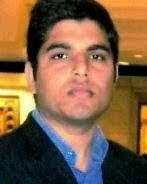
Baijayant “Jay” Panda was elected to the Parliament of India, from Kendrapara Loksabha Constituency, Odhisa in May 2009. Earlier Panda had been twice elected to Parliament, Rajya Sabha in 2000 and 2006, also from the State of Odhisa. He is a member of the Biju Janata Dal (BJD) party.Panda represents the new face of Indian politicians, several of whom have been educated abroad and have had alternate careers before choosing to serve the nation through politics. Panda graduated from the Michigan Technological University and, with a background in Engineering and Management, worked in the corporate sector before joining politics. He assisted the late Biju Patnaik and subsequently Naveen Patnaik, who founded the Biju Janata Dal party, which has found strong acceptance from the people of Odhisa and has been repeatedly voted back in elections. An avid reader and writer, Mr.Panda represents the shining face of Indian democracy, recently we had a long conversation at his residence in New Delhi…excerpts are...
Q: - As a leader and Parliamentarian, how would you rate the leadership crisis in UPA-II over Anna Hazare led Civil Society movement?
A:- It appears as government had no game plan, so taken contradictory position on Anna Hazare at time to time. It certainly indicates towards the leadership crisis.
Q: - Do Lokpal bill will be a panacea against the corruption? How do you see the next course of action from Parliament on this bill?
A: - Nothing including the Lokpal bill will be a panacea; instead it will be making a very big dent against the corruption. We have also need to take other steps, such as passing the long pending Judicial Commission Bill. India has huge shortage of Judges for its population compare to other countries and system needs to be overhauled for speedy appointments as well as accountability in the Judiciary.
Q: - If broadly looking on Jan Lokpal team, it appears, they hardly represent Civil Society at large, do you see somewhere it might be popular anger against the corruption and media participation that manipulated the whole demonstration?
A: - There are many aspects of Civil Society but certainly peoples behind Jan Lokpal constitute one element in taking this issue forward to its logical conclusion. Now Parliament has to play the final role but all the other stakeholders including Civil Society, Media, and Judiciary have also played big role in making ground against the corruption.
Q: - As a Columnist and a prolific voice in the opposition, how do you look on the dwindling investor’s confidence& FDI in our economy? Now, even our own high shot entrepreneurs are increasingly looking outside for business...should we acknowledge the big flaws in our reform/growth agenda?
A: - It’s a proven fact that the least corrupt countries also have the freest economy. Over the last twenty years, Indian economy has consistently got an unprecedented scale that lifted more than twenty crores peoples out of stark poverty. Also, sluggish issues of past such as, licensing has now gone but continuous reforms are necessary to tackle the new forms of corruption which are linked to remaining discretionary powers that should be change in favour of rule based procedures.
Q: - What should be the policy response for reassertion of people’s natural boisterousness? How to retrieve the moral sentiments, whose absence is keeping our democracy in backyard?
A: - The public has right to be agitated in a free country like ours, particularly on the corruption. It’s happening due to politicians abdicating their duties. If politicians do not act in reforming nation’s problems, then it would be essential for others like Civil Society, Media, and Judiciary to step in that vacuum.
Q: - Do regional parties {including BJD} along with the left parties can turn for an alternative political formation at centre? I mean a government without Congress and BJP?
A: - For now, I can’t speculate on such alliances but strongly hold a view that regional parties have succeeded for good reasons. India is a diverse country and no one or two parties can cater the needs of entire nation.
Q: - You represents in Loksabha from Odhisha {Kendrapara}, you also have government in state besides hailing from a business background in mining-don’t you think, the existing mining policies needs substantial changes? What’s your vision for ensuring the long term stake of local communities in mining companies?
A: - Just for clarification, my family business background is more than fifty years old and primarily functional in the engineering, along with captive and not in commercial mining. I agree with you, mining sector needs a lot reforms, many of the policies are opaque and led to abuse of authority. Grant of mining leases should be operated by the open auction and royalty rates must be revised upward to enable funds for development and benefits of the local population.
Q: - What immediate changes are needed on Land Acquisition Act? How government should approach for fair land acquisition policies?
A: - The principle should be followed for greatest good for greatest numbers. There must be a cut of 70-80%of displaced peoples and their consent must be preceded everytime before the land can be acquired. Also, the compensation should be revised sharply upward including ensuring long term benefits and preferential selection in job.
Q: - Naxalism, so far have been either treated academically or autocratically that worsened the plights of disadvantaged groups, how you will be like to see democracy working on this very grave issue?
A: - Development must go hand in hand with prioritizing the humane aspects. Naxalism has originally merged and strengthened by the lack of government action, but now, Naxal forces are playing dangerous game with wrong means of extortion and stoppage of development. Government needs to make large investment in infrastructure/education and raising the governance level in Naxal affected areas…cracking down on the violence shall be another immediate action from government.
Q: - Lastly, what measures should be drawn to end the unfair electoral funding?
A: - This is the fundamental problem impacting policies, transparency and governance. There should be a major electoral reform, particularly regarding electoral funding where we can learn from the other democracy where one solution is state funding of electoral expenses. It is much essential to move in this direction, a fair mechanism of electoral funding will be a new chapter in our democracy. Every action for fairness in system must be welcomed and participated by its all stakeholders.
Atul Kumar Thakur
September 7, 2011, Wednesday, New Delhi
Showing posts with label Public Policy. Show all posts
Showing posts with label Public Policy. Show all posts
Thursday, September 8, 2011


Thursday, October 21, 2010
Reckoning Basel-III Norms!
Following the recent financial meltdown, the leaders of the group of G-20economies asked the Basel Committee on Banking Supervision{BCBS} to reach the new rules needed to prevent another financial crisis in future. The aim was to mitigate the greed ridden financial crisis instead to block the real factors behind it; real notion of Basel-III norms could be sensed out with the statement of Hant Wellink, head of Basel Committee on Banking Supervision-“Partly banks will have to retain profit for years which they can not use to pay shareholders or bonuses.
For another part, this will vary from bank to bank; they will have to get it from the capital market. I think it will make a new crisis less likely. Chances are much smaller, we have made calculations on this but we can’t rule it out completely”. Last Para reflect the genuine apprehension ahead in financial market…so; life even after the Basel-III norms wouldn’t remain indifferent from regulatory considerations.
Basel-III norms, with its underlying proposition of insulating banks from adverse shocks by adequately enhancing the amount of its own capital holding compared to overall deposits and other borrowing can be regarded as an improved and standard set of rules over the existing Basel-II norms. Rule of Basel-III norms written by the Bank of International Settlement’s Committee on Banking Supervision {BCBS} with lucid mandates to define the reform agenda for the banking sector across the world. The new rule comprehensively entails how to asses risks and capital management anticipating theirs risk bearing.
On September20,2010 {Sunday}, agreement finally taken place on Basel-III at a meeting of Central bank Governors and top Supervisors from 27 countries chaired by ECB President, Jean Clande Trichet. They reached to the consensus with focusing on prevention of any further International Credit Crisis with provisioning more than triple of top quality capital as reserve for addressing any meltdown sort of occurrences.
Predominant component of capital is common equity and retained earnings-new rules restrict inclusion of items such as deferred tax assets, mortgage-servicing rights and investments in financial institutions to no more than 15%of the common equity component. Here strong bank would avail an edge as now they can put excess cash to better use though with ample transition period for raising funds to compliance shouldn’t be any big issue for even smaller banks. The new norms are centered around the renewed focus of Central bankers on Macro-prudential stability. The global financial meltdown following the crisis in U.S Sub-prime market has shaped the entire propositions. Earlier guidelines, popularly known as Basel-II was focused on Macro prudential regulation, those features being carried out in Basel-III norms as well with added advanced support. That systemizes the changed motives of regulators now-they have eagle eyes on financial stability of the system in totality rather than Micro regulation of any individual bank.
Under the Basel-III norms, Key Capital Ratio has been raised to 7%of risky assets-Tier-I capital that includes common equity and perpetual preferred stock will be raised from 2 to 4.5% starting in phases from January2013 to be accomplished by January2015. Moreover, banks will have to set aside another2.5%as a contingency for future stress, taking the overall capital ratio or Capital Conservation Buffer to 7%. Banks that would fail to comply after the stipulated timeline would be unable to pay dividends, though they will not be forced to raise cash.
A further counter-cyclical buffer in average of 0%-2.5%of common equity is to be imposed depending on specific circumstances of an economy to protect the banking sector from periods of excess aggregate credit growth. In addition, a liquidity buffer, much like our Statutory Liquidity Ratio {SLR} is to be made mandatory by January2018 to check the risk based measures and higher capital norms for systemically important bank. On paper, Basel-III will triple the quantum of capital, banks will need to maintain but whether it will risk-proof the banking sector is doubtful. So, regulation would decide whether Basel-III norms is light touch set of rule or indeed an effective panacea for hassle free and ethical functioning of banking system.
Impact on Indian banks: - RBI Governor, D.Subbarao is stoutly confident that Indian banks not likely to be adversely impacted by the new capital rules. At the end of June30, 2010; the aggregate capital to risk –weighted assets ratio of the Indian banking system stood at 13.4% of which Tier-I capital constituted 9.3%. So, it wouldn’t leave any pressure on Indian banks in near future albeit there may be some negative impact arising from shifting some deductions from Tier-I and Tier-II capital to common equity.
Despite strong fundamentals, RBI should ensure even more capital than essentially stipulated limit under the Basel-III norms; besides stress must be given on long term capital inflow rather on risky short term investments. Besides, innovative credit policies, RBI should also stringently ensure the well capitalized subsidiary structure for foreign banks and financial institutions operating in India, since the stability of Indian banking system have lot to with it.
Young Committee that recommended for the establishment of Bank of International Settlements {BIS} in1930 had enough sense for volatility in International financial market and greed’s of bankers. Actual effects of even best designed rules are of no value if lacked by the competent, proactive and fearless supervision. Strengthening the global banking system should be and must be the aim of every new financial rules but it’s equally imperative to stop the adverse lobbying that makes regulation nothing more than a print order. We can easily assume this from recently enacted Dodd Frank Act {Wall Street and Consumer Protection Act} in U.S.A which loosing its effects under the stern pressure from affluent lobbyist.
Regulation couldn’t have any parallel while enforcing a law; our regulatory strength has recently tested during the world wide financial meltdown-Indian banking relatively emerged unscratched comparing the western counterparts. More attention is needed from developed world for compliance of rules envisaged under the Basel-III norms-make or break of this rule would be decided by the both Individual as well collective performances of economies. Co-operation at international level would be the real bone of contention for an ambitious rule like Basel-III…meanwhile let’s watch the movements around the financial circle!
Atul Kumar Thakur
October20, 2010, Wednesday, New Delhi
atul_mdb@rediffmail.com
For another part, this will vary from bank to bank; they will have to get it from the capital market. I think it will make a new crisis less likely. Chances are much smaller, we have made calculations on this but we can’t rule it out completely”. Last Para reflect the genuine apprehension ahead in financial market…so; life even after the Basel-III norms wouldn’t remain indifferent from regulatory considerations.
Basel-III norms, with its underlying proposition of insulating banks from adverse shocks by adequately enhancing the amount of its own capital holding compared to overall deposits and other borrowing can be regarded as an improved and standard set of rules over the existing Basel-II norms. Rule of Basel-III norms written by the Bank of International Settlement’s Committee on Banking Supervision {BCBS} with lucid mandates to define the reform agenda for the banking sector across the world. The new rule comprehensively entails how to asses risks and capital management anticipating theirs risk bearing.
On September20,2010 {Sunday}, agreement finally taken place on Basel-III at a meeting of Central bank Governors and top Supervisors from 27 countries chaired by ECB President, Jean Clande Trichet. They reached to the consensus with focusing on prevention of any further International Credit Crisis with provisioning more than triple of top quality capital as reserve for addressing any meltdown sort of occurrences.
Predominant component of capital is common equity and retained earnings-new rules restrict inclusion of items such as deferred tax assets, mortgage-servicing rights and investments in financial institutions to no more than 15%of the common equity component. Here strong bank would avail an edge as now they can put excess cash to better use though with ample transition period for raising funds to compliance shouldn’t be any big issue for even smaller banks. The new norms are centered around the renewed focus of Central bankers on Macro-prudential stability. The global financial meltdown following the crisis in U.S Sub-prime market has shaped the entire propositions. Earlier guidelines, popularly known as Basel-II was focused on Macro prudential regulation, those features being carried out in Basel-III norms as well with added advanced support. That systemizes the changed motives of regulators now-they have eagle eyes on financial stability of the system in totality rather than Micro regulation of any individual bank.
Under the Basel-III norms, Key Capital Ratio has been raised to 7%of risky assets-Tier-I capital that includes common equity and perpetual preferred stock will be raised from 2 to 4.5% starting in phases from January2013 to be accomplished by January2015. Moreover, banks will have to set aside another2.5%as a contingency for future stress, taking the overall capital ratio or Capital Conservation Buffer to 7%. Banks that would fail to comply after the stipulated timeline would be unable to pay dividends, though they will not be forced to raise cash.
A further counter-cyclical buffer in average of 0%-2.5%of common equity is to be imposed depending on specific circumstances of an economy to protect the banking sector from periods of excess aggregate credit growth. In addition, a liquidity buffer, much like our Statutory Liquidity Ratio {SLR} is to be made mandatory by January2018 to check the risk based measures and higher capital norms for systemically important bank. On paper, Basel-III will triple the quantum of capital, banks will need to maintain but whether it will risk-proof the banking sector is doubtful. So, regulation would decide whether Basel-III norms is light touch set of rule or indeed an effective panacea for hassle free and ethical functioning of banking system.
Impact on Indian banks: - RBI Governor, D.Subbarao is stoutly confident that Indian banks not likely to be adversely impacted by the new capital rules. At the end of June30, 2010; the aggregate capital to risk –weighted assets ratio of the Indian banking system stood at 13.4% of which Tier-I capital constituted 9.3%. So, it wouldn’t leave any pressure on Indian banks in near future albeit there may be some negative impact arising from shifting some deductions from Tier-I and Tier-II capital to common equity.
Despite strong fundamentals, RBI should ensure even more capital than essentially stipulated limit under the Basel-III norms; besides stress must be given on long term capital inflow rather on risky short term investments. Besides, innovative credit policies, RBI should also stringently ensure the well capitalized subsidiary structure for foreign banks and financial institutions operating in India, since the stability of Indian banking system have lot to with it.
Young Committee that recommended for the establishment of Bank of International Settlements {BIS} in1930 had enough sense for volatility in International financial market and greed’s of bankers. Actual effects of even best designed rules are of no value if lacked by the competent, proactive and fearless supervision. Strengthening the global banking system should be and must be the aim of every new financial rules but it’s equally imperative to stop the adverse lobbying that makes regulation nothing more than a print order. We can easily assume this from recently enacted Dodd Frank Act {Wall Street and Consumer Protection Act} in U.S.A which loosing its effects under the stern pressure from affluent lobbyist.
Regulation couldn’t have any parallel while enforcing a law; our regulatory strength has recently tested during the world wide financial meltdown-Indian banking relatively emerged unscratched comparing the western counterparts. More attention is needed from developed world for compliance of rules envisaged under the Basel-III norms-make or break of this rule would be decided by the both Individual as well collective performances of economies. Co-operation at international level would be the real bone of contention for an ambitious rule like Basel-III…meanwhile let’s watch the movements around the financial circle!
Atul Kumar Thakur
October20, 2010, Wednesday, New Delhi
atul_mdb@rediffmail.com
Thursday, July 29, 2010
Debacles of Mismanaged Growth
Something very fundamental have changed over the years, the last budget speech of Finance Minister marked it lucidly. Probably on such occasions, first time in history of modern India, private sector had framed in top order. Proposed catalyst role of non-governmental actor in new economy were coincided with other slew of statements; very notable among them was that government will now act as an enabler for poors of this country which mean, now protection of governmental intervention would be confine as prerogative rights of the wealthy class of this nation.
I have stout faith in the state and no idea is as lovable as “Idea of India” for me-the crux I raising here has lot to do with my faith as its tantamount would be graver then we perceive today.
Consine and consciousness, both have shrunken horribly in their respective spaces-barring few, we can see it in every sphere…media have been consistently shifted from its whistle-blower role to a compromising entity, in the name of commercial compulsions and sustenance.
UPAII government, which would be known for the failureness of ministerial obligations and departure of its custodians towards the pastime with greener pasture. Recently, Agriculture Minister has taken over the charge of ICC Chief-interestingly; he never had any footprint in the gentlemen game of Cricket. Further, exactly in bizarre move, he offered to reduce his ministerial burden to focus more on his penchant and to getting away from the obstinate inflationary challenges.
Shockingly, he displayed his penchant for the politics of Cricket in wrong time when agriculture as a primary sector was passing through its worst phase. Czarism of Cricket surpassed the basic needs of India’s two-third population…ridiculously, barren field was substituted by the Empowered Group of Ministers {EGOM} to channelise the hyped food security programme. Is it feasible in the world’s largest democracy to run with a part-time Agriculture Minister?
Obviously, negligence at macro level has turning agriculture farming and services, both as an unviable employment option. In recent years, cultivation cost has radically grown up-millions of farmers moved from conventional food corps to cash corps in the influence of mad commercialization. Increased cost of production, and failureness of marketing frequently leading them to suicides as an option to escape the unbearable humility of debtors.
In last twelve years, last six years were even more horrific-National Crime Record Bureau that solely takes into account of farm suicides reveals the grimness of situation. During2003-08, average one farmer commits suicide in every thirty-two minutes; Maharastra, which account highest farming suicidal incidents, alone have 22 billionaires in the Forbes list from total 48 Indian billionaire’s entry.
Leading voice on rural affairs, P.sainath gives a very realistic account of persisting problems; through rising food prices and diminishing values of farming activities lead 50-60% of their spending alone on foods, 18%on fuel-clothing and rest on everything? Transformation in the farm sector resulted with two hundred thousand of farmers suicide {from1970 to date} in sheer dark depressions…cases are rampant where whole villages have emptied in search of job to cities where there is no opportunity? As par, last Census, Average Per Capita Expenditure/month of farmers in India revolves around Rs.503…even current Census may dwarf this figure further.
Farmer’s indebtedness that grew from 21to 48% since1991 is the real bone of contention behind the farming distress and overall desperation prevailing in the rural areas.
In last two decades, banking presence getting freezed and even lowered in the rural terrains-micro loans are being marginalize in favour of sizable loans despite the government’s best effort in this regard. Despite all tall claims, Public Sector Banks {PSBs} have share of merely 7.61% in the total rural debts-if excluded the Regional Rural Banks{RRBs} stakes, then contribution would remain very abysmal from PSBs. New classes of Moneylenders {MFIs} are dwelling with many operational flaws and impractical policy maneuverings, so they hardly appearing remarkable as an institutional alternatives.
Indeed, there is need of reform in present subsidies mechanism but it must start from the Corporate Sector who doesn’t deserve more then a fair atmosphere of business as government assistance. Gulf between interest of business and rudimentary necessities of common citizens must be taken into account at the all levels of policy implementation otherwise impressions of growth would remain subdued and cause of aberrations for the majority of deserving stakeholders.
Atul Kumar Thakur
July16, 2010, Monday, New Delhi
atul-mdb@rediffmail.com
I have stout faith in the state and no idea is as lovable as “Idea of India” for me-the crux I raising here has lot to do with my faith as its tantamount would be graver then we perceive today.
Consine and consciousness, both have shrunken horribly in their respective spaces-barring few, we can see it in every sphere…media have been consistently shifted from its whistle-blower role to a compromising entity, in the name of commercial compulsions and sustenance.
UPAII government, which would be known for the failureness of ministerial obligations and departure of its custodians towards the pastime with greener pasture. Recently, Agriculture Minister has taken over the charge of ICC Chief-interestingly; he never had any footprint in the gentlemen game of Cricket. Further, exactly in bizarre move, he offered to reduce his ministerial burden to focus more on his penchant and to getting away from the obstinate inflationary challenges.
Shockingly, he displayed his penchant for the politics of Cricket in wrong time when agriculture as a primary sector was passing through its worst phase. Czarism of Cricket surpassed the basic needs of India’s two-third population…ridiculously, barren field was substituted by the Empowered Group of Ministers {EGOM} to channelise the hyped food security programme. Is it feasible in the world’s largest democracy to run with a part-time Agriculture Minister?
Obviously, negligence at macro level has turning agriculture farming and services, both as an unviable employment option. In recent years, cultivation cost has radically grown up-millions of farmers moved from conventional food corps to cash corps in the influence of mad commercialization. Increased cost of production, and failureness of marketing frequently leading them to suicides as an option to escape the unbearable humility of debtors.
In last twelve years, last six years were even more horrific-National Crime Record Bureau that solely takes into account of farm suicides reveals the grimness of situation. During2003-08, average one farmer commits suicide in every thirty-two minutes; Maharastra, which account highest farming suicidal incidents, alone have 22 billionaires in the Forbes list from total 48 Indian billionaire’s entry.
Leading voice on rural affairs, P.sainath gives a very realistic account of persisting problems; through rising food prices and diminishing values of farming activities lead 50-60% of their spending alone on foods, 18%on fuel-clothing and rest on everything? Transformation in the farm sector resulted with two hundred thousand of farmers suicide {from1970 to date} in sheer dark depressions…cases are rampant where whole villages have emptied in search of job to cities where there is no opportunity? As par, last Census, Average Per Capita Expenditure/month of farmers in India revolves around Rs.503…even current Census may dwarf this figure further.
Farmer’s indebtedness that grew from 21to 48% since1991 is the real bone of contention behind the farming distress and overall desperation prevailing in the rural areas.
In last two decades, banking presence getting freezed and even lowered in the rural terrains-micro loans are being marginalize in favour of sizable loans despite the government’s best effort in this regard. Despite all tall claims, Public Sector Banks {PSBs} have share of merely 7.61% in the total rural debts-if excluded the Regional Rural Banks{RRBs} stakes, then contribution would remain very abysmal from PSBs. New classes of Moneylenders {MFIs} are dwelling with many operational flaws and impractical policy maneuverings, so they hardly appearing remarkable as an institutional alternatives.
Indeed, there is need of reform in present subsidies mechanism but it must start from the Corporate Sector who doesn’t deserve more then a fair atmosphere of business as government assistance. Gulf between interest of business and rudimentary necessities of common citizens must be taken into account at the all levels of policy implementation otherwise impressions of growth would remain subdued and cause of aberrations for the majority of deserving stakeholders.
Atul Kumar Thakur
July16, 2010, Monday, New Delhi
atul-mdb@rediffmail.com
Monday, May 31, 2010
Lukewarmness in Accountability
Multitasking like a growing banyan tree have adversely shadowing the Indian political space, this is now a frequent and established phenomenon that vehemently breaking the ethos of public accountability.
Among few sleepy options, sports chosen to be an area of commercial pastime by the high rank politicians-worst of all, by taking into account of marginal-utility principle, they grossly subsuming the task of in an unfortunate single row. Now a days, it’s hard to anticipate the area of interest and experiences of politicians, at least in top order who matters most-ironically, in this new game, there’s nothing exist like opposition except ideologically stricken left parties.
Like Newton’s third law of motion- a man like Arun Jaitely is always ready to give competence to his peers, notably to the farmers leader turned Minister in various crucial capacities turned the biggest sports Mentor of the world, Mr. Sharad Pawar. Their sharing of interest in sports politics strikes some serious concern-in the wake of recession and mismatch of demand-supply mechanism,adversenee fuelled the Consumer Price Index {CPI} led inflation rate to the spiraling high at 16-20%; instead to draw focus, this most challenging reality has been marginalized by the vested interest of Cricket politics and some other trivial issues that hardly matters for a common man who faced hardship on day to day basis.
Today prices of foods are skyrocketing, availability of power per capita is alarmingly going down, employment in organized sector is getting scarce, almost half of countries terrain facing some sort of deadly conflict…amazingly neither ruling coalition nor opposition have much to do with it.
BJP as a party and stakeholder in Indian politics is facing an unusual sort of deficiency in issues and leadership-derailed transition of party leadership is making things impossible for them to foresee real issues at the moment.
Lack of opposition zeal’s are indeed the most surprising outcome of the recent time-though exception exists but on matter of their own existential issues, such as on caste census, women’s reservation etc. The convergence of mode and agenda of two vital components {ruling and opposition parties} are very shocking from the basic point democratic point of views-such circumstances abnormally breaths on the vulnerability of public issues.
Amidst the hullabaloo, a mean path has emerged into popular political stand; the formidable among its evangelist is Congress leader, Digvijay Singh, who is showing rare gesture of hide and seek with his colleagues-like a gifted batsman, he is demonstrating clever footwork on political pitch. In recent past, he has chosen some matter of highest sensitivity, issued his opinion like a maverick albeit in same skill accommodated the resistance followed by it-so, overall resultant left was zero, an abysmal number in solitaire.
Forthrightness remains another front where the acts of Ministers like, Jairam Ramesh and Shashi Tharoor appears fairly silly-where apart from outspokenness, Jairam Ramesh has shown some remarkable reform in his Ministry of Environment &Forest, on the other hand casualness of approaches led Shashi Tharoor out of Ministry and high perception.
One common thing among the Ministers which they all have forgotten that politics is completely an art rather a science as its being preaching blindly in Universities-here uncertainty is strictly attached with the ones action and failureness to live up on expectations. So, arrival of high placed persons from International Multilateral Organizations like, U.N and others have added more unusual alienation in Indian political sphere rather impacting on the matter of significance.
This new political culture is indeed marks a shift of political attention from the ground realities…a section of peoples are absolutely availing the fruits of neo-liberal economy but a big mass is on the verge of pauperization as their skills are hardly considered competent in changed set of productions and services.
Moreover, whose features appears as long hours of work with negligible earning, lack of any social security or labour protection and extensive use of child labours-now debate on history and most of book launches are accompanied by the glamorous cocktails where the issues are exactly placed outside of its sphere. For remaining different in such scenario, one have to show indifferences with deviants and at events of all sorts…political, industrial, intellectual etc; then freedom of expression can only live up in reality.
Atul Kumar Thakur
May28th 2010, Friday, New Delhi
atul_mdb@rediffmail.com
Among few sleepy options, sports chosen to be an area of commercial pastime by the high rank politicians-worst of all, by taking into account of marginal-utility principle, they grossly subsuming the task of in an unfortunate single row. Now a days, it’s hard to anticipate the area of interest and experiences of politicians, at least in top order who matters most-ironically, in this new game, there’s nothing exist like opposition except ideologically stricken left parties.
Like Newton’s third law of motion- a man like Arun Jaitely is always ready to give competence to his peers, notably to the farmers leader turned Minister in various crucial capacities turned the biggest sports Mentor of the world, Mr. Sharad Pawar. Their sharing of interest in sports politics strikes some serious concern-in the wake of recession and mismatch of demand-supply mechanism,adversenee fuelled the Consumer Price Index {CPI} led inflation rate to the spiraling high at 16-20%; instead to draw focus, this most challenging reality has been marginalized by the vested interest of Cricket politics and some other trivial issues that hardly matters for a common man who faced hardship on day to day basis.
Today prices of foods are skyrocketing, availability of power per capita is alarmingly going down, employment in organized sector is getting scarce, almost half of countries terrain facing some sort of deadly conflict…amazingly neither ruling coalition nor opposition have much to do with it.
BJP as a party and stakeholder in Indian politics is facing an unusual sort of deficiency in issues and leadership-derailed transition of party leadership is making things impossible for them to foresee real issues at the moment.
Lack of opposition zeal’s are indeed the most surprising outcome of the recent time-though exception exists but on matter of their own existential issues, such as on caste census, women’s reservation etc. The convergence of mode and agenda of two vital components {ruling and opposition parties} are very shocking from the basic point democratic point of views-such circumstances abnormally breaths on the vulnerability of public issues.
Amidst the hullabaloo, a mean path has emerged into popular political stand; the formidable among its evangelist is Congress leader, Digvijay Singh, who is showing rare gesture of hide and seek with his colleagues-like a gifted batsman, he is demonstrating clever footwork on political pitch. In recent past, he has chosen some matter of highest sensitivity, issued his opinion like a maverick albeit in same skill accommodated the resistance followed by it-so, overall resultant left was zero, an abysmal number in solitaire.
Forthrightness remains another front where the acts of Ministers like, Jairam Ramesh and Shashi Tharoor appears fairly silly-where apart from outspokenness, Jairam Ramesh has shown some remarkable reform in his Ministry of Environment &Forest, on the other hand casualness of approaches led Shashi Tharoor out of Ministry and high perception.
One common thing among the Ministers which they all have forgotten that politics is completely an art rather a science as its being preaching blindly in Universities-here uncertainty is strictly attached with the ones action and failureness to live up on expectations. So, arrival of high placed persons from International Multilateral Organizations like, U.N and others have added more unusual alienation in Indian political sphere rather impacting on the matter of significance.
This new political culture is indeed marks a shift of political attention from the ground realities…a section of peoples are absolutely availing the fruits of neo-liberal economy but a big mass is on the verge of pauperization as their skills are hardly considered competent in changed set of productions and services.
Moreover, whose features appears as long hours of work with negligible earning, lack of any social security or labour protection and extensive use of child labours-now debate on history and most of book launches are accompanied by the glamorous cocktails where the issues are exactly placed outside of its sphere. For remaining different in such scenario, one have to show indifferences with deviants and at events of all sorts…political, industrial, intellectual etc; then freedom of expression can only live up in reality.
Atul Kumar Thakur
May28th 2010, Friday, New Delhi
atul_mdb@rediffmail.com
Wednesday, July 29, 2009
Disgusting Services
It wouldn't be an oversight assertion to term various services as disgusting if the conditions of such services in our country could be hardly visualized in lapidary state. Lagging of services also shouldn't be seen alone as sheer partial lapse of services mechanism instead it now getting matured as full grown maladies that's need an immediate checkout by the respective agencies( Both Government and private).
I lamenting to quote the weakness of basic services among common peoples across the country even after attaining of considerable strength of economy and overall balance position at global platform. Bad availablity of services are hazardly haunting in various ways to maintain a balance and productive circumstances which left numerous pitfalls in growth agenda.
It's quite unfortunate that basic services like, water, electricity, transportation, health, education etc are turning to be the prerogative of affluent; such clouts are dampening the morale of a pool of population who simply found incompatible to maintain the parity vis-a-vis the affluent counterparts. Amidst such disproportionate basic facilities; living in even a prime National Capital Region like Ghaziabad could be a quite terrible experience during the summer season.
On an average,number of hours of load shedding ranges between eight hours to eighteen hours daily, for burning midnight light candle remains the most viable option because of other deficient power back ups.Indeed such facts can astonished those who have only the extrinsic views about the prosperity of these NCRs that shaped through their fame to fetching billions dollar worth of investments from across the world.
Health is a most vital aspect for all living creatures which needs utmost care for smooth progress of life but there are many impediment in the way of such materialization since Government facilities are hardly adequate. Further it paves the way of exploitation and a vicious circle for the economically marginalized section in the hand of private players; they charged exorbitant price and offers no guaranteed services.
From a humane perspective it's quite essential to provide basic health facilities at affordable price which could be possible only through an effective government mechanism; Cuba may be a formidable example in this regard as their medical teams valued topmost among its human resources. But presently very sorry state of affairs prevails in our country to cope with the challenges of effective and inclusive health facilities.
Two months back,I had made frequent visits to AIIMS for looking on a my close relative who was than under-treatment there, I got struck to see the prevailing stark condition there; patient have to wait for months to have their turns, despite being an urgent and a high profile case,even my patient finally got operated after falling on two dates of surgery. Cause were cited by the management like absence of Anesthetic which shall hardly justifiable in India's top notch institution like AIIMS; no doubt pressures surmounts too much high on it's staffs as being a lone hospital of such caliber but that shouldn't lessen their concern for existing patients.
Snatching are very frequent in Delhi's buses and its very hard to escape from this noble experience at least once before becoming excessively careful for ones stuffs.
I lost my cell phone during same days in May; my remorse was more deeper for the precious messages and numerous contacts apart from hassleful formal obligation which I had to make... anyway I lodged my complain to S.H.O about the theft of my cell phone ( AIIMS), but further task was much daunting for me as I had to spoil my energy to visit Vodafone outlet for atleast five times to regain my lost telecommunication identity.
Theirs approaches were so cumbersome and repetitive that they couldn't entertain any queries even a minute after their stipulated working hours... I had to got back once for the same reason. In other more instances we have to face such creeping attitudes of various service providers without having any valid causes; most of time we surpassed such inconvenience because of time-crunch but such occurrence after all makes us more vulnerable in basic facilities.
Recovering from such maladies needs a strong civic sense and commitment for collective welfare; social initiatives would be the genuine impetus in this regard but for its enforcement at broader level meticulous political strategy would be equally required. Good governance and sound civic action can lessen the pain of inadequate service structure.... my candle is flickering now, so I have to imagine about the new dawn in deep darkness.
Atul Kumar Thakur
July 29th, 2009, New Delhi
atul_mdb@rediffmail.com
I lamenting to quote the weakness of basic services among common peoples across the country even after attaining of considerable strength of economy and overall balance position at global platform. Bad availablity of services are hazardly haunting in various ways to maintain a balance and productive circumstances which left numerous pitfalls in growth agenda.
It's quite unfortunate that basic services like, water, electricity, transportation, health, education etc are turning to be the prerogative of affluent; such clouts are dampening the morale of a pool of population who simply found incompatible to maintain the parity vis-a-vis the affluent counterparts. Amidst such disproportionate basic facilities; living in even a prime National Capital Region like Ghaziabad could be a quite terrible experience during the summer season.
On an average,number of hours of load shedding ranges between eight hours to eighteen hours daily, for burning midnight light candle remains the most viable option because of other deficient power back ups.Indeed such facts can astonished those who have only the extrinsic views about the prosperity of these NCRs that shaped through their fame to fetching billions dollar worth of investments from across the world.
Health is a most vital aspect for all living creatures which needs utmost care for smooth progress of life but there are many impediment in the way of such materialization since Government facilities are hardly adequate. Further it paves the way of exploitation and a vicious circle for the economically marginalized section in the hand of private players; they charged exorbitant price and offers no guaranteed services.
From a humane perspective it's quite essential to provide basic health facilities at affordable price which could be possible only through an effective government mechanism; Cuba may be a formidable example in this regard as their medical teams valued topmost among its human resources. But presently very sorry state of affairs prevails in our country to cope with the challenges of effective and inclusive health facilities.
Two months back,I had made frequent visits to AIIMS for looking on a my close relative who was than under-treatment there, I got struck to see the prevailing stark condition there; patient have to wait for months to have their turns, despite being an urgent and a high profile case,even my patient finally got operated after falling on two dates of surgery. Cause were cited by the management like absence of Anesthetic which shall hardly justifiable in India's top notch institution like AIIMS; no doubt pressures surmounts too much high on it's staffs as being a lone hospital of such caliber but that shouldn't lessen their concern for existing patients.
Snatching are very frequent in Delhi's buses and its very hard to escape from this noble experience at least once before becoming excessively careful for ones stuffs.
I lost my cell phone during same days in May; my remorse was more deeper for the precious messages and numerous contacts apart from hassleful formal obligation which I had to make... anyway I lodged my complain to S.H.O about the theft of my cell phone ( AIIMS), but further task was much daunting for me as I had to spoil my energy to visit Vodafone outlet for atleast five times to regain my lost telecommunication identity.
Theirs approaches were so cumbersome and repetitive that they couldn't entertain any queries even a minute after their stipulated working hours... I had to got back once for the same reason. In other more instances we have to face such creeping attitudes of various service providers without having any valid causes; most of time we surpassed such inconvenience because of time-crunch but such occurrence after all makes us more vulnerable in basic facilities.
Recovering from such maladies needs a strong civic sense and commitment for collective welfare; social initiatives would be the genuine impetus in this regard but for its enforcement at broader level meticulous political strategy would be equally required. Good governance and sound civic action can lessen the pain of inadequate service structure.... my candle is flickering now, so I have to imagine about the new dawn in deep darkness.
Atul Kumar Thakur
July 29th, 2009, New Delhi
atul_mdb@rediffmail.com
Subscribe to:
Posts (Atom)

 Posts
Posts